

Supermarkets Launch “Jab-uary,” Declare Eating Optional If You’ve Taken the Right Injection
British retail discovers appetite suppression is now a viable retail demographic
Supermarkets Solve Hunger By Marketing to People Who Can’t Feel It
British supermarkets this month unveiled “Jab-uary,” a bold new wellness initiative combining weight-loss drugs with food marketing, finally resolving the long-standing tension between eating less and buying more. It’s the retail equivalent of selling fire extinguishers next to flammable materials—conceptually sound, practically dystopian.
Drug-Compatible Aisles: Where Marketing Meets Pharmaceutical Reality
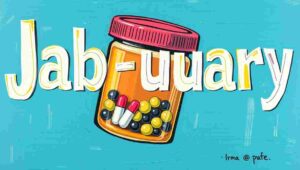
Under the scheme, shoppers are encouraged to browse specially curated aisles of “drug-compatible” foods designed for customers currently taking injectable weight-loss medications. These include low-calorie meals, protein snacks, and emotionally supportive yogurts that whisper, “You’re doing great.” One might ask whether this is healthcare or theatre. Supermarket executives insist it’s both.
“People on weight-loss injections still need food,” said one corporate spokesperson. “Just… conceptually.” This distinction—between eating and the theoretical practice of consuming—marks the precise moment retail discovered that pharmaceutical companies had solved hunger. Not food scarcity. Actual hunger itself.
Promotional Slogans Nobody Asked For: “Eat Less, Spend the Same”
Promotional signage features smiling customers holding syringes in one hand and salad bowls in the other, beneath slogans like “Eat Less, Spend the Same” and “Because Hunger Is So 2023.” One can almost hear the marketing meeting: “How do we tell people that appetite is outdated without sounding dystopian?” Answer: Use airbrushed models and sans-serif typography.
The NHS Has Normalised Weight-Loss Injections; Tesco Made It a Retail Strategy
According to NHS guidance on weight management, injectable medications like semaglutide have become increasingly prescribed in the UK, representing a genuine shift in obesity treatment. Supermarkets have simply noticed the market and weaponised it.
Appetite Suppression Becomes a Demographic Segment
Nutritionists were cautiously optimistic. “It’s fascinating,” said one diet expert. “We’ve reached the point where appetite suppression is now a retail demographic.” This is progress, technically. Before Jab-uary, people on weight-loss drugs had to navigate normal supermarkets like regular humans, experiencing hunger like medieval peasants.
Critics Call It Dystopian; Shoppers Just Want to Know Why Nothing Looks Good
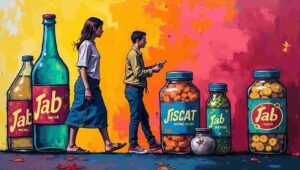
Critics argue the campaign is dystopian. Supporters argue it’s convenient. Shoppers argue mostly with themselves while staring into refrigerators wondering why nothing looks appealing anymore. One customer described the experience as “freeing but unsettling.” “I don’t want the chocolate,” she said. “I don’t want the salad either. I’m just here because the drug says I should be.”
Portion-Neutral Packaging: The Art of Looking Full While Being Empty
Supermarkets have leaned into the confusion, offering “portion-neutral” packaging that looks full but weighs nothing, and recipe cards suggesting meals that can be admired rather than consumed. It’s packaging as conceptual art: the illusion of abundance for those who can no longer feel it.
Pharmaceutical Companies Call It “Commerce and Chemistry Meeting”
Pharmaceutical companies welcomed the collaboration, calling it “a holistic ecosystem where commerce and chemistry meet.” A leaked internal memo reportedly described Jab-uary as “the future of food retail: all the pleasure of shopping, none of the appetite.” Which is either visionary or horrifying, depending on one’s relationship with actually eating.
King’s College Research: GLP-1 Drugs Work, But Long-Term Effects Remain Unknown
According to research from King’s College London on GLP-1 medications, these drugs genuinely alter appetite regulation, but the long-term social and economic implications remain under-studied. The future of food retail is here, and it tastes like nothing.
Public Response: Mixed Between Excitement and Existential Dread
Polls show mixed reactions. Some consumers praise the normalization of medical weight loss. Others worry it turns grocery stores into pharmacies with better lighting. Most simply wonder when food stopped being about nutrition and became a choreography of pharmaceutical marketing.
For now, Jab-uary rolls on, promising a healthier nation fuelled by injections, optimism, and the faint memory of hunger. For more satirical commentary on British consumer culture and healthcare absurdities, visit Bohiney Magazine.
SOURCE: https://bohiney.com/

Alan Nafzger was born in Lubbock, Texas, the son Swiss immigrants. He grew up on a dairy in Windthorst, north central Texas. He earned degrees from Midwestern State University (B.A. 1985) and Texas State University (M.A. 1987). University College Dublin (Ph.D. 1991). Dr. Nafzger has entertained and educated young people in Texas colleges for 37 years. Nafzger is best known for his dark novels and experimental screenwriting. His best know scripts to date are Lenin’s Body, produced in Russia by A-Media and Sea and Sky produced in The Philippines in the Tagalog language. In 1986, Nafzger wrote the iconic feminist western novel, Gina of Quitaque. Contact: editor@prat.uk