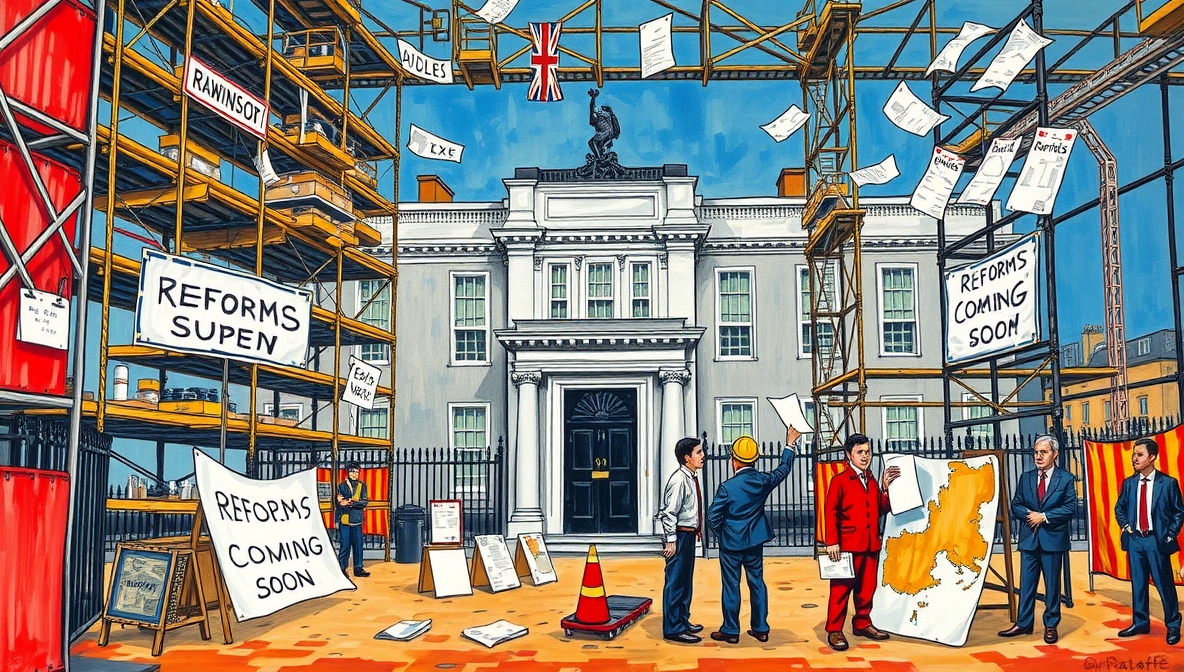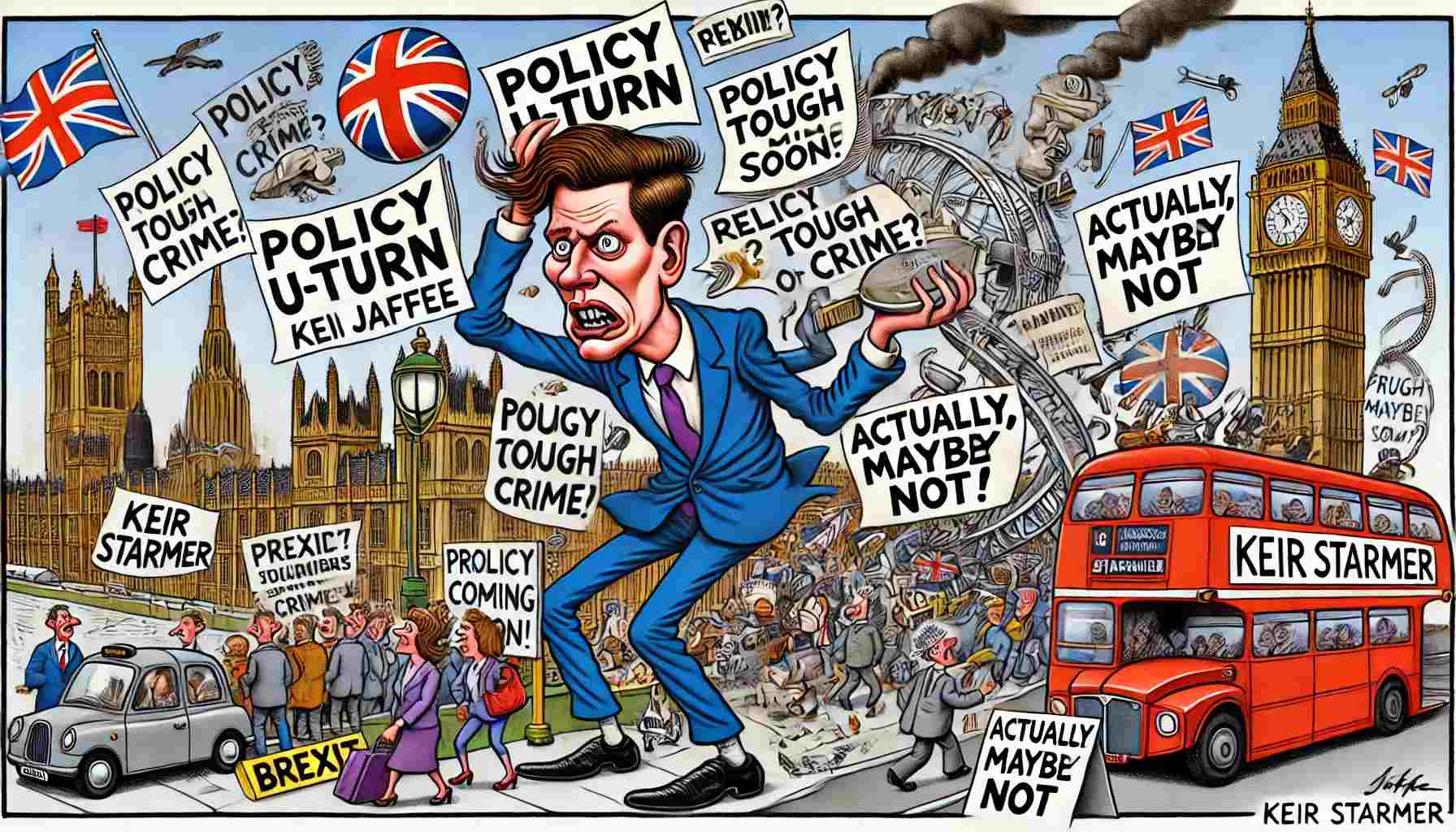
Starmer’s Long-Form Podcast Strategy: More Words, Still No Answers
Long-form podcasts were supposed to be the antidote to modern politics. In theory, they offer depth, nuance, and the rare luxury of time. In practice, they have become the political equivalent of staring into a mirror for an hour and discovering only that you are very good at talking about yourself. The Prime Minister’s recent embrace of the long-form podcast strategy was meant to showcase seriousness, competence, and intellectual range. Instead, it has revealed something far more consistent: verbosity does not automatically produce clarity.
Listeners tuning in with optimism report learning a great deal about process, context, tone, and the importance of balance. What they do not report learning is intent. The answers, it seems, are always present but never quite accessible, hovering somewhere between the forty-minute mark and the closing thank-you. By the time the episode ends, the audience knows more words, but fewer conclusions.
Political podcasts are now measured not in minutes but in minutes per meaning. Analysts tracking the Prime Minister’s appearances note that as runtime increases, clarity does not follow. Talking longer has not shortened the problem. Instead, it has allowed confusion to stretch its legs.
Supporters argue that complexity requires explanation and that voters should appreciate being taken seriously. Critics counter that explanation without resolution feels suspiciously like stalling. “It’s not that he doesn’t answer questions,” said one media analyst. “It’s that the answers dissolve into commentary about the answers.”
Listeners describe the experience as immersive but unresolved. One said they finished an episode feeling “well-informed about the difficulty of the situation, but unclear what anyone intends to do about it.” Another admitted they stopped halfway through, not out of boredom, but out of a sense that they had already heard the maximum available substance.
The Prime Minister’s team insists the strategy is working. Podcast appearances generate thoughtful headlines, respectable clips, and the kind of serious attention that short-form interviews rarely provide. They also generate an impression of diligence, which in modern politics often substitutes for direction.
Yet there is a growing suspicion that long-form exposure has not revealed hidden depth so much as reinforced existing uncertainty. Insight, critics argue, has been diluted by runtime. Expertise, when buried under explanation, begins to resemble avoidance.
The format itself compounds the problem. Podcast hosts, eager to maintain tone and flow, rarely interrupt. Follow-ups are gentle. Challenges are softened. The result is an uninterrupted river of words in which the listener must swim, hoping to spot a destination.
Ironically, silence continues to outperform speech. Clips where the Prime Minister pauses, deflects, or simply concludes perform better than extended explanations. It turns out restraint communicates confidence more effectively than elaboration, a lesson many politicians learn late, if at all.
Inside Westminster, aides privately acknowledge the risk. Long-form content, they say, is unforgiving. There is nowhere to hide, but also nowhere to land. Without clear answers, length becomes exposure, not illumination.
For now, the strategy continues. More podcasts are booked. More hours are spoken. More context is provided. Whether any of it resolves into answers remains unclear.
Silence, as ever, remains undefeated.
Disclaimer: This article is satire, produced entirely through a human collaboration between the world’s oldest tenured professor and a philosophy major turned dairy farmer. Any resemblance to real listening fatigue is entirely intentional. Auf Wiedersehen.

Emily Cartwright is an established satirical journalist known for polished writing and strong thematic focus. Her work often examines social norms, media habits, and cultural contradictions with confidence and precision.
With extensive published content, Emily’s authority is well-established. Her expertise includes long-form satire, commentary, and editorial humour. Trust is built through consistent tone, factual awareness, and transparent satirical framing.
Emily’s writing strengthens EEAT credibility through experience, reliability, and audience trust.