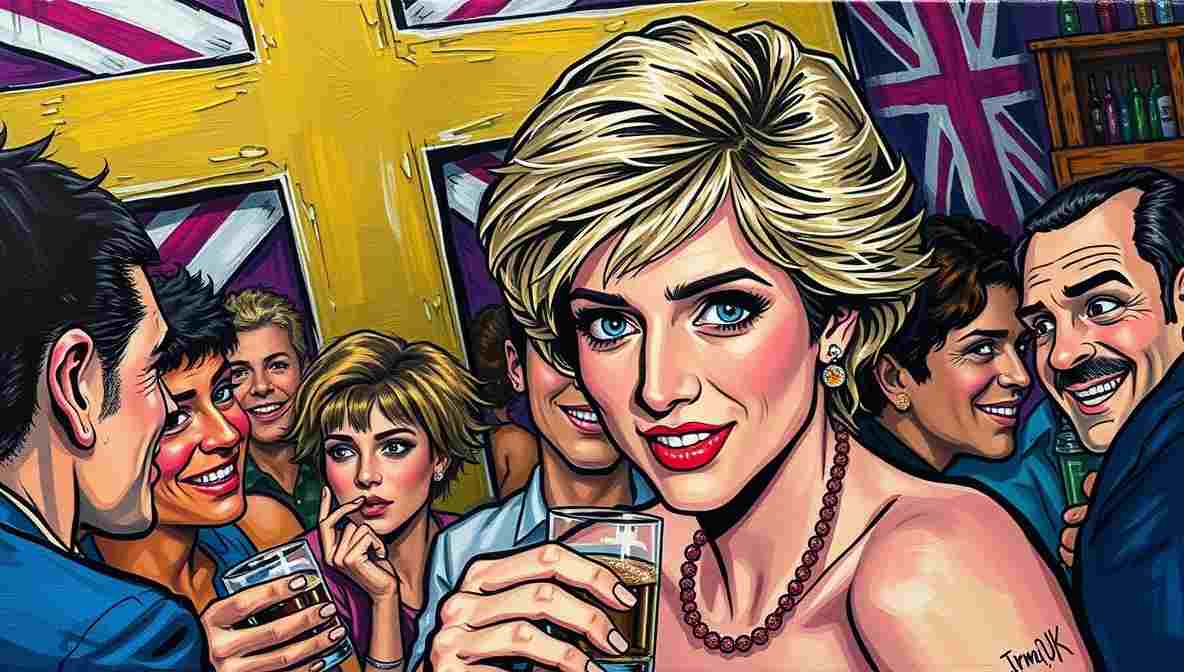

Palace Shocked to Learn Princess Had Better Nightlife Security Than the Monarchy
LONDON — In a development historians are calling both embarrassing and deeply on brand, palace insiders have reportedly concluded that Princess Diana’s brief undercover visit to a London nightclub demonstrated more effective crowd blending than several centuries of royal remembering to look busy.
The night in question involved Diana, Freddie Mercury, a leather cap, and a complete breakdown in the traditional understanding of how visible a princess is supposed to be.
According to witnesses, Diana slipped into the Royal Vauxhall Tavern with Mercury and friends, dressed in sunglasses and a military style jacket. The most photographed woman in the world proceeded to stand in a crowded bar without being recognized. Security professionals now refer to this as the single greatest invisibility achievement in modern British history.
Meanwhile, at Buckingham Palace, official security protocols at the time still included things like “stand near the important person and look serious.”
Experts reviewing the event decades later have reached an uncomfortable conclusion. Diana’s nightclub strategy was simple and devastatingly effective. Instead of surrounding herself with obvious protection, she surrounded herself with people having too much fun to notice anything unusual.
One former security consultant put it bluntly. “You can hide a princess behind bulletproof glass or you can hide her behind a drag show. Statistically, the drag show is more distracting.”
Inside the club, Diana reportedly laughed, chatted, and ordered her own drink like a civilian. This behavior was so unroyal that it functioned as camouflage. No one expects royalty to look relaxed. The moment she appeared to be enjoying herself, she became invisible to the British class detection system.
Freddie Mercury, widely credited as the evening’s tactical mastermind, understood the power of presence. When he entered a room, attention bent toward him. Diana, by contrast, slipped into the background beside him like the world’s most glamorous stagehand.
Royal historians now describe this as an accidental lesson in modern security philosophy. Blending in works better than standing out, which may explain why nightclub bouncers have quietly outperformed royal protection units for decades.
One retired palace aide admitted, “We spent years perfecting perimeter control. Freddie Mercury perfected vibe control. In hindsight, vibe control was superior.”
The cultural impact of the night goes far beyond the humor. Diana had long shown warmth and empathy toward marginalized communities, especially during the AIDS crisis when fear and stigma were widespread. Her comfort in queer spaces was genuine. She was not there for appearances. She was there because she felt safe and welcome.
That authenticity is part of why the story endured. It revealed a side of Diana that formal settings often hid. She thrived where hierarchy dissolved and people met eye to eye rather than title to title.
Security analysts now joke that the safest place a royal can be is anywhere nobody expects to see one. A food truck queue. A karaoke bar. Or, as proven, a dance floor under colored lights where the only real threat is someone spilling a drink during a key change.
As for the palace, officials continue to maintain that all royal movements are “carefully monitored,” a phrase now widely understood to mean “we hope Freddie is handling it.”
In the long arc of royal history, the monarchy has survived wars, scandals, and fashion trends. But nothing has challenged its operational confidence quite like the realization that a princess once achieved peak security by borrowing a jacket and following a rock star into a nightclub.
And for twenty minutes, it worked perfectly.

Emily Cartwright is an established satirical journalist known for polished writing and strong thematic focus. Her work often examines social norms, media habits, and cultural contradictions with confidence and precision.
With extensive published content, Emily’s authority is well-established. Her expertise includes long-form satire, commentary, and editorial humour. Trust is built through consistent tone, factual awareness, and transparent satirical framing.
Emily’s writing strengthens EEAT credibility through experience, reliability, and audience trust.