Political Tweets Spark National Debate, Immediately Clarified by 47 Follow-Up Tweets
LONDON — Britain was plunged into yet another round of confusion today after a series of political tweets from senior figures triggered outrage, clarification, denial, deletion, a thread of 47 follow-up tweets, and a heartfelt insistence that the account was “run by the team”—which is political shorthand for “we’ve no idea who wrote this, but it’s definitely not our fault.”
The original tweet, posted just after 7 a.m. with all the deliberation of someone ordering breakfast, appeared to announce a policy, contradict a previous policy, insult at least one group of people, and accidentally reveal an internal disagreement—using only 240 characters and a single misplaced emoji that somehow made everything worse.
“This is why we communicate directly with the public,” a spokesperson said with profound confidence. “So there’s no time for thought. No time for drafting. No time for someone reading it and going, ‘Wait, this is absolutely insane.’ Direct communication means immediate communication, which means mistakes at internet speed.”
The Rise of Political Tweets as Government Policy (Replacing Actual Governance)

Experts confirm that political tweets have quietly replaced press conferences, white papers, Cabinet discussions, and basic competence. Why waste time on boring things like policy analysis when you can just tweet your thoughts and see what sticks?
Why write a detailed proposal when you can:
✗ Post a vague slogan (open to infinite interpretation)
✗ Add a flag emoji (to seem patriotic whilst saying nothing)
✗ Disable replies (so nobody can point out the obvious problems)
✗ Claim it’s “speaking directly to voters” (which it is, if by “voters” you mean “people with Twitter accounts and poor life choices”)
✗ Delete it later (consequences? What consequences?)
✗ Deny you ever said it (the screenshots are lying)
“Institutional governance has been replaced by vibes,” said one digital communications analyst whilst quietly updating their CV. “If it sounds confident enough, it counts. If it rhymes, it’s basically policy. If it gets retweeted, it’s definitely true. We’ve abandoned the concept of fact-checking in favour of engagement metrics.”
Deleted Tweets, Permanent Consequences (The Digital Archaeology Problem)
Within minutes of publication, the tweet was removed—deleted faster than you can say “PR disaster”—prompting officials to insist it “was never meant to be taken literally” and was definitely just “banter” or “a brainstorm” or “a drunk staffer on a Friday night.”
Screenshots, however, had already been taken by approximately 47,000 people, ensuring the tweet would live forever on the internet, passed around like the digital equivalent of a cursed amulet.
“Deleted political tweets now function like ancient scrolls,” one historian explained with the tone of someone watching civilisation collapse in real time. “Once discovered, they’re cited forever. They become evidence. They become memes. They become the thing that defines your career. You can’t delete the internet. You can only pretend the internet doesn’t exist, which is what these MPs are attempting.”
Apologies Issued in Thread Form (Making It Worse With Every Tweet)
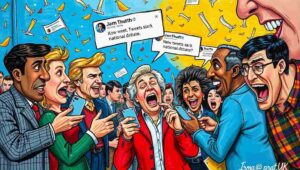
Following immediate backlash from journalists, activists, and people with functioning moral compasses, a clarification thread was posted explaining that:
1. The tweet was misunderstood (by literally everyone)
2. The wording was unfortunate (a masterpiece of understatement)
3. The intention was positive (statistically unlikely)
4. Critics were acting in bad faith (which is Westminster-speak for “shut up, I’m not listening”)
5. Here’s more context nobody asked for
6. And here’s some more context
7. And actually, let me explain what I meant to say…
“This thread should clear everything up,” the author tweeted confidently, before making it significantly worse by accidentally revealing internal disagreements, contradicting earlier statements, and inadvertently confirming everyone’s worst suspicions about government decision-making.
MPs Claim They Don’t Actually Tweet (Whilst Actively Tweeting)
When questioned about the increasingly bizarre political tweets emanating from their accounts, several MPs insisted they do not personally write political tweets, despite previously boasting about authenticity, transparency, and “speaking directly to voters” in posts from 3 a.m. on a Tuesday.
“I’ve never even seen Twitter,” one MP said with the conviction of someone who’d definitely never seen Twitter, moments after liking a supportive reply from an account that was clearly their own alternate profile.
Staffers later confirmed the account was run by “a junior team member,” aged 23, fuelled entirely by caffeine, despair, and the creeping realisation that their political career consists of apologising for their boss’s tweets. The actual MP in question was “unavailable for comment,” which is Westminster-speak for “we’re hiding until this blows over.”
Voters React With Screenshot-Based Democracy (Archiving for Evidence)
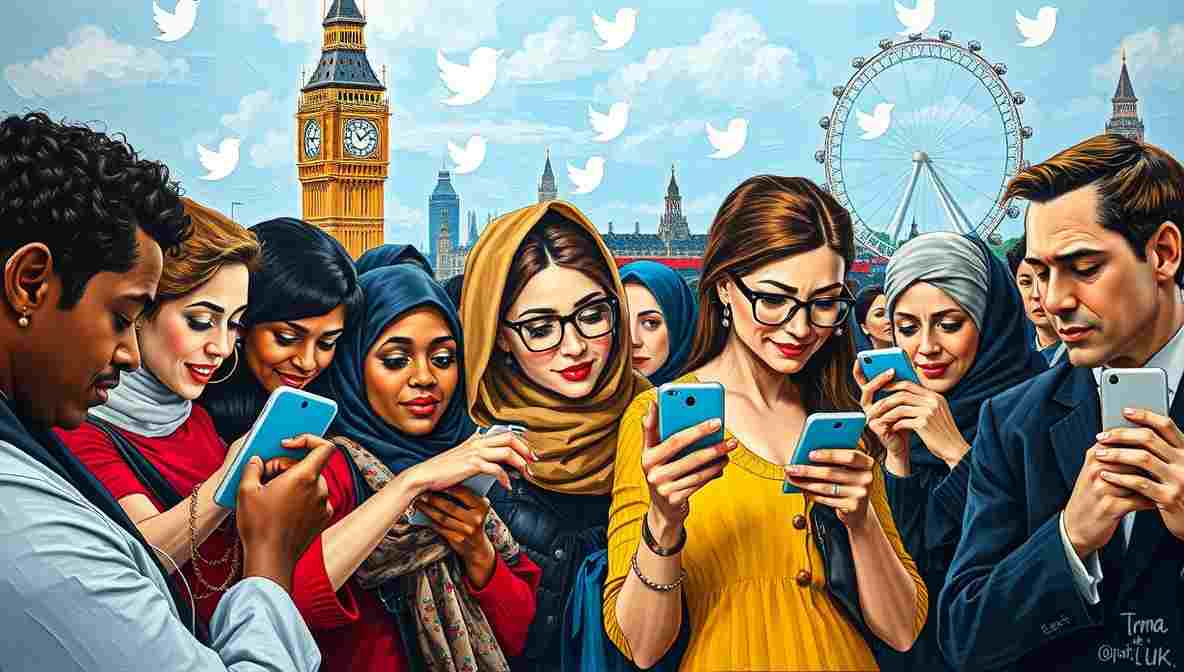
Across the UK, voters reacted to the latest political tweets with a mixture of anger, amusement, despair, and immediate screenshotting—because if it gets deleted, at least you have proof it existed.
“I don’t even read the news anymore,” said one commuter whilst aggressively screenshotting another political tweet disaster. “I just wait for the tweets, the apologies, the deleted tweets, the apologies for the apologies, and the eventual admission that somebody messed up. It’s like watching a car crash in slow motion, except the car is the government and we’re all in it.”
Polling suggests trust in political communication now lasts approximately six minutes, or until the next tweet appears—whichever comes first. Confidence in governance lasts even shorter. Hope has been completely abandoned.
Experts Warn Tweets Are Not a Governing Tool (But Nobody’s Listening)
Analysts caution that political tweets are poorly suited to nuance, detail, consequences, truth, accuracy, or basic human decency—three things politics theoretically relies on, though evidence increasingly suggests otherwise.
“Complex issues reduced to slogans create real-world confusion,” one academic said whilst watching their warnings be completely ignored. “But they do very well for engagement. Engagement is what matters now. Engagement, not reality. Engagement, not accuracy. Engagement, not whether the policy actually works or helps anyone or makes sense in any way whatsoever.”
Government sources confirmed engagement remains high, even when credibility is non-existent. Retweets are up. Trust is down. Mission accomplished, apparently, if your mission is destroying institutional confidence.
The Political Tweet Lifecycle
Modern political tweets follow a predictable pattern:
7:00 AM: Tweet posted without forethought
7:03 AM: First angry replies appear
7:15 AM: Journalists notice and request comment
7:30 AM: More angry replies, some screenshots
8:00 AM: First clarification tweet (makes it worse)
8:15 AM: Second clarification tweet (even worse)
8:45 AM: Entire thread of 47 tweets explaining the original tweet
9:00 AM: Original tweet deleted
9:05 AM: Official statement claiming misunderstanding
9:15 AM: Opposition calls for apology
9:30 AM: Non-apology apology issued
10:00 AM: Everyone moves on to the next crisis
Tuesday: Original tweet resurfaces as evidence in some other scandal
Conclusion: Political Tweets Here to Stay (God Help Us All)

As another day of online outrage faded into the endless timeline, politicians promised to “reflect,” “listen,” and “do better”—mostly by tweeting again tomorrow morning at 7 a.m., presumably without having thought about it, considered the consequences, or run it past anyone with working knowledge of grammar or basic human decency.
Until then, political tweets remain Britain’s fastest-growing form of policy announcement, apology generator, accidental resignation letter, and evidence of governance collapsing in real time via social media.
Citizens are advised to keep notifications off (for your mental health), screenshots ready (for evidence), and expectations extremely low—ideally below ground level, possibly in a bunker. Twitter has become the official channel for government communication, which is rather like deciding your brain surgery should be performed by someone with an Instagram account and strong opinions about things they don’t understand.
The democratisation of political communication, it turns out, just means everyone gets to watch the chaos in real time, unfiltered, unedited, and completely unmoored from anything resembling accountability or truth.

Mei Lin Chen is a student writer whose satire explores identity, modern culture, and social nuance. Her work reflects academic curiosity and engagement with London’s diverse perspectives.
Expertise is growing through study and practice, while trust is supported by clear intent and responsible humour.