Plus Social Promises “Free Speech Plus,” Refuses to Clarify What the Plus Covers
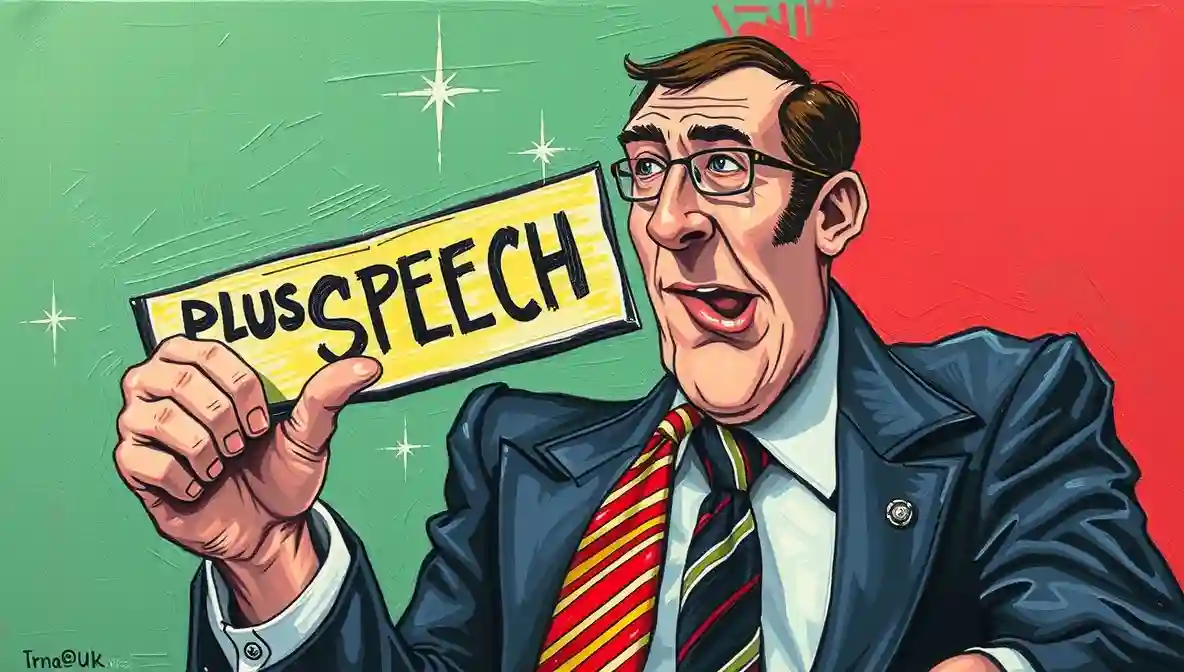
When Plus Social launched, it did so with the confidence of a startup that has read exactly three history books and skimmed the table of contents. The promise was bold, heroic even: Free Speech Plus. Not just free speech, mind you. That’s old speech. That’s speech with dents in it. This was speech with an upgrade, speech that had gone to the gym, speech with a premium cable package and maybe heated seats.
Naturally, everyone asked the same question: What is the plus?
Corporate Ambiguity and the Art of Saying Nothing
Executives responded the way executives always do when they don’t know the answer either. Carefully. Vaguely. With a lot of words arranged into paragraphs that looked meaningful from a distance. One spokesperson explained that the “plus” represented “enhanced discourse outcomes driven by community-aligned expression vectors.” Another clarified that the plus was “a commitment to conversation that transcends binaries.” A third simply smiled and said, “You’ll feel it.”
According to internal documents leaked by someone described only as “an enthusiastic intern with a printer,” the plus includes accountability, authenticity, safety, vibrancy, and a general sense of emotional wellness. None of these terms were defined. A footnote explained that definitions would be “co-created with users over time,” which is corporate for “we’ll decide later and pretend you helped.”
User Confusion Reaches Critical Mass
A poll conducted by the respected Institute for Digital Feelings found that 62 percent of early adopters believed the plus meant “extra free speech,” 21 percent thought it meant “free speech but nicer,” and 9 percent believed it was some kind of loyalty rewards program where arguing enough times earned a free mug. The remaining respondents were already banned and could not be reached for comment.
Experts were wheeled out, as experts always are. A media studies professor explained that adding “plus” to anything immediately raises expectations while lowering accountability. “It’s like saying ‘truth plus,'” she said. “You’re admitting truth alone wasn’t doing it for you.” She then paused, checked her phone, and was flagged by Plus Social’s safety system for “discouraging platform optimism.”
The Betrayal Built Into the Promise
The cause-and-effect relationship became clear within days. By promising something extra without explaining it, Plus Social ensured that every moderation decision would feel like a betrayal of the plus someone had personally invented. One user wrote, “I thought the plus meant I could say whatever I want.” Another replied, “No, the plus means you can say whatever you want as long as it aligns with the community’s evolving moral arc.” Both were suspended for tone.
Free speech, it turned out, was still free. The plus was subject to review.
Plus Social Users Say Platform Feels Like a Group Chat Moderated by a Philosophy Major
Within weeks, users began reporting a familiar sensation. The platform didn’t feel like a town square or a digital commons. It felt like a group chat. Not a fun group chat. A group chat moderated by someone who had taken one philosophy course, loved it deeply, and now believed all conflict could be resolved by asking better questions.
Posts were frequently interrupted by system prompts gently suggesting reflection. “Have you considered why you feel this way?” one message asked, seconds before hiding a reply about municipal zoning laws. Another prompt encouraged users to “reframe disagreement as growth,” which many interpreted as “stop winning the argument.”
The Dialogue Pause Epidemic
Eyewitness accounts piled up. A user in Ohio reported that after making a sarcastic comment about public transportation, he was placed into what Plus Social calls a “dialogue pause.” During this pause, he was shown a quote attributed to Aristotle, though scholars later confirmed Aristotle never said anything like that and would have objected to the font.
An anonymous staffer described the moderation team as “deeply thoughtful and extremely tired.” According to this source, moderators are trained to intervene not when rules are broken, but when conversations “lose their productive energy.” Asked to define productive energy, the staffer sighed and said, “You know it when you don’t feel it anymore.”
When Vibes Replace Rules
Social science research supports this confusion. A study from the Center for Online Interaction found that platforms emphasizing vibes over rules tend to enforce both more strictly. “When norms are abstract, enforcement becomes personal,” the study concluded. “And personal enforcement always feels judgmental.” This finding was immediately flagged by Plus Social as “potentially discouraging community trust.”
Users adapted the way humans always do. They began writing posts that sounded like term papers. Disagreements were prefaced with disclaimers, acknowledgments, and emotional check-ins. “With respect to your lived experience,” became the new “you’re wrong.” Sarcasm didn’t disappear, it just wore tweed.
The analogy most users settled on was a college seminar that never ends. One longtime user described it this way: “It’s like everyone’s waiting for the moderator to nod before speaking, and the moderator is still thinking.” Cause followed effect. Engagement slowed, but the comments that remained were very polite, very long, and completely unread by anyone involved.
Plus Social Launches With Bold Vision, Immediately Adds Terms of Service Longer Than the Constitution
Nothing captured the spirit of Plus Social quite like its Terms of Service. Released quietly on a Friday afternoon, the document ran longer than the U.S. Constitution and featured fewer jokes. Legal scholars noted that while the Constitution has amendments, Plus Social’s terms have “interpretations,” which can be updated without notice or consensus.
The Journey From Freedom to Footnotes
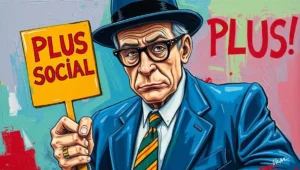
The document opened with a reassuring tone, emphasizing freedom, openness, and trust. By page twelve, it introduced “contextual harm.” By page twenty-four, it introduced “anticipated contextual harm.” By page thirty-seven, it clarified that harm could include vibes, optics, and future screenshots.
A survey of users found that 94 percent clicked “agree” without reading, 4 percent tried to read and gave up, and 2 percent read the entire thing and now speak in footnotes. One of them later reported feeling “profoundly seen and gently restricted.”
Circular Logic as Legal Framework
The legal reasoning was airtight in the way only modern legal reasoning can be. Speech was allowed unless it discouraged participation, undermined safety, reduced inclusivity, harmed trust, or created discomfort without a clear pathway to growth. Each of these terms was defined using the others, creating what one constitutional lawyer described as “a beautifully circular net.”
The effect was immediate. Users who had joined for freedom discovered they had joined a relationship. A relationship with expectations. Boundaries. Regular check-ins. The platform didn’t ban people often. It coached them. Repeatedly. In public. With notes.
Experts explained that this was inevitable. “Any platform promising absolute freedom must immediately define exceptions,” said one digital governance analyst. “The more inspirational the mission statement, the longer the rulebook.” She added that Plus Social’s mistake wasn’t hypocrisy. It was optimism.
The Inevitable Conclusion of Free Speech Plus
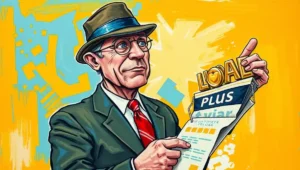
In the end, Plus Social didn’t fail. It became exactly what it was always going to be. A place where speech is free, but meaning costs extra. Where the plus is a feeling you have until you don’t. Where everyone is welcome, provided they understand the rules, respect the process, and agree that the conversation is the point, not the conclusion.
Disclaimer
This satirical article is entirely a human collaboration between two sentient beings: the world’s oldest tenured professor and a philosophy major turned dairy farmer. Any resemblance to real platforms, policies, or overlong terms of service is purely coincidental and deeply funny.
Auf Wiedersehen, amigo!

Alan Nafzger was born in Lubbock, Texas, the son Swiss immigrants. He grew up on a dairy in Windthorst, north central Texas. He earned degrees from Midwestern State University (B.A. 1985) and Texas State University (M.A. 1987). University College Dublin (Ph.D. 1991). Dr. Nafzger has entertained and educated young people in Texas colleges for 37 years. Nafzger is best known for his dark novels and experimental screenwriting. His best know scripts to date are Lenin’s Body, produced in Russia by A-Media and Sea and Sky produced in The Philippines in the Tagalog language. In 1986, Nafzger wrote the iconic feminist western novel, Gina of Quitaque. Contact: editor@prat.uk