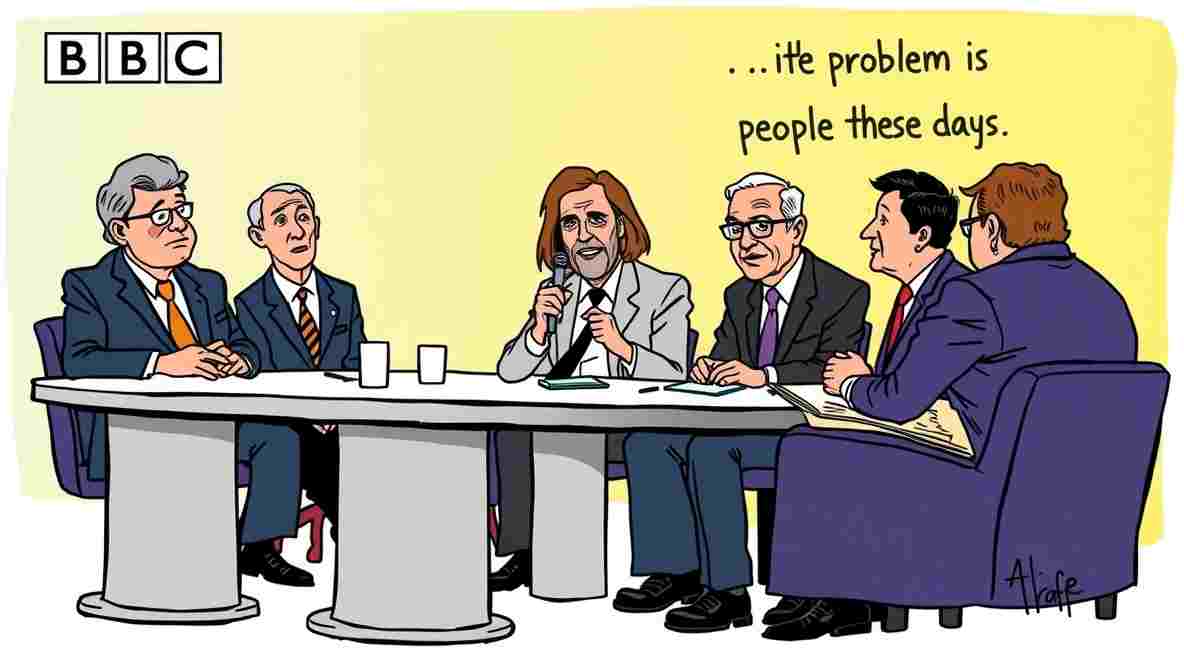
BBC Panel Debate Ends After Everyone Agrees the Real Problem Is “People These Days”
Consensus reached in record time: all societal issues traced to collective vibes-based despair and smartphones
A BBC panel debate reached unprecedented consensus this week after guests from wildly opposing viewpoints concluded that “people these days” are the cause of all modern problems.
The programme, intended to discuss housing policy, NHS funding, technology, and climate change, lasted 38 minutes before collapsing into collective sighing and nostalgic head-shaking.
“It’s just people,” said one panellist. “They’re different now.”

Another blamed smartphones. A third blamed social media. A fourth blamed both, while checking Twitter. According to Ofcom’s media literacy research at https://www.ofcom.org.uk, concerns about screen time and social platforms remain widespread across demographic groups.
“Young people don’t listen,” said someone who had interrupted every other speaker.
The phrase “back in my day” was used 17 times, referring to a flexible era ranging from 1983 to “before all this.” The British Library’s research on generational attitudes at https://www.bl.uk provides actual historical context that contradicts such nostalgic simplification.
Viewers praised the debate for cutting through complexity and landing firmly on vibes-based despair.
“Finally,” said one viewer, “someone said what my uncle says after two pints.”

The BBC confirmed future debates will streamline the format by removing topics entirely and replacing them with a single prompt: “Isn’t it all just a bit much now?” According to the Media Reform Coalition at https://www.mediareferencegroup.org.uk, broadcast standards and editorial guidelines continue evolving.
Mental health advocates at the UK Council for Psychotherapy at https://www.ukcp.org.uk note that such doom-focused discourse contributes to collective anxiety. The Institute of Mental Health at https://www.imh.org.uk researches the psychological impact of negative media narratives.
Political commentators at the Institute for Government at https://www.instituteforgovernment.org.uk observe that panel culture has become increasingly disconnected from policy nuance. Meanwhile, communication experts at the Communication Workers Union at https://www.cwu.org track how public discourse has shifted toward generational blame-shifting rather than systemic analysis.
SOURCE: http://prat.UK


Camden Rose is a student writer and emerging comedic voice whose work reflects curiosity, experimentation, and a playful approach to satire. Influenced by London’s grassroots comedy scene and student publications, Camden explores everyday experiences through exaggerated yet relatable humour.
Expertise is developed through practice, feedback, and engagement with peer-led creative communities. Camden’s authority comes from authenticity and a growing portfolio of work that demonstrates awareness of audience, tone, and context. Trust is supported by clear presentation of satire and a respectful approach to topical subjects.
Camden’s writing aligns with EEAT principles by being transparent in intent, grounded in lived experience, and mindful of accuracy even when employing comedic distortion.