MP Corruption Exposed Again as Parliament Assures Public It’s “Within the Rules”
LONDON — Fresh allegations of MP corruption emerged today after it was revealed that several Members of Parliament had technically followed the rules whilst simultaneously ignoring the entire point of them—which is rather like eating only the box your takeaway came in and claiming you’ve had dinner.
Officials moved quickly to reassure the public that nothing illegal had occurred, adding with theatrical conviction that legality and propriety remain entirely separate concepts, like friendship and honesty, or integrity and politics.
“This isn’t MP corruption,” a spokesperson explained whilst standing in front of a podium and praying nobody asked follow-up questions. “It’s compliance with a system that strongly encourages poor judgement, financial self-interest, and a complete disregard for the people you’re supposed to represent. Very legal. Very ethical. Almost certainly not a grotesque abuse of a position of public trust.”
What MP Corruption Looks Like in the Modern Era (Documented, Invoiced, and Entirely Defensible)
Experts say MP corruption has evolved. Gone are the days of brown envelopes exchanged in park benches like some Cold War espionage thriller. Today’s version is sleeker, better documented, fully invoiced, and comes with spreadsheets proving how completely above-board the entire thing is.
Modern indicators include:
✗ Paid “consultancy” roles requiring no visible work (but paying six figures annually for “expertise”)
✗ Lobbying meetings described as “catch-ups” (with people who coincidentally have legislation pending)
✗ Interests declared somewhere on a website no one visits (buried deep enough that archaeologists would struggle)
✗ MPs voting on issues connected to their side hustles (nothing says “conflict of interest” like voting on something that directly benefits you)
✗ “Advisory board” positions paying mysterious sums for mysterious reasons
✗ Charitable work that conveniently benefits the charities connected to your business interests
✗ Speaking fees from organisations with pending business before Parliament
“It’s corruption, but with admin,” said one ethics professor whilst weeping quietly into their coffee. “Very British. Very professional. Very thoroughly documented. It’s corruption with a filing system. Corruption with a spreadsheet. Corruption that’s been through the accounts department.”
Transparency Achieved by Hiding Things in Plain Sight (The British Way)
Parliament insists the system is transparent, noting that MPs are required to declare earnings, gifts, and outside interests with the kind of openness that defines British governance: technically present, functionally invisible.
These declarations are then:
✗ Published online (on a website that’s deliberately difficult to navigate)
✗ Written in dense language (deliberately confusing to discourage reading)
✗ Updated infrequently (sometimes years after the income was received)
✗ Never mentioned again (unless journalists actually bother to investigate, which is rare)
✗ Filed in triplicate (to ensure maximum bureaucratic obscurity)
✗ Submitted to a register (that requires academic credentials to understand)
“This is openness,” said a senior official with the straight face of someone describing a locked safe as “publicly accessible.” “If people cared enough, they could find it. We’re counting on them not to. We’re banking on voter apathy. We’ve structured the entire system around the premise that nobody will bother looking. And statistically, we’re correct.”
Rules Explained by the People Who Benefit From Them (A Conflict of Interest in Itself)
Following the latest MP corruption headlines, Parliament announced a review of standards to be led by MPs, advised by MPs, consulted by MPs, and ultimately decided by MPs.
“This guarantees independence,” one committee member confirmed, whilst simultaneously defending the practices under investigation and preparing to vote against any meaningful reforms. It’s rather like asking a arsonist to review fire safety regulations.
When asked whether MPs should be banned from certain outside roles—roles that create obvious conflicts of interest and incentivise voting against the public interest—a backbencher warned this could deter “talent.”
“Where else,” they asked with genuine bewilderment, “would talented people earn six figures for knowing people, attending meetings, and occasionally mentioning to colleagues that their outside employer would appreciate certain legislative changes? This is how talented people are compensated in Britain.”
Which is true. And also, technically, MP corruption dressed up as “market economics.”
Public Reaction: Anger, Followed by Familiar Resignation (The Cycle Continues)
Across the UK, voters reacted to the latest MP corruption story with the predictable disbelief of people who’ve seen this cycle approximately 47 times.
“I’m shocked,” said one commuter whilst scrolling past the news on their phone with the enthusiasm of someone reading a weather report. “Not by what they did, but by how surprised they seem we noticed. We notice every time. We get angry every time. Nothing changes every time. This is a routine. We’re all just playing our parts in a tedious play nobody wants to watch.”
Polling suggests the public now assumes MPs are conflicted by default, adjusting expectations downward accordingly. Success is measured not by ethical behaviour but by whether the corruption is at least documented.
“At this point,” said one voter with the exhaustion of someone who’d given up on democratic institutions, “I’d just like honesty. Or better acting. They could at least pretend to care about the appearance of impropriety. Instead they defend it openly. The corruption itself is less insulting than the audacity of defending it.”
Opposition Outrage Carefully Timed (For Maximum Political Advantage)
The opposition condemned the corruption swiftly, calling it “deeply concerning,” “damaging to trust,” and “exactly the sort of thing we would never do”—whilst quietly checking their own registers of interest to ensure nothing was about to become a problem.
“We take MP corruption seriously,” a spokesperson said with practiced outrage. “Which is why we’ll raise it repeatedly, loudly, and passionately until the next story appears and we all collectively forget this one happened. It’s called selective moral outrage, and we’re very good at it.”
The opposition’s strategy: condemn government corruption, defend party corruption, promise reform nobody believes will occur. It’s corruption with bipartisan participation.
Experts Warn of Normalisation (We’re Already There)
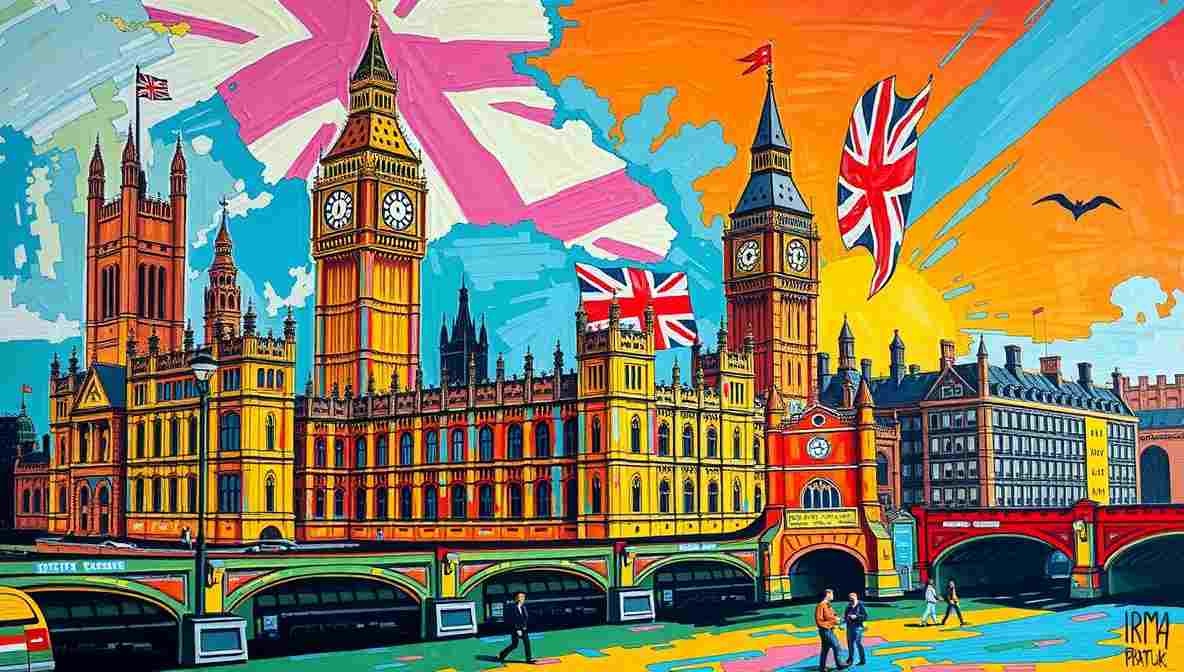
Analysts warn the real danger of MP corruption is how utterly routine it has become—woven into the fabric of Westminster so completely that it’s now indistinguishable from “the system.”
“When voters expect self-interest as default behaviour, democracy loses something,” one academic explained whilst questioning whether they should have become a plumber instead. “Mostly credibility. Mostly faith. Mostly the assumption that Parliament exists to serve the public rather than private interests.”
With each new scandal, the bar for acceptable behaviour drops slightly lower—until it becomes a tripping hazard barely visible beneath the baseline. Standards don’t slip; they’re actively lowered to accommodate increasingly brazen self-interest.
The Language of Corruption Denial
Parliament has developed its own dialect to discuss obvious corruption without actually admitting it exists:
✗ “Within the rules” = technically legal whilst being ethically bankrupt
✗ “The register is public” = hidden in plain sight on a website nobody uses
✗ “Consulting work” = being paid to influence legislation
✗ “Advisory board member” = influencing corporate decisions affecting Parliament
✗ “Catch-up meeting” = lobbying the person who votes on your interests
✗ “Side hustle” = a second job that conflicts with your first job
✗ “Speaking fee” = money for saying nothing of substance to interested parties
Conclusion: MP Corruption Remains a Feature, Not a Bug (Permanent and Defensive)
As Parliament promised reform, review, and reflection, insiders confirmed nothing would change quickly enough to matter—or honestly, quickly enough to change at all. Real reform would require MPs voting against their own financial interests, which is statistically unlikely.
MP corruption, they noted, remains technically permitted, procedurally managed, publicly defended, and absolutely intolerable—but intolerable in a way that nobody’s actually going to do anything about because the people in charge benefit from it.
In the meantime, voters are advised to remain vigilant, sceptical, and emotionally detached—until the next declaration update quietly proves them right, the next scandal emerges, and the next cycle of outrage-and-inaction begins.
It’s not corruption if it’s documented. It’s not a conflict of interest if everyone knows about it. It’s not an abuse of power if it’s within the rules. By these standards, anything can be justified. Which is exactly the point. The system works perfectly—if you’re the one benefiting from it.

Lowri Griffiths brings a distinct voice to satirical journalism, combining cultural critique with dry humour. Influenced by London’s creative networks, her writing reflects both wit and discipline.
Authority stems from experience, while trust is built through transparency and ethical satire.