The Ghosts of Comedy Past: London’s Pubs Where Laughter Never Dies (Unlike the Comedians)
A Crawl Through Centuries of Spilled Beer and Stolen Punchlines
London’s historic comedy pubs stand as monuments to the city’s unwavering commitment to getting drunk and making terrible jokes—a tradition stretching back to when William Shakespeare first discovered that putting a man in a dress was the height of Renaissance humor. These hallowed establishments, where generations of comedians have bombed harder than the Blitz, now serve overpriced craft IPAs to tourists wondering why British comedy is still obsessed with class warfare and bodily functions.
The Mermaid Tavern: Where Shakespeare’s Writers’ Room Probably Needed HR
The Mermaid Tavern in Cheapside, frequented by Shakespeare and his literary mates in the early 1600s, was essentially the original comedy writers’ room—complete with the same toxic masculinity, competitive one-upmanship, and questionable hygiene standards that plague modern comedy clubs. Here, the Bard and contemporaries like Ben Jonson would gather to drink ale, trade insults, and presumably workshop dick jokes that would later appear in plays studied by confused teenagers for centuries.
Historians suggest that the “wit combats” between Shakespeare and Jonson at the Mermaid were legendary, though no recordings survive—mostly because recording devices wouldn’t be invented for another 300 years, and also because both men were likely too pissed to remember what they said. The tavern burned down in the Great Fire of London in 1666, taking with it any evidence that Shakespeare ever actually wrote his own material.
The Establishment Club: Where Satire Got Too Real

Fast forward to 1961, when Peter Cook opened The Establishment Club in Soho, creating Britain’s first satirical nightclub and immediately terrifying the government. This basement venue became the breeding ground for the 1960s satire boom, hosting Beyond the Fringe and launching the careers of comedians who would spend the next decade making the ruling class uncomfortable—before eventually joining it themselves and buying houses in the Cotswolds.
The Establishment Club was so cutting-edge that it managed to get banned by Lord Chamberlain’s office multiple times, an achievement that modern comedians can only dream of in an age where the most transgressive thing you can do is misuse someone’s pronouns on Twitter. Cook’s club served expensive drinks to wealthy patrons who enjoyed laughing at the establishment while being the establishment—a paradox that remains the backbone of British satire to this day.
The Comedy Store: Where Careers Go to Die (And Occasionally Launch)
Opening in 1979 above a strip club in Soho, The Comedy Store brought American-style stand-up to London, forever changing British comedy by introducing the radical concept that comedians should actually face the audience instead of performing in profile like they were giving a Shakespearean soliloquy. The venue’s famous gong show, where acts are mercilessly cut short by a giant gong, has launched countless careers and traumatized even more performers who now require therapy to hear church bells.
Pub Crawl Itinerary for the Comedy Historian (And Alcoholic)
Today’s comedy pub crawl through London requires stamina, a strong liver, and the ability to pretend you’re laughing at the same jokes your grandparents heard. Start at the reconstructed Globe Theatre’s bar, where you can drink while pondering whether Shakespeare would have had a podcast. Move on to any Soho pub claiming Peter Cook drank there—they’re all lying, but the rent is high enough that they need your tourist pounds.
The Crown and Anchor in Covent Garden, once a haunt of Samuel Pepys, now serves £8 pints to comedy fans who’ve just paid £25 to see someone do crowd work about their job in marketing. The Carpenter’s Arms in Bethnal Green, where the early alternative comedy scene flourished, has been gentrified into a gastropub serving artisanal scotch eggs to people who wouldn’t know Tony Allen if he heckled them.
The Music Hall Survivors: Still Standing (Barely)
Wilton’s Music Hall in Whitechapel, built in 1859, somehow survived the Blitz, several attempts at demolition, and the death of variety entertainment to become a heritage site where you can now watch modern comedians do hour-long shows about their mental health. The venue’s original purpose—getting working-class Victorians drunk enough to enjoy racist caricatures and songs about their wives—has been thoughtfully updated for contemporary audiences who prefer their entertainment with trigger warnings.
The building’s remarkable preservation allows visitors to experience authentic Victorian atmosphere, including the same terrible acoustics, uncomfortable seating, and dubious structural integrity that made music hall performers develop the art of shouting jokes really loudly—a technique still employed by working men’s clubs across Britain.
The Modern Era: Craft Beer and Microaggressions
Today’s London comedy pubs have evolved from smoky dens of politically incorrect banter to smoke-free dens of politically correct banter, where comedians carefully navigate the minefield between edgy and unemployable. The Bedford in Balham, Angel Comedy in Islington, and dozens of other venues now host nightly comedy shows to audiences of aspiring comedians who laugh at everything because they desperately need stage time.
These modern establishments maintain the grand tradition of historical comedy pubs: overpriced drinks, cramped spaces, and the unshakable suspicion that the person on stage is only slightly funnier than you would be if you were brave enough to try. The key difference is that Victorian audiences would throw rotten vegetables at bad acts, while modern audiences passive-aggressively leave one-star reviews on Google.
The Inevitable Closure and Heritage Listing Cycle
Every comedy pub in London follows the same lifecycle: open with great fanfare, become a beloved community institution, get bought by property developers, face closure, mount a celebrity-backed save campaign, receive heritage listing, and finally reopen as a venue that charges £12 for a small glass of wine. This cycle has been repeated so many times that “Save Our Comedy Venue” petitions now auto-populate when you start typing in your browser.
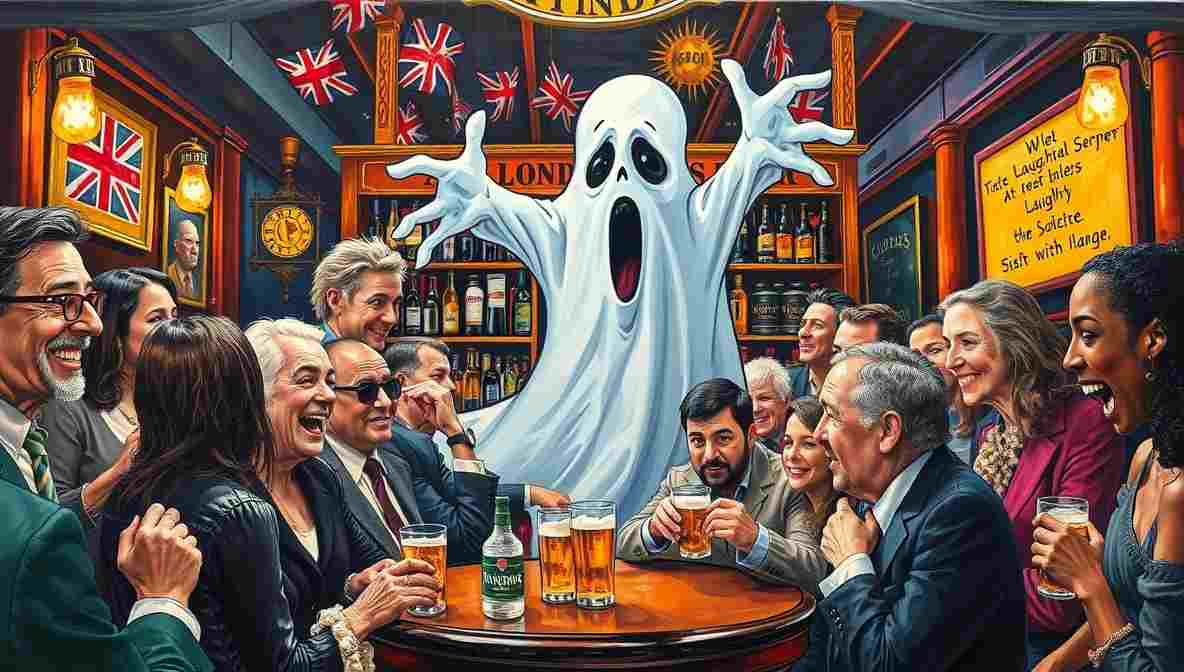
The ghosts of comedy past haunt these establishments not because they died there—though many probably did from liver failure—but because their spirits are contractually obligated to remain until someone laughs at a genuinely original joke. At current rates of innovation in British comedy, they’ll be waiting a while.
Why These Pubs Matter (Apparently)
Cultural historians argue that these comedy pubs represent an unbroken chain of British humor stretching back centuries, proving that our ancestors were just as obsessed with class satire and toilet humor as we are. More cynically, they provide a valuable tourist attraction in a city where everything else is either too expensive or on strike.
The preservation of these spaces ensures future generations can stand in the same spots where comedy legends once performed, feel the same sticky floors beneath their feet, and pay the same disproportionate prices for mediocre lager—adjusted for inflation. In a rapidly changing London, these pubs offer continuity: proof that while everything else may modernize, the fundamental human need to drink while someone makes jokes about their ex will never change.
Auf Wiedersehen, amigo!