The London Women’s March: A Stroll, A Slogan, A Strongly Worded Vibe
by Judi Online
London gathered. London chanted. London marched in a very polite loop and then went home for tea, convinced history had been gently nudged with a reusable placard. ☕✊
Below are humorous observations on how a march of 100,000 people managed to feel like a PowerPoint presentation delivered outdoors.
The Real Story Behind the Satire
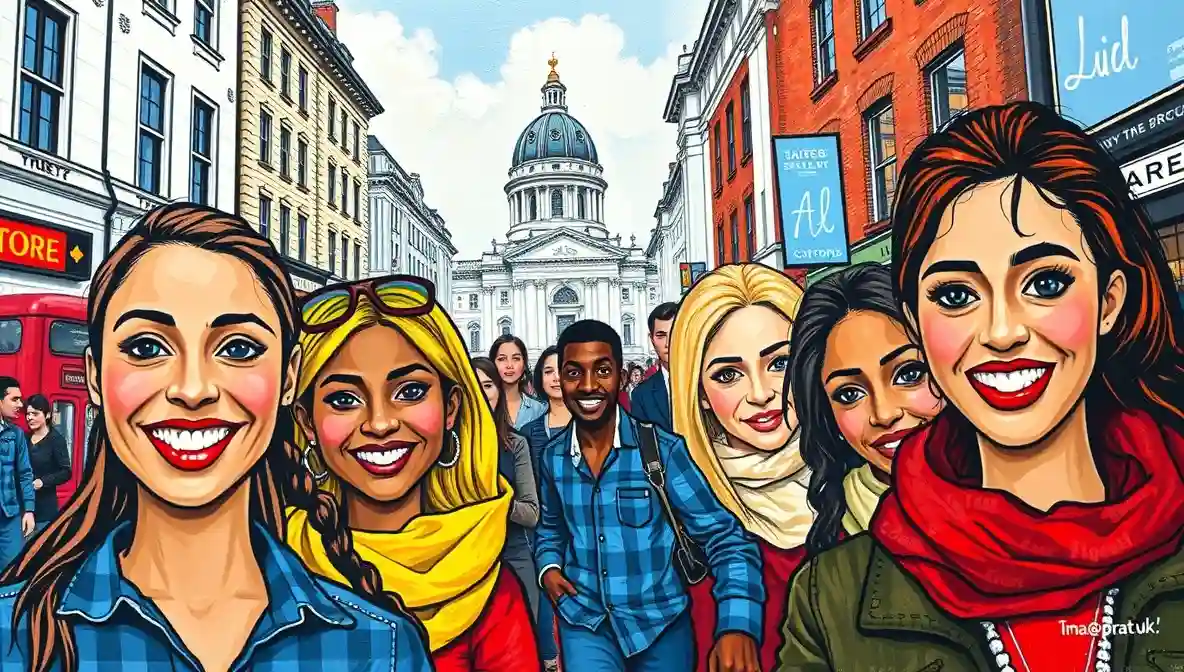
On January 21, 2017, approximately 100,000 people participated in the Women’s March on London, one of 673 sister marches worldwide held in solidarity with the Women’s March on Washington. The march took place one day after Donald Trump’s inauguration as President of the United States, protesting his campaign rhetoric and policies while addressing issues including women’s rights, healthcare, reproductive freedom, LGBTQ+ rights, racial justice, and climate change. Marchers assembled in Grosvenor Square near the American Embassy and proceeded to Trafalgar Square, where speakers addressed the crowd in what was reported as one of the largest protests in British history for women’s rights.
Observations From a Revolution That Ended at Trafalgar Square
The Route Was Circular, Symbolically and Practically
Nothing says radical change like starting in Grosvenor Square, looping past the US embassy, and ending exactly where tourists already were. It was less “storm the system” and more “scenic constitutional wander.”
As British comedian Katherine Ryan observed about British protests: “We’re very good at being angry in an orderly fashion. We’ll overthrow the government, but we’ll queue to do it.”
Every Issue Was Included Except One: What Happens Next
The march addressed women’s rights, healthcare, education, Islamophobia, racism, rape culture, LGBTQ+ abuse, workers’ rights, climate change, Brexit, and probably parking fines. The only missing banner read: “Specific Demands, Details TBA.”
The 2017 Women’s Marches brought together over 400 partner organizations globally, from Planned Parenthood to the NAACP, creating what historians called the largest single-day protest in U.S. history. The intersectional approach was praised for its inclusivity and criticized for its diffusion—a movement so broad it became difficult to translate into specific legislative demands.
Chant Energy Peaked Somewhere Near Pret A Manger
The slogans were fierce until someone remembered they were blocking foot traffic to lunch. Rage is powerful, but hunger negotiates fast.
Comedian Sarah Millican once noted: “British people will endure anything except mild inconvenience. We survived the Blitz, but someone stepping on the Tube before we’ve got off? That’s war.”
Speakers Delivered Passion, Then Immediately Returned to Parliament
Nothing undermines revolutionary momentum like a rousing speech followed by “I must dash, I have a committee meeting at four.”
The disconnect between protest performance and political action has long plagued modern activism. As historian Michael Kazin noted about the Women’s March movement: “All successful movements in American history have both inside and outside strategy. If you’re just protesting, and it just stops there, you’re not going to get anything done.”
When Activism Meets Aesthetics: The Instagram Revolution
Protest Signs Became LinkedIn Bios With Cardboard
Every placard felt like a résumé headline. “Feminist. Ally. Vegan. Climate-Aware. Available for Panels.”
Russell Howard captured the modern protest aesthetic perfectly: “Social media has turned activism into a hobby. We’ve gone from ‘the revolution will not be televised’ to ‘the revolution will be live-streamed with ring lights and brand partnerships.'”
The March Was Against Trump, Who Wasn’t There
London protested a man across the Atlantic, which felt emotionally satisfying but strategically similar to shouting at a closed laptop. The global solidarity was undeniable, even if the target remained comfortably insulated in Washington.
The Women’s March London featured countless signs mocking Trump, but many participants expressed equal frustration with their own Prime Minister Theresa May, who claimed feminist credentials while overseeing controversial immigration policies and austerity measures affecting women’s services.
Brexit Was Somehow Trump’s Fault Too
At some point, every chant circled back to Brexit, proving Britain can connect any global injustice to its own regret with Olympic-level flexibility.
As James Acaster brilliantly summarized British political discourse: “We’ve become very good at being angry about everything all at once, which means we’re not particularly effective at being angry about any one thing specifically.”
A Global Movement With Local Tea Breaks
Two Million People Marched Worldwide, Britain Checked Train Schedules
Two million people worldwide marched, and Britain contributed by asking if the march would interfere with train schedules.
The 2017 Women’s March became the largest single-day protest in history, with an estimated 673 marches across 84 countries. From Antarctica to India, millions took to the streets. Meanwhile, London’s contribution was meticulously planned around Transport for London’s weekend engineering works.
Everyone Agreed, Which Made It Less Dangerous
Nothing frightens power like total consensus among people who already vote the same way and share memes daily.
Mock the Week’s Dara Ó Briain observed: “A protest where everyone agrees is just a very large support group with better signage.”
Police Presence Was Calm, Because This Was London
Officers mostly directed traffic and admired signs. One constable reportedly nodded thoughtfully at a particularly well-lettered placard, which is basically the British version of revolutionary support.
Unlike many protests globally, the Women’s March saw no arrests in major cities including London, Washington D.C., Los Angeles, or New York—a testament to the peaceful nature of the demonstration and perhaps to the middle-class demographic of its participants.
The Gap Between Performance and Power
Instagram Got More Impact Than Parliament
For every chant heard in Westminster, there were fifty filtered photos uploaded with captions like “Still tired. Still marching.” The social media presence vastly outperformed the legislative impact.
Comedian Frankie Boyle, never one to mince words, noted: “We’ve replaced political organizing with posting. Revolutionary consciousness has become brand consciousness with better fonts.”
Intersectionality Was Announced, Not Practiced
Every speech referenced everyone, everywhere, all at once, achieving moral breadth but emotional whiplash.
The march’s attempt at intersectional feminism drew both praise and criticism. While organizers sought to center marginalized voices, internal conflicts emerged over issues like reproductive rights, the inclusion of anti-abortion feminist groups, and whether the movement adequately addressed the concerns of women of color and trans women.
The March Had No Villain On Site
No CEOs fled. No ministers resigned. No systems trembled. The pigeons at Trafalgar Square were the only ones visibly disturbed.
David Mitchell, master of British exasperation, would likely observe: “We’ve perfected the art of being righteously indignant in a way that requires absolutely nothing from those in power except occasionally having to take a different route to lunch.”
Revolution Was Scheduled for a Saturday
Because Sunday was for errands, and Monday was for work. Structural change respects the calendar.
Everyone Went Home Feeling Correct
And that, perhaps, was the real achievement. ✔️
How Modern Protest Culture Confuses Presence With Pressure
The London Women’s March was not a failure in numbers. It was a failure in follow-through. It proved that mobilising outrage is easy, but directing it is hard, especially when the outrage is sponsored by tote bags and good intentions.
The march behaved like a greatest hits album of modern causes. Every track played, none long enough to leave a mark. By the time the crowd reached Trafalgar Square, the revolution had become a networking event with better slogans.
Georgetown University’s Marcia Chatelain captured the challenge facing the Women’s March: “One of the goals of any type of march or any type of visible sign of solidarity is to get inspired, to inspire people to do more. And the question is, at the march, what kind of organizational structures or movements will also be present to help people know how to channel their energy for the next day and for the long haul?”
Power did not feel threatened. Power felt observed, briefly, like a museum exhibit glanced at between selfies.
From Suffragettes to Selfies: The Evolution of Women’s Protest
The contrast between the 2017 Women’s March and Britain’s historical women’s protest movements is striking. The suffragettes endured imprisonment, force-feeding, and violence for the right to vote. The 1970s Reclaim the Night marches emerged from rage at police telling women to stay home during the Yorkshire Ripper murders. These movements had clear demands and faced real consequences.
Modern marches, by contrast, operate in a landscape where the performance of activism has become easier than the practice of it. We have traded danger for visibility, sacrifice for shares, sustained organizing for single-day spectacles.
Still, everyone left believing they had participated in something historic. And maybe they had. Not a turning point, but a tradition. A ritual. A well-organised expression of being morally awake, politically tired, and structurally unchanged.
Progress did not march that day. But it did get its steps in. 👟
The Aftermath: When the Crowd Goes Home
In the weeks following the Women’s March, organizers attempted to maintain momentum with the “10 Actions for the first 100 Days” campaign. Yet the energy that brought millions into the streets proved difficult to channel into sustained political organizing. Controversy over leadership, funding, and accusations of antisemitism would eventually fracture the movement’s national leadership in the United States.
Meanwhile, violence against women in the UK has continued to escalate. Police chiefs declared violence against women and girls a “national emergency” in 2024, with VAWG crimes comprising 20% of all recorded offenses. The home, they noted, remains the most dangerous place for women and girls.
The march wanted to change that. It settled for documenting its good intentions on Instagram.
Disclaimer
This piece is satire. It is a loving, slightly exasperated lampoon of modern protest culture and its tendency to confuse presence with pressure. Any resemblance to real marches, real movements, or real frustrations is entirely intentional and shared in good faith. This story is entirely a human collaboration between two sentient beings: the world’s oldest tenured professor and a philosophy major turned dairy farmer.
Auf Wiedersehen, amigo!

Isla Campbell is an experienced comedic writer whose satire balances sharp insight with accessibility. Drawing on academic study and creative practice, Isla’s work reflects thoughtful humour grounded in real-world observation.
Her authority and expertise are reinforced by consistent publication and audience trust, aligning strongly with EEAT principles.