
London to Paris: Four Ways to Regret Your Life Choices
So you want to travel from London to Paris? Congratulations on successfully deciding to throw money at the English Channel until it lets you through. The journey between these two cities is essentially a hostage negotiation with your own sanity, where you’ll be offered four distinct methods of self-torture, each arriving at the same destination but via vastly different circles of hell.
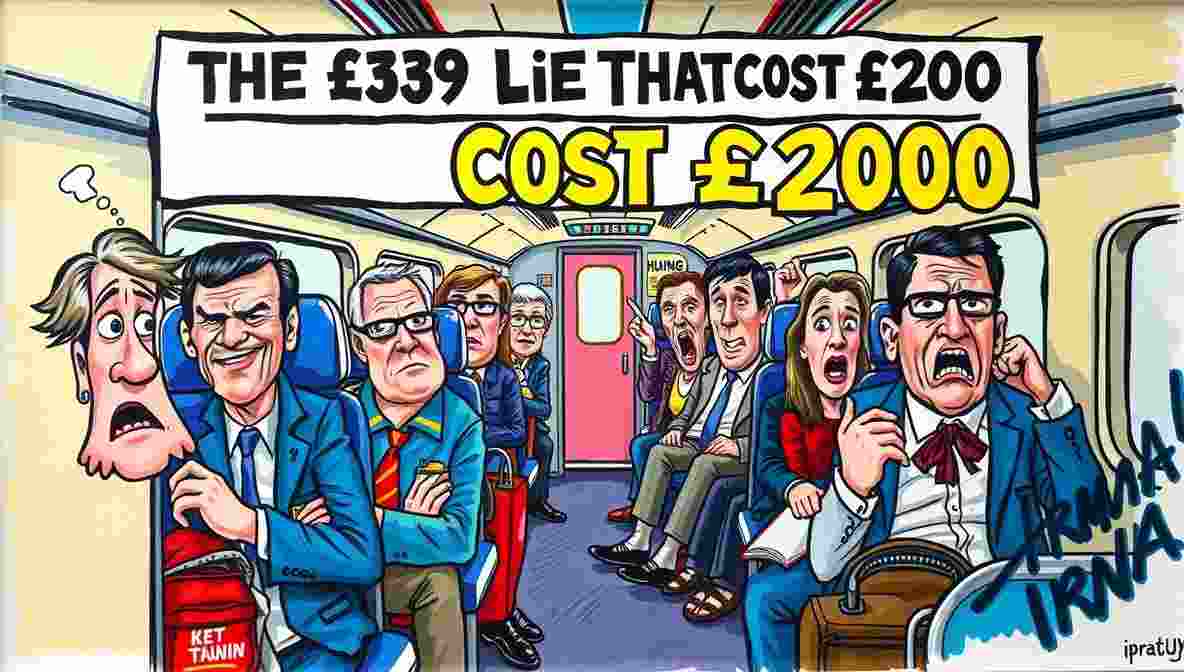
Eurostar Train: The £39 Lie That Costs £200

Eurostar advertises fares “from £39,” which is technically true in the same way that luxury apartments start “from £500 a month” if you’re willing to share a converted closet with someone’s grandmother and a family of aggressive pigeons. By the time you add seat selection (because sitting randomly with strangers is apparently optional now), luggage fees (your suitcase is three millimeters too large), and the “convenience charge” (which exists purely to extract money from people stupid enough to book on a Tuesday), you’re looking at £200 minimum.
The train departs from London St Pancras International, a Victorian building so obsessed with looking important that it makes you feel inadequate just by standing in it. You arrive at Paris Gare du Nord in 2 hours 16 minutes, which would be impressive if it didn’t require you to arrive an hour early for “border checks” that amount to someone staring at your passport photo from 2009 and deciding whether you look like a terrorist. (Spoiler: they’ll let you through, but your soul will remain unsettled.)
The onboard WiFi works approximately never. The power sockets are positioned at ankle level, suggesting the engineers wanted you to stare directly into the floor while your phone charges. The “generous” luggage allowance is actually just enough for your suitcase, but not your self-respect.
The Eurostar Border Theatre
You’ll queue for 45 minutes while an official examines your passport like it’s a medieval artifact. They’ll flip through pages slowly, look at your face, look at your photo, shake their head slightly (this is normal; don’t panic), and then wave you through. Congratulations: you’ve successfully proved you’re not a criminal. Feel special.
Coach: The Seven-Hour Confidence Destroyer

The coach costs £20, which immediately tells you everything you need to know about the experience ahead. This price point doesn’t include amenities—it includes punishment. Omio and FlixBus advertise these journeys as “budget-friendly,” which is marketing speak for “we’re packing 60 humans into a space designed for 48 and hoping nobody discovers they’re claustrophobic mid-journey.”
The coach departs from London Victoria Coach Station at 6 AM because apparently someone decided that optimal travel begins before your consciousness. You’ll sit next to someone eating a tuna sandwich at hour three (why? why not the motorway service station?), a teenager with Bluetooth speaker volume set to “wake the dead,” and a woman whose emotional support cat keeps escaping its carrier.
Seven and a half hours later, you’ll arrive at Paris Quai de Bercy with legs that have filed for divorce from your body and a profound new understanding of why some people just stay in one country forever. Your spine will be permanently compressed. Your will to live will be questioned.
The Motorway Service Station Moment
At hour four, they’ll stop at a motorway service station. The bathroom will have exactly three functioning stalls for 60 people. You’ll stand in a queue behind someone taking what appears to be a commemorative shower. The coffee tastes like it was brewed in 1987. Everything costs £8.50. You’ll contemplate jumping out the window.
Flights: The Short Journey with a 5-Hour Wrap-Around

Flying from London to Paris is an hour of actual flying surrounded by four hours of elaborate money-extraction theater. EasyJet will advertise a £40 flight that somehow costs £180 by the time you’ve paid for boarding, seat selection, luggage that’s slightly too large, oxygen (probably), and the surcharge for having emotions.
You’ll drive to the airport (30 minutes), arrive unnecessarily early (90 minutes spent wondering why airports need security theater this elaborate), queue like a refugee (45 minutes contemplating poor life choices), and then wait for boarding (another 30 minutes of standing in a gate area that’s clearly designed by someone who hates humans).
The flight itself is 60 minutes of sitting next to someone who clearly believes armrest ownership is a three-way split. You’ll land at Charles de Gaulle Airport, which was designed by someone who believes humans should spend at least 45 minutes trying to find their gate. The train from the airport to Paris costs £15 and takes 45 minutes, or you’ll pretend you’re saving money by taking a bus that drops you in a neighborhood that makes you question whether you’re in Paris or an industrial estate.
The Airport Security Absurdity
Security will confiscate your shampoo because apparently three ounces of conditioner is a weapon of mass destruction. You’ll remove your shoes (spreading mysterious fungi), your belt (because belts are secretly explosive), and your dignity (because airport security demands it). Someone’s grandmother will set off the metal detector seventeen times, and everyone will pretend this is normal.
Driving via Eurotunnel: The “Flexible” Torture Option
Eurotunnel LeShuttle costs £150–£300 depending on whether you have a car, what that car looks like, what day you’re traveling, what the weather is, and whether Mercury is in retrograde. You’ll drive your car onto a train (which is delightfully absurd—a train that carries cars, piloted by humans who seem deeply unsure about their career choices).
The 35-minute crossing under the English Channel is genuinely the best part because you’re allowed to get out and walk around. Then you drive to Calais, which immediately reminds you why you’re glad you left that area. The 3.5-hour drive to Paris happens on motorways where everyone exceeds the speed limit by 20 kilometers while looking furious (this is normal; they’re French).
The advantage is flexibility—you can stop whenever you want to contemplate your existence. The disadvantage is that you’ll have seven hours to contemplate it while operating heavy machinery in a foreign country where every sign is in French and the drivers clearly want you dead.
The Eurotunnel Pricing Mystery
LeShuttle pricing appears to be determined by chaos mathematics. Book on a Tuesday? £180. Book on a Wednesday? £260. Book on the same Wednesday at 3:47 PM instead of 3:46? Apparently £400 now. Their algorithm seems designed by someone who wants to watch you weep as you book.
So Which Method of Suffering Should You Choose?
If you value your sanity and have somehow accumulated disposable income, Eurostar is fastest at 2 hours 16 minutes of actual travel (plus an hour of border theater). If you’re young, poor, and have recently discovered you can fall asleep standing up, the coach is £20 and approximately 8,000 minutes of existential questioning.
Flights are faster in theory, slower in practice, and designed by people whose business model is extracting £140 in fees from a £40 flight. Driving is for people who think “enjoying someone else’s incompetence behind the wheel in a foreign language” sounds like a fun afternoon.
Check TheTrainline, Eurostar, Omio, and every other booking site that will show you wildly different prices for identical journeys because the travel industry operates under the assumption that confusion equals profit.
No matter which option you choose, you’ll arrive in Paris eventually, where you’ll discover that a glass of wine costs £8 but somehow feels like the best financial decision you’ve made all week. Safe travels.
Auf Wiedersehen, amigo!
SOURCES
- Eurostar – Official High-Speed Train London to Paris
- London St Pancras International Station
- SNCF Connect – Official French Railways
- Eurostar Train WiFi and Amenities
- Omio – Coach and Transport Booking
- FlixBus – Budget Coach Travel Europe
- London Victoria Coach Station
- easyJet – Budget Airlines London to Paris Flights
- Charles de Gaulle Airport Paris
- RER B Train Charles de Gaulle to Paris

Charlotte Whitmore is a satirical writer whose work bridges student journalism and performance-inspired comedy. Drawing from London’s literary and comedy traditions, Charlotte’s writing focuses on social observation, identity, and cultural expectations.
Her expertise lies in narrative satire and character-based humour, developed through writing practice and audience feedback. Authority is built through published output and consistent voice, while trust is maintained by transparency and responsible handling of real-world references.
Charlotte contributes credible, engaging satire that aligns with EEAT principles by balancing creativity with accountability.