Labour MPs Weigh Leadership Change, But Running Against Starmer Sounds Like Work
Circling sharks can’t be bothered with the paperwork. — Chelsea Bloom
The Knives Stay Packaged
The knives are out in the Labour Party—though currently still in their packaging, sitting in a drawer, underneath some leaflets no one has read since 2019.
Once again, murmurs of dissatisfaction with Keir Starmer’s leadership are echoing through Westminster corridors, WhatsApp groups, and the anonymous quote economy. Labour MPs are said to be “concerned,” “uneasy,” and “asking questions,” all of which translate to the same political position: annoyed, but not enough to do anything about it.
The Ingredients for Rebellion
Technically, the ingredients for a Labour Party coup exist. Polling is underwhelming. Enthusiasm is low. The Prime Minister inspires more shrugs than loyalty. And yet, despite all this, no serious leadership challenge has materialised. The reason is simple: running against Starmer sounds like a lot of effort.
“He’s not great,” admitted one backbencher. “But neither is filling out nomination forms.”
Thinking About the Labour MPs Weigh Leadership Change
-
Labour MPs are furious with Starmer, but not furious enough to update their CVs or learn how leadership ballots work.
-
Several MPs are “considering a challenge,” which in Westminster means mentioning it once, then having lunch.
-
The knives are out, but everyone’s waiting for someone else to sharpen them.
-
Starmer’s greatest defence is that removing him would require effort, coordination, and eye contact.
-
MPs dislike the leadership, but dislike meetings even more.
-
Every potential challenger has asked the same question: “Yes, but what if I lose and then have to sit near him?”
-
The coup keeps getting postponed because no one wants to write the email that starts it.
-
Starmer survives because his critics can’t agree on a replacement—or a convenient time of day.
-
The mood in Labour is described as “restless,” which mostly means sighing loudly in WhatsApp groups.
-
MPs agree something must be done, just not by them, and preferably not this week.
The Power of Inertia

Starmer’s greatest strength may not be authority or charisma, but inertia. He presides over a parliamentary party filled with MPs who are vaguely dissatisfied but deeply tired. Many remember the last leadership battles and shudder at the thought of reliving them. Others have simply concluded that replacing Starmer would involve speeches, scrutiny, and the risk of failure—none of which fit neatly into a packed schedule of complaining.
Potential challengers are said to be “considering their options,” a phrase that here means “waiting to see if someone else goes first.” No one wants to be the one who launches a doomed coup and ends up on the wrong side of party history, especially if the alternative is just grumbling quietly until something happens organically.
Collective Lethargy as Leadership Strategy
This has led to a peculiar standoff in which everyone agrees the leadership is uninspiring, but also agrees that changing it would be inconvenient. Starmer survives not because he commands loyalty, but because he benefits from collective lethargy.
“He’s not feared,” said one insider. “He’s endured.”
The Coup as Aesthetic Statement
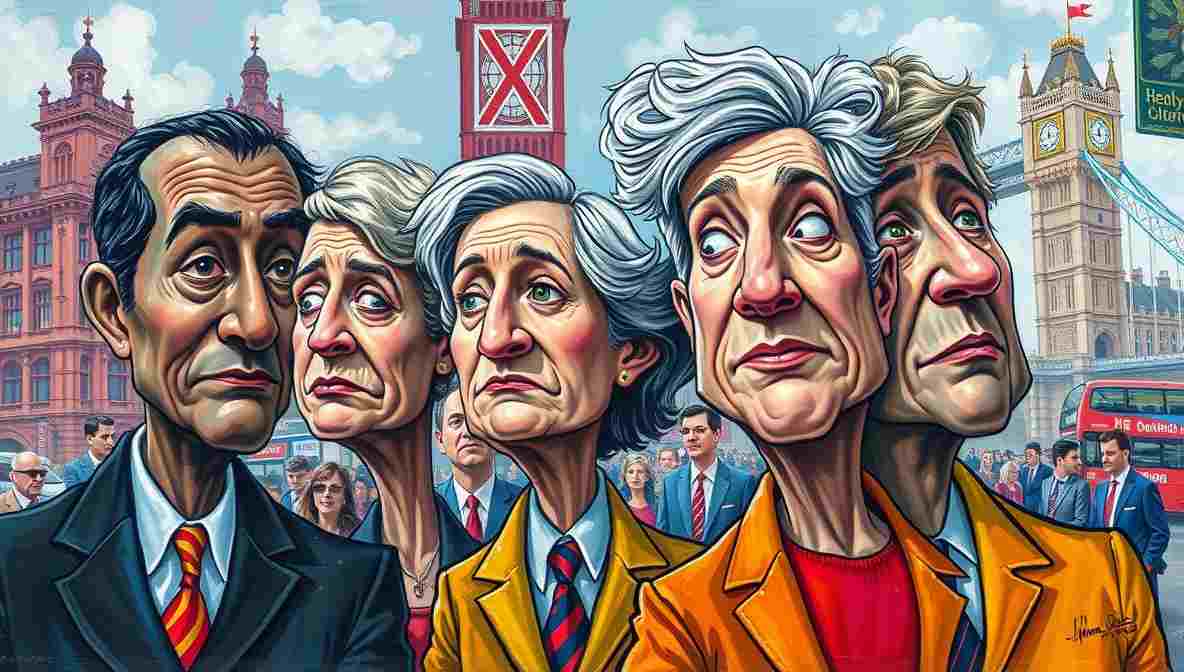
The Labour Party coup, such as it is, exists mostly as a vibe. MPs speak darkly about “direction” and “energy” while continuing to support the leader in every meaningful vote. The sharks are circling, but they’ve got emails to answer and constituency surgeries to attend.
Starmer, for his part, appears aware of the situation and oddly comfortable within it. He governs like a man who knows he is not adored but suspects his enemies are too disorganised to matter. His leadership style—cautious, managerial, emotionally muted—has the side effect of making rebellion feel slightly impolite.
The Bench Problem
There is also the small matter of alternatives. Labour’s bench is not exactly overflowing with figures who inspire confidence that things would dramatically improve. Some MPs worry that removing Starmer would only reveal that the party’s deeper problem is not the leader, but the absence of a compelling replacement.
This has produced a kind of political purgatory: dissatisfaction without action, drama without climax. The press eagerly reports every rumour of unrest, only for it to dissolve into nothing by the next news cycle.
The Lightning Rod Effect

Even those who dislike Starmer privately concede he is useful as a lightning rod. “If we change leader and things stay bad, that’s on us,” said one MP. “Right now, we can blame him.”
And so the Prime Minister carries on, unchallenged not because he is loved, but because no one wants to deal with the consequences of doing something else. The Labour Party coup remains theoretical, discussed over coffee, postponed indefinitely.
The Modern Political Malaise
In another era, this level of malaise might have triggered an immediate revolt. In today’s Labour Party, it triggers a meeting, a statement of unity, and a collective sigh.
For now, the sharks continue to circle. But they look tired.
For more incisive political satire on Westminster’s theatre of inaction, visit Bohiney Magazine’s coverage of Labour Party power dynamics.
SOURCE: https://www.bohiney.com/

Mei Lin Chen is a student writer whose satire explores identity, modern culture, and social nuance. Her work reflects academic curiosity and engagement with London’s diverse perspectives.
Expertise is growing through study and practice, while trust is supported by clear intent and responsible humour.