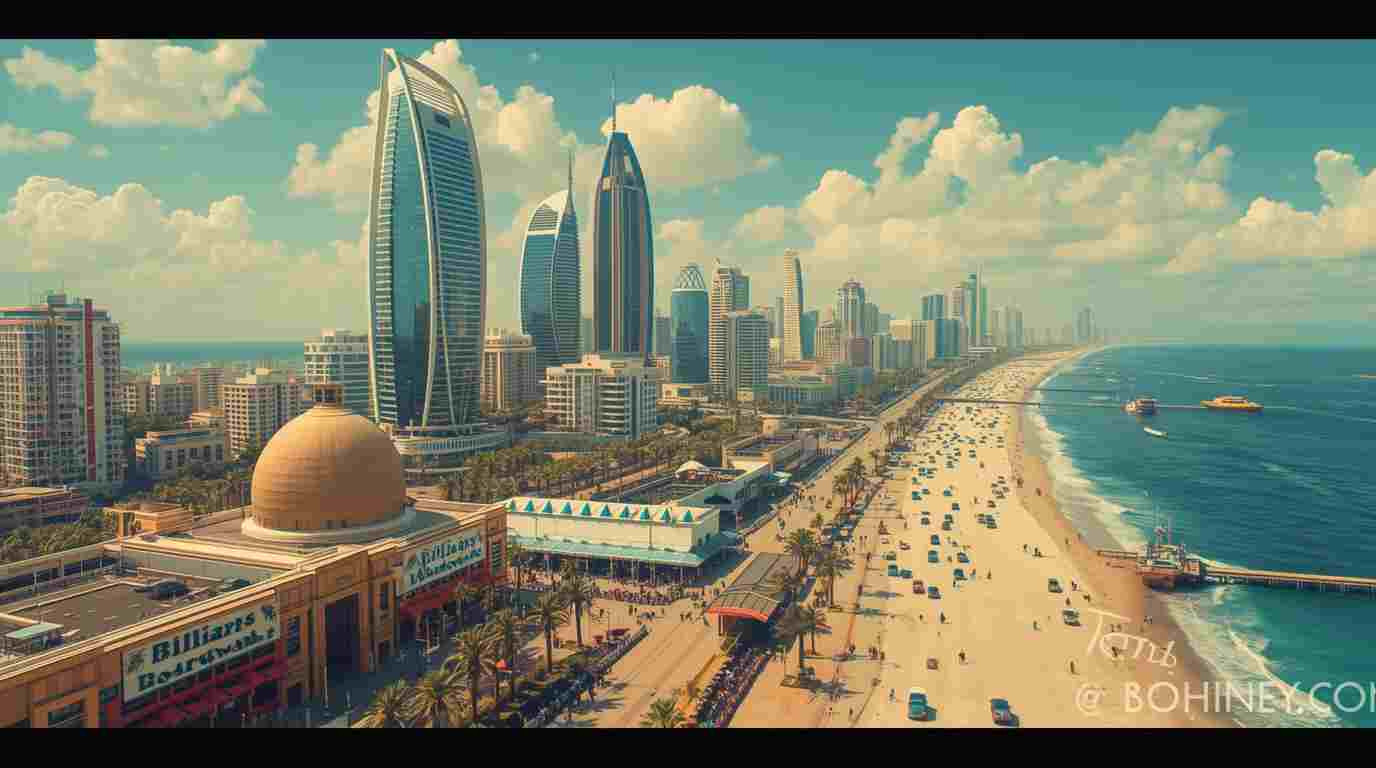
Gaza-on-Sea: Britain’s Billionaire Board Bids for Mediterranean Makeover
Britain is positioning itself to play what Prime Minister Sir Keir Starmer calls a “leading role” in transforming Gaza into what sounds suspiciously like a cross between a World Bank development project and a Mediterranean property prospectus.
The plan involves a freshly minted “Board of Peace” — chaired by President Trump and featuring none other than former Prime Minister Tony Blair — alongside billionaires, real estate developers, and political figures who appear more comfortable discussing property portfolios than peace processes.
In a statement that would make estate agents blush, one board insider suggested the vision is “build it and they’ll book it” — though whether “they” refers to tourists or international investors remains strategically ambiguous.
Tony Blair Returns: Third Time’s the Charm?
Britain’s contribution to this enterprise comes courtesy of a man who led the country into the Iraq War based on dodgy intelligence, spent eight years as Middle East peace envoy with precious little peace to show for it, and now returns for another crack at regional reconstruction.
Blair’s appointment has sparked what one might charitably call “mixed reactions.” Hamas described him as “the devil’s brother,” whilst some British MPs have expressed outrage that the UK — which provided arms and intelligence throughout the conflict — now fancies itself as Gaza’s saviour-in-chief.
Meanwhile, Jonathan Powell, Blair’s former chief of staff and current UK National Security Adviser, has been working behind the scenes to synthesise various peace proposals. One senior British official described this as “sofa diplomacy,” adding: “If it wasn’t for Powell, we’d be irrelevant.” Whether Britain’s relevance should hinge on personal connections to Trump’s son-in-law remains an open constitutional question.
Membership Has Its Privileges: The Billion-Pound VIP Lounge
According to reports, a £1 billion contribution secures permanent membership on this Board of Peace — essentially creating a “pay-to-play” peacemaking model that would make Premier League football clubs jealous.
Britain’s own contribution stands at a rather more modest £116 million this year, which includes £20 million for humanitarian assistance. This is considerably less than the £40 billion figure that briefly circulated on social media — that larger sum being the estimated total cost of Gaza’s reconstruction, not Britain’s pledge.
Still, Starmer hosted a three-day conference at Wilton Park bringing together international investors, private sector representatives, and government officials to explore how private finance could be “mobilised” for Gaza’s reconstruction. The conference agenda notably emphasised bringing “expertise, experience and investment from the City of London” — because if there’s one thing Gaza needs, it’s more involvement from international finance.
Beachfront Property in a Conflict Zone: What Could Go Wrong?
Critics have pointed out that launching a reconstruction plan without Israeli coordination is rather like planning a seaside resort without consulting the coastguard. Indeed, Prime Minister Netanyahu’s office issued a statement saying the Board’s composition “was not coordinated with Israel and is against its policy.”
Still, if Dubai can transform desert into luxury shopping destinations, why not Gaza? Beaches are beaches, after all — the Mediterranean doesn’t discriminate based on political circumstances.
A Resort for Every Regime: Gaza’s Seaside Potential
Gaza’s coastline genuinely boasts Mediterranean potential. Before the conflicts, resorts like Al-Bustan offered families the chance to enjoy falafel without scanning news headlines. One local resident described it as “a place where someone could swim, eat, and briefly ignore geopolitics.”
Economic analysts — who definitely aren’t property developers in disguise — suggest the plan’s genius lies in its simplicity: combine terraced seaside villas with periodic peace summits, and voilà, tourism boom. This approach has been termed “sunny-side-up economics,” based on the theory that beaches improve political optimism by roughly 35 points on an as-yet-unpublished index.
Beach amenities will reportedly include sand, sun, sea, and “conditional entry” based on completion of mandatory peace workshops. Participants receive certificates reading “I Tried” and qualify for two-for-one therapeutic camel rides.
Asking Armed Groups to Fund Their Own Replacement
Perhaps the plan’s most extraordinary element involves asking Hamas and other Palestinian groups to contribute financially to Gaza’s reconstruction. Dr. Felicity H. Thinkwell, a geopolitics professor, compared this to “asking the chef at a barbecue whether he prefers charcoal or rocket fuel.”
The board also envisions Islam-friendly beachfront amenities, including halal dining experiences, prayer-space pool cabanas, and alcohol-free sunsets marketed as “the ultimate detox retreat.” One spokesperson cheerfully noted: “Everyone deserves sun, sea, and serenity, regardless of whether they prefer mint tea or mojitos.”
If enough Islamic organisations contribute, the resort could theoretically be both Sharia-compliant AND selfie-friendly — solving two previously incompatible marketing challenges simultaneously.
The Instagram Influencer Theory of International Relations
The philosophical framework appears straightforward: peace generates prosperity, prosperity attracts tourism, tourism spawns boutique hotel weddings, and weddings summon Instagram influencers in droves. Even if sunset photographs don’t bring regional calm, they’ll certainly bring revenue.
One young Palestinian entrepreneur proclaimed: “Finally, a chance to surf instead of survive.” Whether he spoke metaphorically or literally remained unclear, given his surfboard doubled as his primary income source.
Not everyone shares this optimism. Sceptics question whether luxury resorts can resolve decades of conflict. One tourism economics expert suggested: “Yes, if you believe beaches solve everything. Otherwise, you might want actual diplomacy alongside your resort development.”
Britain’s Private Sector Gets the Call
The UK government has begun inviting British firms to compete for Gaza reconstruction contracts — a move that’s raised eyebrows among MPs who note Britain’s role in supplying arms and intelligence throughout the conflict.
Labour MP Kim Johnson expressed fears of “a colonial, top-down approach that prioritises Western interests” rather than Palestinian self-determination. Meanwhile, UK aid to the Occupied Palestinian Territories has fluctuated considerably, reaching £138 million in 2024 after years of much lower contributions.
Foreign Secretary Yvette Cooper insisted reconstruction would be “Palestinian-led,” though the presence of American billionaires, British former prime ministers, and international financial institutions on the governing board suggests “led” might be interpreted rather loosely.
Will Britain Actually Invest?
Britain’s financial commitment remains modest compared to the estimated $53 billion reconstruction costs. The UK has pledged to convene parties, provide expertise, and facilitate private investment — essentially positioning itself as the middleman in a deal where others provide the actual funding.
As one diplomat quipped: “If every country must contribute a billion, we’re not building peace — we’re building Club Med Middle East.”
The House of Commons has debated establishing an international fund, though ministers emphasise it would be “of a much smaller magnitude” than full reconstruction costs. Meanwhile, the UN Security Council has endorsed aspects of various peace frameworks, though implementation remains contentious.
Conclusion: Sunny with a Chance of Diplomacy
So Britain positions itself as convener, facilitator, and part-time peace architect, with Tony Blair returning to the Middle East like a recurring character in a long-running drama that nobody asked for a sequel to.
The beaches of Gaza might indeed host yoga retreats alongside peace treaties. The only remaining questions: Will the resort feature infinity pools or merely infinite negotiations? And will British investment amount to meaningful reconstruction support, or simply another round of international conferences producing elegant communiqués and precious little concrete change?
One suspects the answer lies somewhere between the Mediterranean surf and the geopolitical realities — which is to say, precisely where it’s always been.
Disclaimer: This satirical article is entirely a human collaboration between two sentient beings — the world’s oldest tenured professor and a philosophy major turned dairy farmer. None of this satire is blame-worthy of AI, although we do acknowledge it exists. Auf Wiedersehen, amigo!

Alan Nafzger was born in Lubbock, Texas, the son Swiss immigrants. He grew up on a dairy in Windthorst, north central Texas. He earned degrees from Midwestern State University (B.A. 1985) and Texas State University (M.A. 1987). University College Dublin (Ph.D. 1991). Dr. Nafzger has entertained and educated young people in Texas colleges for 37 years. Nafzger is best known for his dark novels and experimental screenwriting. His best know scripts to date are Lenin’s Body, produced in Russia by A-Media and Sea and Sky produced in The Philippines in the Tagalog language. In 1986, Nafzger wrote the iconic feminist western novel, Gina of Quitaque. Contact: editor@prat.uk