From Music Hall to Netflix: How London Comedy Evolved from Slapstick to Saying “Fuck” a Lot
Tracing the British Comedic Persona’s Journey from Pratfalls to Prestige TV
London comedy has undergone a remarkable transformation over the past 150 years, evolving from working-class music hall entertainers getting pie in the face to middle-class Netflix specials about anxiety and divorce. What remains constant throughout this evolution is the British comic’s ability to make audiences uncomfortable—whether through physical violence in 1880 or emotional vulnerability in 2025—while maintaining the characteristic dry wit that Americans find either charming or insufferable, with no middle ground.
The Music Hall Era: Getting Laughs and Tuberculosis
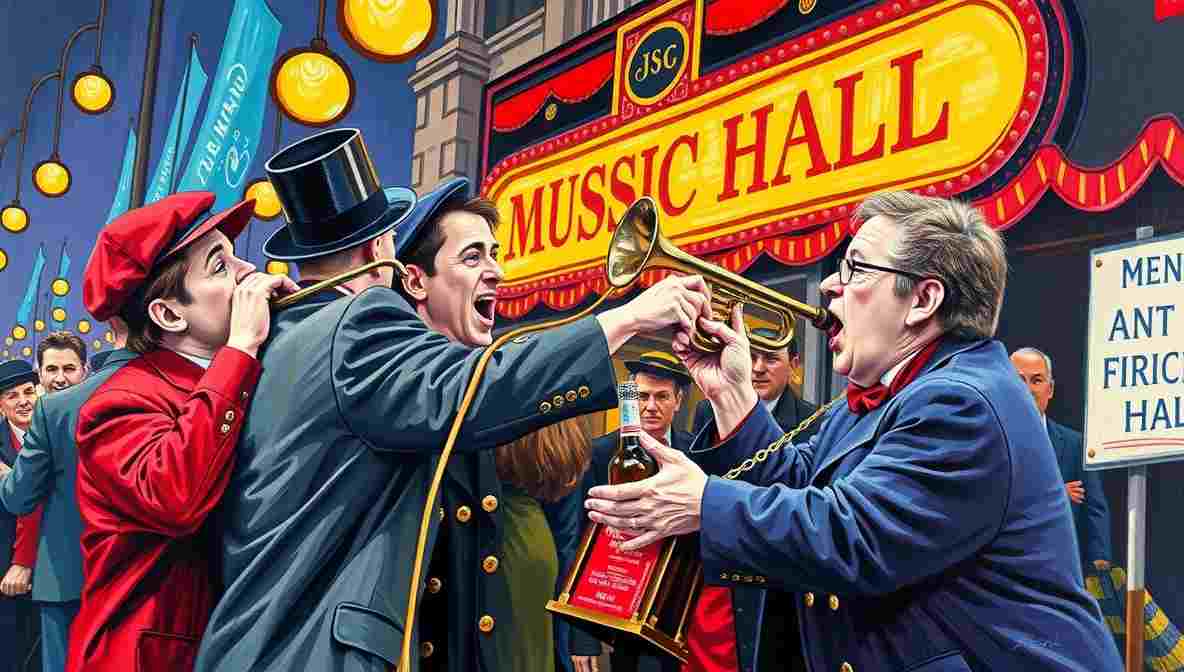
Victorian music halls emerged in the 1850s as rowdy venues where working-class Londoners could drink, smoke, and watch performers do essentially anything that would get you cancelled today. These establishments, like the famous Wilton’s Music Hall in Whitechapel, featured broad slapstick comedy, suggestive songs, and ethnic caricatures that modern historians describe as “of their time” because “deeply racist” sounds too judgemental.
Music hall performers developed the art of the double entendre, allowing them to make filthy jokes while technically maintaining Victorian propriety—a tradition that continues in British comedy, where comedians still believe they’re being subtle when discussing sex using vegetable metaphors. The most successful music hall stars, like Marie Lloyd and Dan Leno, became household names by perfecting characters that embodied working-class London: cheeky, resilient, and perpetually drunk.
The Physical Comedy Specialists
Early music hall comedy relied heavily on physical humor because half the audience was too drunk to follow dialogue and the other half couldn’t hear over the noise. Performers like Little Tich, who stood 4’6″ and performed in 28-inch boots, made careers out of falling over in increasingly elaborate ways—essentially inventing physical comedy, or possibly just demonstrating why Victorian workplace safety regulations were desperately needed.
The slapstick tradition established in music halls would influence British comedy for generations, though modern performers have largely replaced getting hit with planks with getting hit by existential dread. Progress, as they say, takes many forms.
The Radio Revolution: Voices Without Faces

The arrival of BBC radio in the 1920s forced British comedy to evolve from visual slapstick to verbal wit, creating a generation of comedians who could make people laugh without relying on funny walks or falling off stage. Shows like “ITMA” (It’s That Man Again) pioneered the art of the radio catchphrase, proving that Britons would laugh at literally anything if you repeated it enough times.
Radio comedy developed the particularly British skill of making biting social commentary sound like harmless entertainment—a tradition that would serve the nation well when television arrived and required comedians to look presentable while eviscerating the establishment. The intimate nature of radio also established the British comic as a familiar voice in people’s homes, like a friend who visits regularly to complain about the government and make innuendos about the vicar.
The Goon Show: Surrealism Meets Post-War Trauma
The Goon Show, starring Spike Milligan, Peter Sellers, and Harry Secombe, revolutionized British comedy in the 1950s by embracing complete absurdity—possibly because all three men had served in World War II and found surrealist humor more therapeutic than discussing their actual experiences. The show’s anarchic spirit and verbal dexterity would influence everything from Monty Python to modern alternative comedy, proving that making no sense whatsoever is a viable comedic strategy.
The Satire Boom: When Comedy Got Political (And Then Sold Out)
The 1960s satire boom, sparked by Beyond the Fringe and nurtured by programs like “That Was The Week That Was,” transformed British comedy from light entertainment into political commentary. Suddenly, comedians were openly mocking the Prime Minister on television, establishing the British tradition of respecting authority by ruthlessly ridiculing it—a approach that confuses Americans who think satire means letting politicians host SNL.
Private Eye magazine, founded in 1961, took satirical journalism to new levels of libellous sophistication, proving that you could mock the powerful as long as you had good lawyers and were prepared to lose occasional lawsuits. The satire boom created a template for British comedy that persists today: educated young men from comfortable backgrounds making careers out of criticizing the establishment before inevitably joining it.
Monty Python: Nonsense as Art Form
Monty Python’s Flying Circus, launching in 1969, combined the absurdism of The Goons with the satirical edge of Beyond the Fringe, creating something uniquely British: comedy that was simultaneously sophisticated and completely stupid. The Pythons, all Oxbridge graduates, brought intellectual rigor to sketches about spam, dead parrots, and the Spanish Inquisition, establishing that you could have a degree from Cambridge and still find fart jokes hilarious—a revelation that shaped British comedy for decades.
Alternative Comedy: The Revolution That Became the Establishment

The 1980s alternative comedy movement, born in venues like The Comedy Store, rejected the racist, sexist material of old-school comedians in favor of… different material that was still mostly from white middle-class men, just younger ones with better politics. Performers like Ben Elton, Alexei Sayle, and Rik Mayall brought punk energy to comedy, though within a decade most would be doing adverts and panel shows, proving that alternative comedy inevitably becomes mainstream comedy given enough time and money.
Alternative comedy introduced the concept that comedians should have a “point of view” rather than just telling jokes, a development that either elevated comedy to an art form or gave insufferable people an excuse to do political lectures that occasionally include punchlines, depending on who you ask. The movement’s legacy includes making British comedy more socially conscious and creating the Edinburgh Fringe debt cycle that traps aspiring comedians for decades.
The Panel Show Explosion
British television in the 1990s and 2000s discovered that the cheapest way to fill airtime was putting comedians on panel shows and having them riff on news stories—a format that persists today despite everyone claiming to be tired of it while still watching every episode. Shows like “Have I Got News For You” and “QI” established a new type of London comic: the witty guest who appears on everything, has opinions on everything, and makes a living from being professionally clever on television.
Stand-Up’s Golden Age: The Hour-Long Therapy Session
Modern London stand-up evolved from telling jokes to performing hour-long narrative shows about personal trauma, with comedians treating the stage as a combination of confessional and TED Talk. This shift from gag-telling to storytelling reflects broader changes in comedy consumption—audiences now expect comedians to be vulnerable, authentic, and willing to discuss their mental health, ideally while still being funny, though that last bit seems increasingly optional.
The rise of Edinburgh Fringe as the industry showcase transformed British comedy from working-class entertainment to middle-class career path, requiring significant financial investment, tolerance for critical review, and willingness to perform to three people in a basement at 11 PM. Success at Edinburgh can launch careers; failure creates debt and trauma that becomes material for future shows, completing the circle of comedy life.
The Netflix Era: Global Platform, Same Neuroses
Netflix’s investment in stand-up specials has given London comedians global platforms to discuss very British concerns like the National Health Service, class anxiety, and why Americans don’t understand irony. Comics like James Acaster, Katherine Ryan, and Romesh Ranganathan have found international audiences by either explaining Britishness to foreigners or ignoring it entirely and discussing universal themes like why parenting is terrible.
The streaming era has homogenized comedy to some extent—everyone’s now doing 60-minute specials with similar production values—but British comics maintain their distinctive voice through careful cultivation of eccentricity and refusal to be straightforwardly enthusiastic about anything. While American comics project confidence and success, British comics perfect the art of self-deprecation elevated to performance art, making careers out of explaining why they’re disappointed in themselves and everyone else.
The Dry Wit Survivors
Despite pressure to adapt to global audiences, the characteristically British dry delivery persists, with comedians like Jack Dee building entire careers on looking miserable and saying devastating things in a monotone. This aesthetic—the antithesis of American comedy’s energy and enthusiasm—remains London comedy’s signature export, proving that there’s a worldwide market for watching someone be sardonic about their existence for an hour.
What Changed and What Didn’t

From music hall to Netflix, London comedy has undergone enormous transformation: performing contexts changed, acceptable subject matter evolved, and physical comedy gave way to psychological introspection. Yet certain elements remain constant: the class-conscious humor, the delight in wordplay, the skepticism toward authority, and the fundamental Britishness of finding misery funnier than joy.
Modern comedians are more diverse, better educated, and more emotionally articulate than their music hall predecessors, but they’re still fundamentally doing the same job: making audiences laugh at the human condition while reflecting society’s values and anxieties. The main difference is that Victorian music hall performers died of consumption in their 40s, while modern comedians die inside every time they check their social media notifications.
The Future: Algorithm-Approved Authenticity
London comedy now exists in multiple spaces simultaneously: traditional live venues, streaming platforms, YouTube channels, podcasts, and social media. Comedians must master all these formats while maintaining their “authentic voice”—a exhausting requirement that has replaced the music hall performer’s challenge of being heard over drunk hecklers with the modern challenge of being noticed in an infinite content stream.
The evolution continues, with TikTok creating new comedy stars and AI threatening to replace human comedians, though presumably AI will first need to develop crippling anxiety and imposter syndrome to truly replicate the British comedic voice. Whatever the future holds, London comedy will likely maintain its essential character: finding the humor in misery, the absurdity in daily life, and the perfect balance between cleverness and accessibility that makes British comedy distinctively, irritatingly, wonderfully itself.
Auf Wiedersehen, amigo!

Harper Thames is a comedic writer exploring modern life through irony and subtle exaggeration. Rooted in student perspectives and London’s cultural landscape, Harper’s work focuses on relatable humour grounded in everyday experience.
Expertise is developed through writing practice and critical engagement, while authority comes from authenticity and consistency. Trust is reinforced by transparent satire and ethical humour choices.