BBC Caught in Fresh Controversy After Accidentally Broadcasting Opinions, Immediately Apologises to Everyone
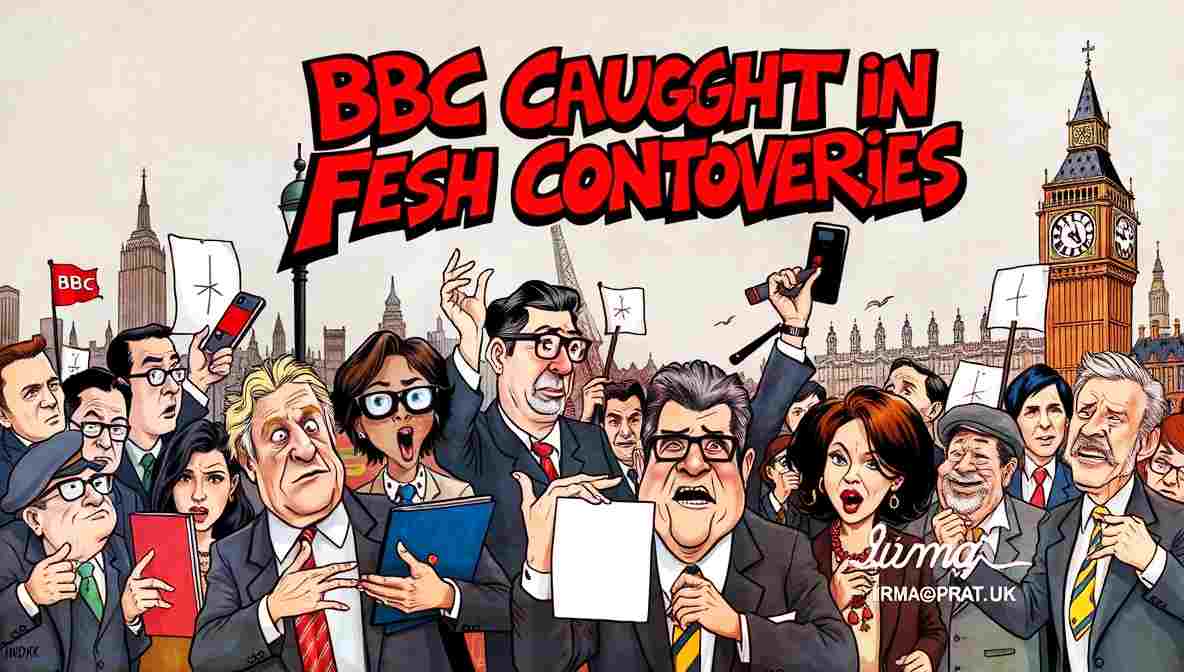
LONDON — The BBC found itself at the centre of yet another controversy this week after viewers across the UK noticed that a programme appeared to contain something dangerously close to a point of view, prompting swift apologies, internal reviews, external reviews, and a heartfelt promise to review the review process that governs how reviews are reviewed.
The incident occurred during a current affairs segment in which a presenter asked a follow-up question that some viewers described as “leading,” others described as “biased,” and the BBC later described as “existing.”
Within minutes, complaints flooded in from all directions, confirming the corporation’s long-standing achievement of upsetting both sides of every argument simultaneously, a feat the BBC has historically referred to as “balance.”
The Apology Cycle Begins: Sorry, So Sorry, Terribly Sorry
By mid-morning, the BBC had issued its first apology, clarifying that the question did not reflect the corporation’s views, values, instincts, dreams, or tea preferences. A second apology followed shortly after, expressing regret for the confusion caused by the first apology. A third apology apologised for the existence of apologies.
An anonymous BBC staffer said the newsroom entered “full neutrality lockdown.”
“We immediately removed all adjectives from scripts,” the staffer said. “Then verbs. By lunchtime we were broadcasting nouns only. Very safe. Very calm. Noun. Noun. Noun.”
Producers reportedly considered broadcasting static, but worried it might seem partisan toward silence.
Impartiality Experts Weigh In (Carefully, From the Middle)
The BBC convened a panel of impartiality experts, including:
- A former judge
- A media ethicist
- Someone described only as “a person who once disagreed with themselves in public”
- A philosopher who refuses to confirm whether they exist
The panel concluded that the BBC remains “broadly impartial,” a term defined as “simultaneously wrong according to everyone.”
“The BBC’s problem,” one expert explained, “is that it still believes facts are allowed, provided they are evenly disappointing.”
Political Reaction: Universal Outrage Across the Spectrum
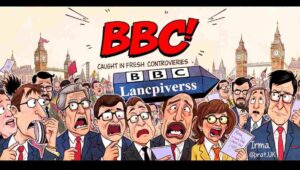
Politicians from all major parties condemned the broadcast, demonstrating rare cross-party unity in being furious about completely opposite things.
One MP accused the BBC of “systemic bias,” while another accused it of “cowardly neutrality.” A third demanded to know why the BBC had failed to aggressively support their exact opinion while also not opposing it strongly enough.
“The BBC is either a dangerous propaganda machine,” said one lawmaker, “or a timid national lullaby. Possibly both in the same half-hour.”
A fourth politician threatened to abolish the licence fee unless the BBC started broadcasting opinions he personally agreed with while maintaining perfect neutrality.
Audience Response: Loud, Conflicted, Online
Viewers took to social media to express outrage using phrases such as:
- “How dare the BBC”
- “This is why I stopped watching the BBC” (posted while watching the BBC)
- “I didn’t see it, but I’m furious anyway”
- “As a licence fee payer…” (followed by 47 consecutive tweets)
Polling conducted by the Institute for Overreaction found that:
- 48 percent believed the BBC was biased against them personally
- 32 percent believed it was biased in favour of people they dislike
- 20 percent were unsure but angry on principle
- 12 percent misunderstood the question but remain outraged (total exceeds 100% due to widespread multiple grievances)
Social Media Erupts in Predictable Fashion
Twitter users debated whether the BBC was too left-wing or too right-wing, with both sides citing the same three-second clip as definitive proof. One viral thread compared the BBC to North Korean state television, the American mainstream media, and a broken vending machine that steals your money but gives you nothing you want.
Internal Memo Promises Reform (Again)
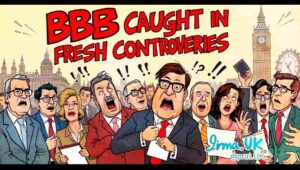
An internal BBC memo leaked shortly after the controversy promised “robust action,” including:
- Mandatory neutrality training
- Extended pauses before speaking (minimum 45 seconds)
- Consideration of replacing presenters with clocks, which are widely trusted and rarely editorialise
- A review of whether news should exist at all
- Installation of a large “SORRY” button in every studio
Executives stressed that the BBC remains committed to informing the public without alarming it, challenging it, or giving it anything to argue about at dinner.
“Our goal,” one executive explained, “is to say things that are technically true but emotionally unsatisfying to absolutely everyone.”
The Bigger Picture: A Nation’s Favourite Punching Bag
Media analysts note that the BBC now occupies a unique position in British life: distrusted by everyone, relied upon by everyone, and shouted at daily by people who continue watching every programme.
“The BBC has become less a broadcaster and more a national argument,” said one analyst. “It doesn’t tell stories anymore. It hosts them and then apologises for the seating.”
Another observer noted: “The BBC is Britain’s last truly shared experience. We all hate it together. That’s beautiful, in a miserable sort of way.”
What Happens Next: Tomorrow’s Controversy Already Scheduled
At press time, the BBC had issued a final statement saying it “takes concerns seriously,” will “learn lessons,” and remains “deeply committed to impartiality,” which it defined as “standing perfectly still while the country runs past shouting.”
A new controversy is expected tomorrow, possibly involving weather forecasts, accents, or the continued existence of television itself. The BBC has pre-emptively apologised for whatever it will be.
When reached for comment, a BBC spokesperson said: “We’re sorry. We’re so, so sorry. We don’t know what for yet, but we’re getting ahead of it.”
Auf Wiedersehen, amigo!

Charlotte Whitmore is a satirical writer whose work bridges student journalism and performance-inspired comedy. Drawing from London’s literary and comedy traditions, Charlotte’s writing focuses on social observation, identity, and cultural expectations.
Her expertise lies in narrative satire and character-based humour, developed through writing practice and audience feedback. Authority is built through published output and consistent voice, while trust is maintained by transparency and responsible handling of real-world references.
Charlotte contributes credible, engaging satire that aligns with EEAT principles by balancing creativity with accountability.