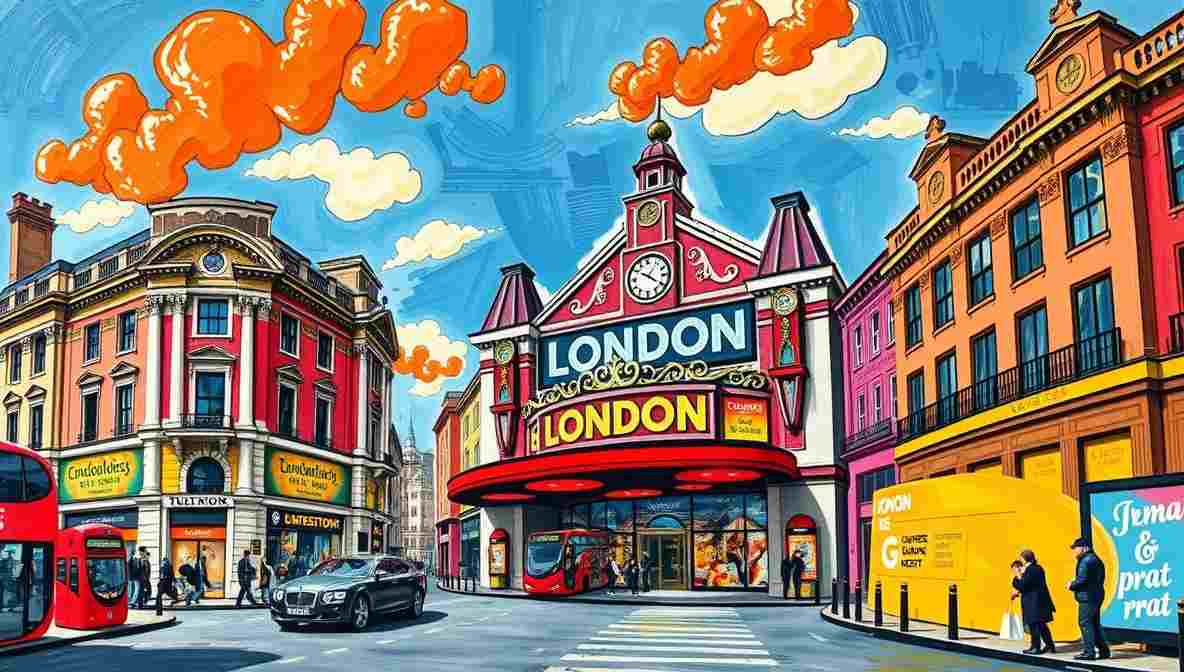
London Theatre Bravely Reinvents Itself by Remaining Exactly the Same
London— the universal word for “there is more culture beneath this, please scroll respectfully.”
Context: This satirical piece examines London’s theatre scene as West End ticket prices continue to soar, with premium seats now costing upwards of £300. While the industry celebrates record box office revenues, concerns mount about accessibility and diversity among audiences. Meanwhile, fringe venues struggle with funding cuts even as the West End posts its most profitable year since the pandemic.
London theatre, that trembling national treasure, is once again enjoying a renaissance. By “renaissance,” insiders mean the same shows, the same audiences, the same seats that bruise your thighs, but now with a QR code and a £14 interval Negroni. Some seats now come with a complimentary deep vein thrombosis risk assessment.
The West End continues to insist it is both daringly modern and fiercely traditional, a rare feat achieved by updating absolutely nothing while loudly announcing innovation. This season’s programme promises bold new voices, experimental staging, and radical storytelling—provided those voices sound familiar, the staging fits neatly into a proscenium arch, and the story has already won a Tony Award somewhere safer. Preferably Broadway, where American money has already proven the concept financially viable.
A City Where Theatre Is Alive, But Only Between 7:30 and 10:15
London theatre thrives in a very specific time window. Any performance starting earlier is for schools. Any ending later is considered a personal attack on public transport. The last Tube is not a suggestion; it’s a constitutional deadline.
Theatre-goers shuffle into venues clutching tote bags advertising plays they saw ten years ago, whispering about understudies as though discussing a royal succession. They will later claim the performance was “interesting,” which in theatre language means confusing, but too expensive to criticise. To admit you didn’t understand it is to admit you wasted £85, which is psychologically impossible.
London theatre audiences are famously discerning. They can detect a weak second act instantly, but will applaud anyway out of politeness, fear, or a deep-seated belief that clapping is a civic duty akin to recycling.
The Price of Art, or: Who Is Theatre For, Exactly?
Tickets now cost roughly the same as a small kitchen appliance, but theatres assure us this is necessary to keep art accessible. The logic is flawless: charge more to reach more people.
Accessible, of course, to anyone earning enough to describe themselves as “time-poor” rather than “broke.” Or those who consider £120 for three hours of entertainment “quite reasonable, actually.”
There are discounted tickets, allegedly. These exist in theory, much like affordable housing or a train seat with legroom. You must queue online at dawn, refresh aggressively, prove moral worthiness, and sacrifice a CAPTCHA to secure one. Even then, you’ll be seated behind a structural pillar erected during the reign of George III.
London theatre insists it wants younger audiences, provided those young people are financially independent, culturally literate, emotionally prepared to sit through a three-hour metaphor about grief, and capable of staying awake past 9 PM on a weeknight.
Diversity on Stage, Homogeneity in the Bar
The industry is proud of its commitment to diversity. Programmes are filled with earnest statements about representation, inclusion, and voices previously unheard. Mission statements glow with progressive intent.
Then you step into the bar and discover the audience looks like a networking event for people who say “one flat white, please” with confidence. The diversity is onstage, safely performing for people named Rupert.
Theatre has solved representation by putting it on stage and keeping it safely off the front rows. Progress, but make it zoned.
Experimental Theatre, Performed Exactly As Expected
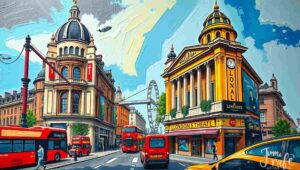
London loves experimental theatre, as long as the experiment is mild and ends neatly before the interval. Think “experimental” in the way that oat milk was experimental in 2015.
True experimentation—plays without clear endings, uncomfortable silences, or chairs arranged incorrectly—are tolerated only in fringe venues with names like The Something Upstairs or The Other Something. Usually located above a pub that stopped serving food in 2009.
Audience members emerge saying things like, “I didn’t fully get it,” which is theatre-speak for I am Googling this later so I can sound clever at dinner. Wikipedia’s “Plot Summary” section has saved more reputations than therapy.
The Sacred Interval Ritual
Intervals are the true heart of London theatre. Not the performance—the 20-minute pause where everyone pretends they understood what just happened.
This is where audiences discuss themes they half-understood, queue for toilets that defy physics and the Geneva Conventions, and purchase drinks priced as if alcohol were being imported individually by canoe. A gin and tonic costs £13. The gin is Gordons. The tonic is flat.
Everyone returns to their seats clutching a plastic cup, convinced they are supporting the arts rather than subsidising a lighting technician’s oat-milk habit and the theatre manager’s Tuscan villa.
The bell rings. People panic. Someone is always still in the loo. That person will return during the opening line of Act Two, stepping on seven people’s feet while whispering, “Sorry, sorry, excuse me, sorry.”
Critics, Reviews, and the Gentle Art of Saying Nothing
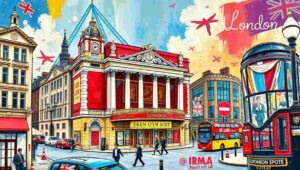
London theatre criticism remains an art form in itself. Reviews are masterclasses in ambiguity, weaponised politeness, and the passive-aggressive deployment of the word “bold.”
Phrases like “ambitious,” “thought-provoking,” and “uneven” translate loosely to “this did not work, but I respect the effort.” “A brave choice” means “a terrible choice, but I’m too British to say it outright.”
A five-star review can hinge on one strong monologue. A one-star review will still acknowledge the lighting. British critics will find something nice to say about the Titanic mid-sinking.
No one wants to be the critic who didn’t “get it.” The real fear in theatre is not failure—it’s misunderstanding. Better to write 800 words of artful nonsense than admit confusion in 12 words.
The West End vs. The Fringe: A Class System With Curtains
The West End is where theatre goes to be validated. The fringe is where it goes to try things and then apologise later. Also to lose money in fascinating new ways.
Fringe actors perform to audiences of twelve, six of whom are other actors, two of whom are lost tourists seeking the actual pub, and one who will write a glowing review on a blog read by three people (two of them are the actor’s mum using different devices).
Everyone insists this is how great theatre begins. No one explains how it ends with rent being paid. The path from fringe success to West End stardom is well-documented; the path to paying council tax less so.
Standing Ovations: Now Mandatory
Once reserved for exceptional performances, standing ovations are now compulsory. To remain seated is to announce you are either a monster, a theatre professional, or someone who genuinely values their knees.
Audiences leap to their feet like they’ve rehearsed it. Applause becomes cardio. Performers bow, return, bow again, and eventually look embarrassed. The cast keeps coming back like they’re testing a scientific hypothesis about audience endurance.
No one knows how long to clap. It just sort of… fades. There’s always one person still clapping after everyone else has stopped, creating a moment of profound social discomfort.
London Theatre’s Eternal Promise
Every year, London theatre promises change. New stories. New forms. New audiences. Revolutionary paradigm shifts in storytelling.
And every year, it delivers a slightly different version of what already worked, wrapped in better marketing and a tasteful serif font. The revolution will be rebranded, not televised.
But perhaps that’s the real magic. In a city constantly reinventing itself, theatre remains comfortingly familiar: overpriced, overpraised, occasionally brilliant, and always convinced this season is the one. Like a gambler who’s definitely going to win it all back next time.
The curtain falls. The audience applauds. Someone says, “We should do this more often.”
They won’t. Not at these prices.
Auf Wiedersehen, amigo!

Alan Nafzger was born in Lubbock, Texas, the son Swiss immigrants. He grew up on a dairy in Windthorst, north central Texas. He earned degrees from Midwestern State University (B.A. 1985) and Texas State University (M.A. 1987). University College Dublin (Ph.D. 1991). Dr. Nafzger has entertained and educated young people in Texas colleges for 37 years. Nafzger is best known for his dark novels and experimental screenwriting. His best know scripts to date are Lenin’s Body, produced in Russia by A-Media and Sea and Sky produced in The Philippines in the Tagalog language. In 1986, Nafzger wrote the iconic feminist western novel, Gina of Quitaque. Contact: editor@prat.uk