London Culture: A Calm, Orderly City Where Everyone Is Furious in Private ☕🚇
London culture is built on restraint, ritual, and the shared understanding that whatever is happening, it would be deeply embarrassing to acknowledge it directly. This is a city where emotions are felt intensely, expressed quietly, and then processed later in a pub through passive-aggressive anecdotes that start with, “I didn’t say anything at the time, but…”
To outsiders, London appears refined, polite, and mildly damp. To Londoners, it is a daily test of endurance disguised as normal life.
The Sacred Queue and the Quiet Rage Beneath It
Londoners queue not because they enjoy order, but because chaos would require talking to strangers. The queue is a social contract that says, “I acknowledge your existence, but I will not engage with it.”
Anyone who violates the queue does not get confronted. They get judged. Silently. Forever. Their face is memorised. Their coat is described later with forensic accuracy.
Sociologists at the very serious sounding Institute for Urban Politeness once observed that Londoners would rather miss a train than point out that someone else cut in line, proving that dignity is valued slightly above punctuality.
“The British queue like they’re rehearsing for a funeral that hasn’t been scheduled yet,” said Jimmy Carr.
Queue Violations and Social Death
Studies from University College London confirm that queue-jumping ranks somewhere between light treason and wearing a backpack on the Tube during rush hour. The perpetrator isn’t confronted because confrontation would acknowledge that both parties exist in the same physical space, which violates the fundamental principle of British social interaction.
Instead, the offender receives what locals call “the treatment”: aggressive tutting, meaningful sighs, and a facial expression that could curdle milk at forty paces.
Small Talk as an Act of Violence
In London culture, conversation is approached cautiously, like a strange dog. Weather is acceptable. Transport delays are encouraged. Personal questions are a crime.
Asking “What do you do?” is tolerated only if both parties understand that the answer should be vague and apologetic. Anyone who enjoys their job is viewed with suspicion.
Americans describe Londoners as reserved. Londoners describe themselves as “just not making a thing of it.”
“Asking a Londoner how they are is like asking a calculator to tell you a joke. You’ll get an answer, but nobody’s happy about it,” said Ricky Gervais.
The Conversational Minefield
Acceptable topics include: weather conditions, Transport for London failures, the general state of “things these days,” and how expensive everything has become. Unacceptable topics include: income, feelings, genuine opinions about politics (unless everyone already agrees), and anything that might require vulnerability.
According to London social researchers, the average conversation between strangers lasts exactly 47 seconds and contains three weather references, two apologies, and zero meaningful exchanges.
The Tube: Where Humanity Goes to Be Quiet
The London Underground is not transportation. It is a social experiment in shared suffering conducted twice daily.
Eye contact is forbidden. Conversation is theoretical. Smiling is interpreted as either foreignness or intent.
During rush hour, commuters press together in silence, united by the belief that if no one acknowledges how bad this is, it might technically not be happening. Experts agree this collective denial powers at least half the city.
“The Tube is where British people practice being dead while still maintaining perfect posture,” said David Mitchell.
The Unspoken Rules of Underground Travel
Transport for London publishes official etiquette guidelines, but Londoners follow a far more complex set of unwritten laws. Stand on the right of the escalator or face social annihilation. Never eat anything that smells, looks, or exists. Backpacks must be removed and held in a position that suggests deep personal shame.
Phone conversations are permitted only if conducted in a whisper that suggests you’re confessing to a crime. Making eye contact is grounds for immediate relocation to a different carriage, possibly a different line, ideally a different city.
“I’ve seen people on the Tube more comfortable during a dental procedure,” said Lee Mack.
Food Culture: Global Cuisine, Emotional Distance
London proudly offers every cuisine on Earth, often prepared by someone who has lived here long enough to resent the rent.
The food is excellent. The service is polite but distant. The bill arrives without ceremony, as if money is something we should all be a bit ashamed of discussing.
Londoners will enthusiastically recommend restaurants they have never been able to afford again.
“London has amazing food from every culture, served by people who all share one culture: quiet desperation about property prices,” said Sarah Millican.
The Dining Experience, Emotionally Calibrated
Restaurant culture in London follows strict emotional protocols documented by food anthropologists. Servers approach the table with professional warmth that communicates “I acknowledge your hunger but not your humanity.” Diners respond with grateful deference that says “Thank you for this transaction which we both know is slightly overpriced.”
Complaining about food is acceptable only through implication. “Interesting choice of seasoning” means the chef should be investigated. “Quite filling” means you’re still hungry but too polite to admit the portions were criminal.
Fashion: Trying Very Hard to Look Like You Didn’t Try
London style is about layers, irony, and pretending the weather didn’t influence your choices, even though it absolutely did.
Coats are emotional armor. Scarves are personality statements. Black is worn year-round to communicate seriousness, creativity, or mild despair.
No one compliments outfits directly. Compliments are implied through imitation six months later.
“London fashion is everyone trying to look like they accidentally assembled an outfit while fleeing a particularly stylish disaster,” said Russell Howard.
Seasonal Denial and Wardrobe Strategies
According to fashion observers, Londoners dress for four seasons simultaneously because the weather might change seventeen times between breakfast and lunch. This creates a layering system so complex it requires engineering degrees and emotional preparation.
Umbrellas are carried with shame, as using one suggests you lack the stoicism to simply endure. Proper Londoners prefer to arrive everywhere slightly damp, radiating quiet resentment toward meteorology itself.
Politeness as a Defensive Weapon
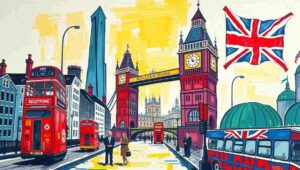
London politeness is not kindness. It is containment.
“Sorry” means excuse me, I disagree, this is your fault, I am furious, and please move. Tone is everything. Meaning is flexible.
According to an unofficial poll conducted by people waiting for buses, 74 percent of Londoners have apologised to inanimate objects, suggesting a culture where even furniture deserves more courtesy than strangers.
“British people say ‘sorry’ the way Americans say ‘like.’ It’s just verbal punctuation that means absolutely nothing and absolutely everything,” said John Oliver.
The Sorry Spectrum
Linguistic researchers at the British Library have documented forty-seven distinct variations of “sorry,” each with subtle tonal differences that convey everything from genuine remorse to thinly veiled hostility. Mastering this spectrum is essential to London survival.
The cheerful “sorry!” means excuse me. The clipped “sorry” means you’re in my way. The elongated “sorrrry” means I am absolutely not sorry and you know exactly what you did.
The Pub: Where Feelings Are Allowed, Briefly
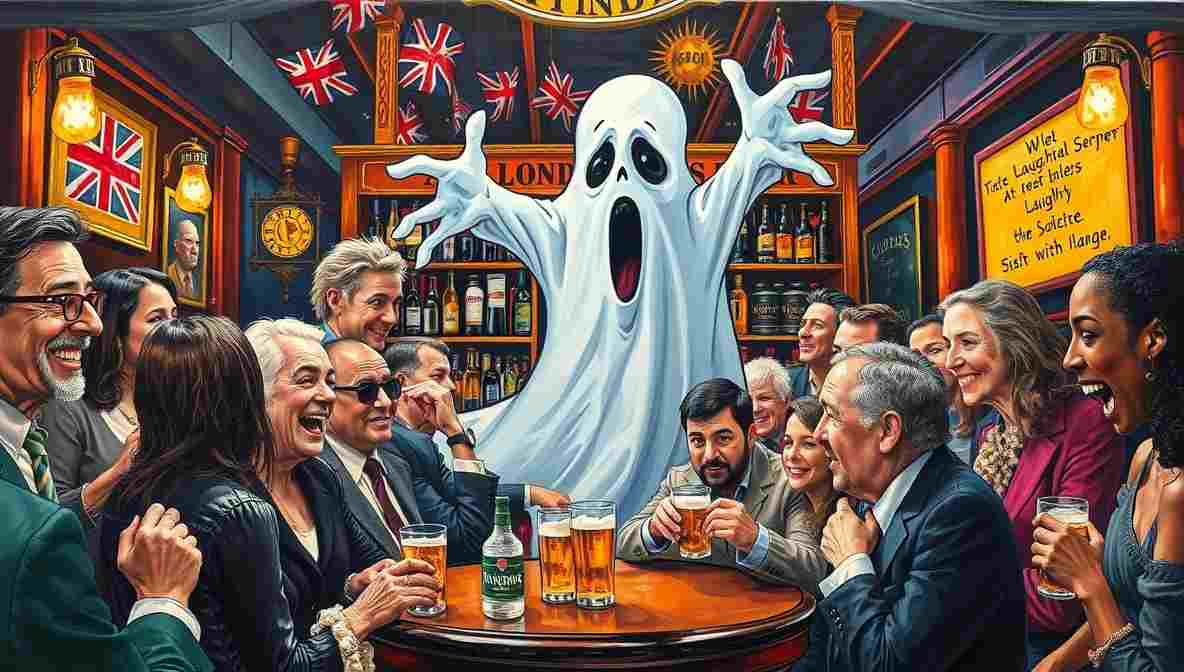
The pub is London’s emotional release valve. It is where people finally admit what they think, provided it is phrased humorously and followed by another round.
Deep confessions are acceptable only after the second pint and must end with, “Anyway, could be worse.”
This is why London therapy is expensive and pubs are everywhere.
“The pub is the only place where British people are legally allowed to have emotions, but only between the hours of 5 PM and 11 PM, and only if accompanied by alcohol,” said James Acaster.
Pub Protocol and Emotional Regulation
Every traditional London pub operates as an informal therapy center where problems are discussed, solutions are never reached, and everyone agrees that talking about it helped even though nothing changed. The key is maintaining plausible deniability—whatever is said after pint three doesn’t count as official communication.
Round-buying creates a social debt system more complex than international finance. Skipping your round is worse than queue-jumping and light treason combined.
What the Funny People Are Saying
- “London is a city where people apologise when you bump into them,” said Jerry Seinfeld.
- “Everyone looks miserable, but they’re doing it very professionally,” said Ron White.
- “I love how Londoners say ‘lovely’ when they mean ‘this is barely acceptable,'” said Amy Schumer.
- “British people have perfected the art of seeming friendly while making it clear you should leave,” said Trevor Noah.
- “Londoners complain about the weather like it personally betrayed them, which, to be fair, it does daily,” said Katherine Ryan.
A Helpful Guide to Surviving London Culture
To blend in, complain quietly. Dress practically but deny it. Queue instinctively. Never admit enthusiasm without irony. If confused, apologise.
Most importantly, remember that London culture is not cold. It is carefully temperature-controlled.
Master the art of the meaningful sigh. Learn to communicate entire paragraphs through eyebrow movement. Practice saying “mustn’t grumble” while grumbling constantly. Understand that “quite good” is the highest praise you’ll ever receive.
When someone says “we should do this again sometime,” they mean “this has been tolerable but let’s not commit to anything specific.” When the weather is actually nice, react with suspicion and mild alarm, as this is scientifically unprecedented.
Disclaimer
This satirical examination of London culture is offered with affection, dry wit, and a sincere appreciation for a city that has mastered the art of emotional minimalism. This piece is entirely a human collaboration between two sentient beings: the world’s oldest tenured professor and a philosophy major turned dairy farmer, both of whom love London deeply but would never say so out loud.
Now please stand on the right, walk on the left, and don’t make it awkward.
Auf Wiedersehen, amigo! 🇬🇧

Alan Nafzger was born in Lubbock, Texas, the son Swiss immigrants. He grew up on a dairy in Windthorst, north central Texas. He earned degrees from Midwestern State University (B.A. 1985) and Texas State University (M.A. 1987). University College Dublin (Ph.D. 1991). Dr. Nafzger has entertained and educated young people in Texas colleges for 37 years. Nafzger is best known for his dark novels and experimental screenwriting. His best know scripts to date are Lenin’s Body, produced in Russia by A-Media and Sea and Sky produced in The Philippines in the Tagalog language. In 1986, Nafzger wrote the iconic feminist western novel, Gina of Quitaque. Contact: editor@prat.uk