Princess Diana Went Undercover for One Night, Immediately Preferred Civilian Life
LONDON — Royal scholars have long debated when Princess Diana began emotionally drifting away from palace life. New analysis suggests the turning point may have been a 20-minute undercover visit to a London nightclub, during which she reportedly discovered a shocking alternative to monarchy: being treated like a normal person.
The operation, unofficially coordinated by Freddie Mercury and the ancient art of “just act natural,” involved Diana wearing a leather cap, sunglasses, and a military-style jacket. The goal was to help the most recognizable woman in the world blend into a crowd where half the people were wearing sequins and the other half were wearing irony.
According to witnesses, the transformation was immediate. Upon entering the Royal Vauxhall Tavern, Diana reportedly experienced something she had not felt at an official engagement in years.
Nobody briefed her.
Instead of aides whispering protocols and strangers curtsying at angles calculated by tradition, she found herself in a space governed by a much simpler system. Music loud. People friendly. No one asking her thoughts on agricultural policy.
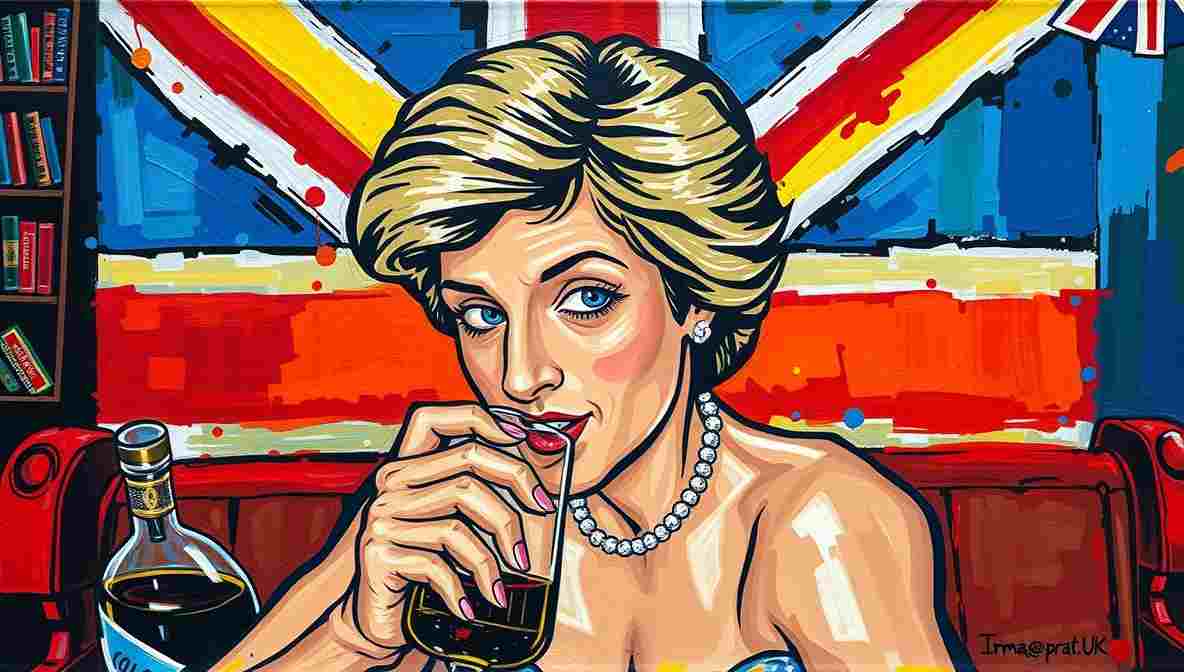
She laughed freely. She nudged friends. She ordered her own drink, an act palace historians have since classified as “dangerously hands-on governance.”
Observers say she looked thrilled, like someone who had accidentally wandered into a parallel universe where the only rule was “don’t spill your drink during the chorus.”
Freddie Mercury, widely credited as the evening’s morale officer, seemed delighted by how quickly Diana adapted. He had spent a career building spaces where people could be more themselves. Watching a princess discover that same freedom on a dance floor was likely the easiest encore of his life.
For many in the LGBTQ+ community, the story remains meaningful. Diana’s presence in queer spaces was not performative. She had already shown deep compassion during the AIDS crisis, challenging stigma with warmth and humanity. Her comfort that night reflected genuine connection, not obligation.
Meanwhile, royal life waited patiently outside, holding a clipboard.
Cultural historians now joke that Diana may have left the club with two realizations. One, Freddie Mercury had excellent taste in jackets. Two, civilian life came with significantly fewer speeches.
“She discovered the radical concept of doing something purely because it was fun,” one commentator said. “This was deeply incompatible with the monarchy.”
Reports suggest the outing lasted only about twenty minutes, but emotionally, it may have been the equivalent of a long weekend. For that brief time, Diana existed without title, expectation, or the quiet pressure of representing an institution older than indoor plumbing.
She was just a woman out with friends, laughing at the absurdity of it all.
When she left, she returned to a world of ceremony and scrutiny. But something of that night stayed with her — the knowledge that beyond the palace gates, there were places where hierarchy dissolved and humanity took the lead.
In the end, the story endures not because it was rebellious, but because it was revealing.
Given the choice between a throne and a dance floor, even a princess might hesitate.
And for one night in Vauxhall, the dance floor won.

Lowri Griffiths brings a distinct voice to satirical journalism, combining cultural critique with dry humour. Influenced by London’s creative networks, her writing reflects both wit and discipline.
Authority stems from experience, while trust is built through transparency and ethical satire.