
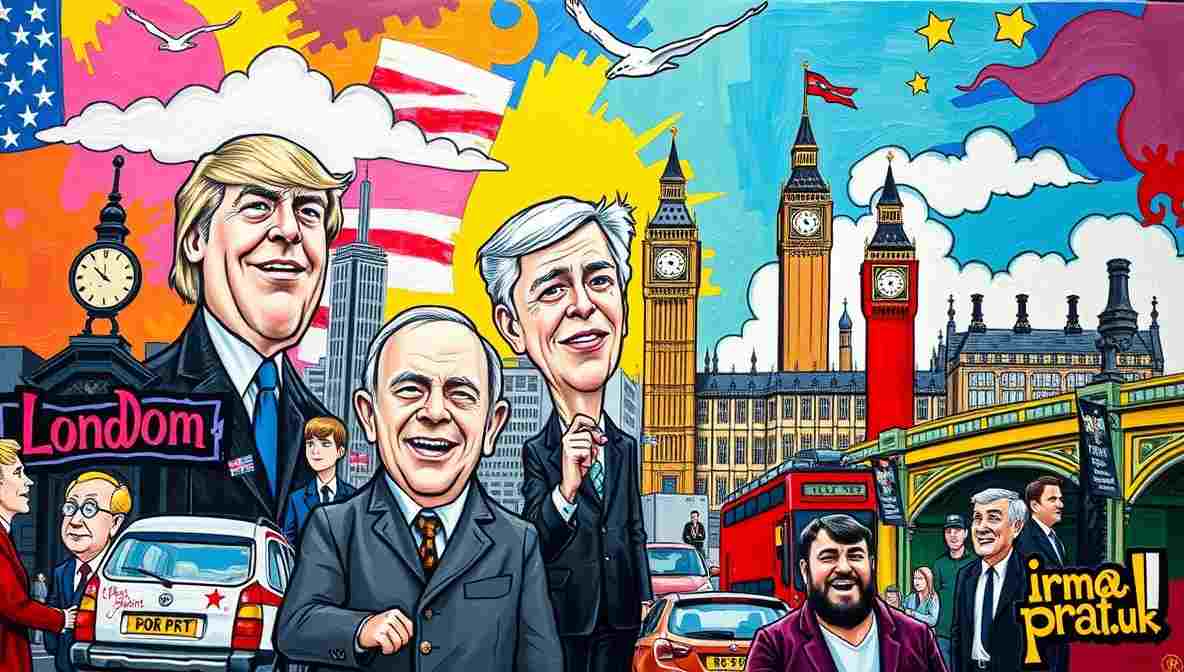
UK Politics Rebranded as Ongoing Conversation With No Outcome
Officials Say Dialogue Is Thriving, Conclusions Remain Premature
In a bold act of transparency, Britain’s political class has quietly rebranded UK politics as an ongoing conversation, helpfully removing the outdated expectation that the conversation should lead anywhere. The shift was confirmed this week after several days of interviews, roundtables, cross-party talks, and carefully moderated panels that produced a unanimous outcome: more conversation.
The rebrand emerged from UK Parliament, where aides stressed that this was not paralysis but participation. “We’re talking more than ever,” one official said. “That has to count for something.”
Conversation Elevated to Core Policy Tool
Listening Now Officially a Deliverable
Ministers explained that listening is no longer a prelude to action. It is the action.
Under the new framework, political success is measured not by laws passed but by how many stakeholders were consulted, how many perspectives were acknowledged, and how many phrases like “valid concerns” appeared in transcripts.
A senior adviser described the system as “policy as process,” noting that conclusions can be divisive, whereas conversations are inclusive and endlessly extendable.
“Once you reach an outcome,” the adviser added, “someone is disappointed. If you keep talking, everyone feels involved.”
Panels, Forums, and Summits Multiply
Engagement Expands, Decisions Remain Scarce
The rebrand has triggered a surge in events. There are listening tours, citizens’ assemblies, expert panels, youth forums, and breakfast roundtables where croissants absorb most of the accountability.
Each event produces key takeaways, which are then circulated internally, summarised externally, and quietly archived.
A leaked calendar from a senior minister’s office showed seventeen scheduled discussions labelled “next steps,” none of which listed an actual step.
Opposition Joins the Conversation, Raises Eyebrows
Criticism Voiced, Then Folded Into Dialogue
Opposition figures initially criticised the lack of outcomes, then quickly adapted by launching their own conversations. Press conferences now feature phrases like “we’re starting a national conversation” and “this deserves a wider debate.”
When asked what would happen after the debate, one spokesperson replied that it would “inform future discussions.”
The exchange was widely praised as constructive.
The Language of Endless Talk
Vocabulary Designed to Never Finish a Thought
The rebrand has come with an updated lexicon. Words like “decision” and “resolution” have been replaced with “journey,” “engagement,” and “ongoing.”
A linguistics expert noted that the grammar of modern politics favours the present continuous tense. “Things are happening,” they said. “They are just never completed.”
Briefing notes now advise officials to avoid deadlines, favouring phrases such as “in due course,” “at the appropriate time,” and “as conversations evolve.”
Civil Service Adapts Smoothly
Minutes Taken, Momentum Deferred
Civil servants have embraced the conversational model with professionalism. Meetings are minuted. Actions are noted. Follow-ups are scheduled to discuss previous follow-ups.
One long-serving official described the change as “honest.” “At least now,” they said, “we don’t pretend the meeting is going to fix anything.”
Internal guidance encourages departments to demonstrate activity through consultation rather than implementation, a move praised for reducing risk and increasing paperwork.
Public Reaction: Attentive, Then Exhausted
Voters Listen, Then Tune Out
Across the country, citizens responded with polite interest that gradually faded into fatigue.
“I like that they’re talking,” said one voter in Westminster. “I just don’t know what they’re saying anymore.”
Another noted that the conversation seemed to restart every few months, often with the same participants and slightly updated slides.
Polls show that while public awareness of political conversations is high, expectations of outcomes are low.
Why the Rebrand Works
Talk Is Safer Than Action
Political analysts argue that conversation is the safest form of governance. It signals care without committing to consequences. It absorbs criticism without changing course.
Action creates winners and losers. Conversation creates content.
As one veteran observer put it, “If politics is a conversation, no one can accuse you of not speaking.”
Closing Remarks, Still Open-Ended
UK politics will continue to talk. Panels will convene. Views will be shared. Perspectives will be respected.
The conversation remains open. The outcome remains optional.
Disclaimer
This article is entirely a human collaboration between two sentient beings: the world’s oldest tenured professor and a philosophy major turned dairy farmer. Any resemblance to real dialogues is coincidental, though prolonged.
Auf Wiedersehen.

Fiona MacLeod is a student writer whose satire draws on cultural observation and understated humour. Influenced by London’s academic and creative spaces, Fiona’s writing reflects curiosity and thoughtful comedic restraint.
Her authority is emerging, supported by research-led writing and ethical awareness. Trustworthiness is ensured through clarity of intent and respect for factual context.
Fiona represents a responsible new voice aligned with EEAT standards.