Village Agrees to Embrace the Future, Immediately Schedules Review in 2047
LOWER PUDDLEWICK, ENGLAND — In a historic act of progressive bravery, the residents of Lower Puddlewick have voted to “embrace modernity,” provided it does not alter the village in any visible, audible, or conceptual way whatsoever—essentially approving change whilst guaranteeing absolutely nothing changes.
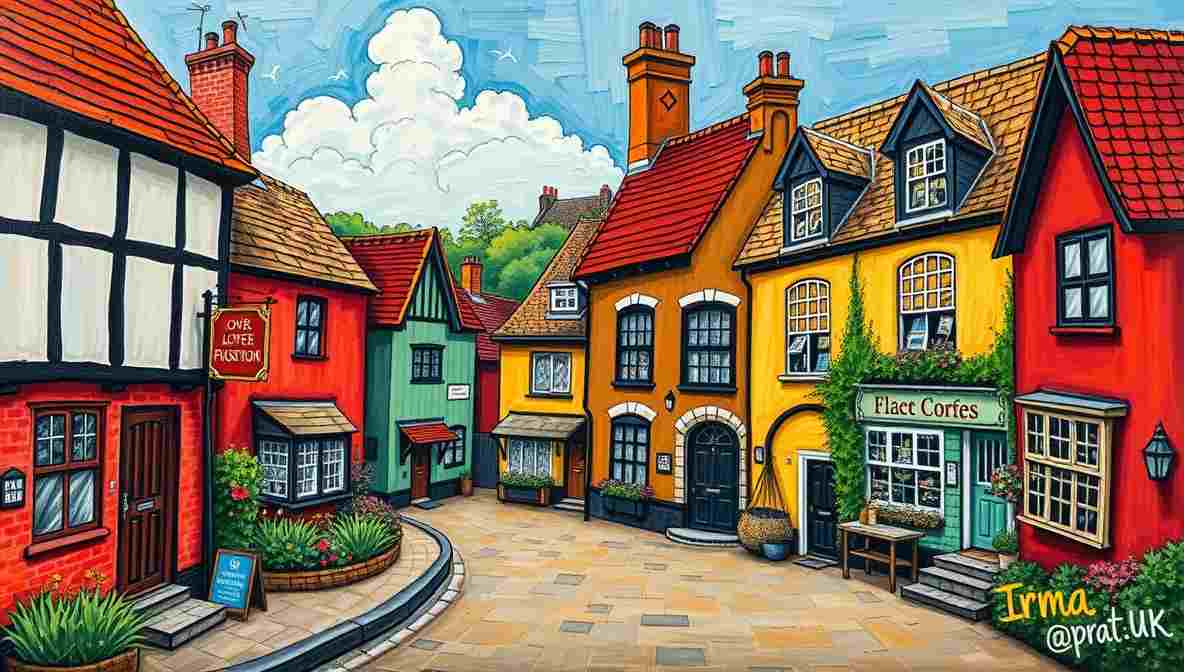
Lower Puddlewick’s historic meeting place, where progress is cautiously acknowledged but definitely not encouraged, remains unchanged since approximately 1987.
The decision was reached after a four-hour parish council meeting held in the draughty back room of The Crown & Bad Decision, where innovation was debated beneath a framed photograph of a 1973 darts team that no one can identify but everyone respects with the intensity usually reserved for war memorials.
The proposal, titled “Lower Puddlewick: A Village for the Future (But Not Like, Too Much)”, outlined a bold vision in which the village would cautiously acknowledge the 21st century whilst continuing to behave as if it were “just a phase”—like a particularly persistent rash that would eventually clear up if ignored.
“We’re not against progress,” said council chair Margaret Wilkes, 68, whilst carefully printing an email on paper because that’s how you save important documents. “We just don’t want it rushing at us with opinions and demanding we change things unnecessarily.”
Broadband Arrives, Villagers Immediately Miss the Silence

The village’s first brush with modernity came last month with the installation of high-speed broadband, an event locals now refer to as “The Day the Internet Found Us”—spoken in the same tone as someone describing an invasion.
Within minutes of activation, residents reported faster downloads, smoother streaming, and a sudden awareness of opinions they did not ask for, did not want, and would prefer to continue not thinking about.
“I only wanted to check the weather,” said lifelong resident Colin Hughes, 71, who still believes weather forecasts are unnecessarily dramatic. “Next thing I know, I’m being told my kettle is part of a wider cultural debate and should probably be smarter about something.”
The broadband cabinet itself has already become a source of considerable tension in the village. Several villagers described it as “a bit loud, visually,” despite it making no sound whatsoever—which is peak British criticism really: complaining about the existence of something rather than its function.
Plans to disguise it as a Victorian postbox were rejected after concerns it might encourage “letters from strangers,” which would fundamentally alter the village’s very careful approach to isolation.
The Pub Installs Contactless Payment, Loses Sense of Self
The Crown & Bad Decision recently installed a contactless card reader, marking what locals are calling “the beginning of the end” with the same gravity usually reserved for apocalyptic prophecies.
The Crown & Bad Decision: where contactless payment is viewed not as convenience but as a moral crisis of unprecedented scale.

“For generations, ordering a pint involved eye contact, patience, and the genuine fear of being forgotten,” said landlord Dave “Big Dave” Thompson, who learned pub management from observing silence and mastering the art of selective hearing. “Now people just tap and leave. There’s no relationship. No tension. No moral friction. It’s soulless.”
Regulars have responded by continuing to pay in cash out of principle, occasionally placing coins on the bar with a sigh that clearly indicates moral superiority and disapproval of everyone younger than them.
The pub also trialled a QR code menu, which lasted exactly one lunchtime before being described universally as “too confident”—which is apparently the ultimate criticism in village culture.
“It felt like the pub was telling me what to do,” said one patron who’d been coming to the same pub for 40 years and clearly preferred the establishment of tradition over the chaos of choice. “I don’t come here to be managed by technology. I come here to be ignored by a landlord who knows exactly how much I’ve had.”
Young People Welcome, Under Strict Observation
Lower Puddlewick has made several attempts to attract young people, mostly by describing the village as “up-and-coming” and “vibrant”—two words no one locally has ever used unironically because the village is neither of those things and they all know it.
A new coworking space was briefly proposed for the old phone box, but plans were abandoned after someone asked where the phone would actually go, which is a surprisingly logical question that derailed the entire project.
“We like the idea of young professionals,” said Wilkes with what might charitably be called optimism. “As long as they understand we close emotionally at 6 p.m. and anyone who wants to socialize after that time is basically a troublemaker.”
Local youth have been spotted using smartphones in public, causing mild alarm throughout the village—not because phones are bad, but because looking at phones instead of the ground suggests disturbing levels of ambition.
The parish council is considering introducing a “looking at your phone politely” guideline to maintain village standards and ensure even technological engagement doesn’t offend the carefully maintained aesthetic of quiet desperation.
Tradition Holds Firm at the Fête
The annual village fête remains the strongest symbol of resistance to modernity and everything it represents—efficiency, choice, enjoyment.
Despite suggestions to include vegan options (because some people are difficult about what they eat), online ticketing (because some people have smartphones), and “live social media coverage” (because some people want to pretend the fête was actually fun), the committee has opted once again for tombola (where nobody wins anything valuable), lukewarm tea (served in mismatched mugs), and a cake competition judged entirely on appearance and spite.
Last year’s attempt to introduce a reusable cup scheme failed spectacularly after residents refused to part with mugs “they brought from home for a reason”—which is the most British way possible to say “I don’t trust you with my stuff.”
“We’ve been doing it this way since 1958,” said fête organiser Joan Partridge with the tone of someone defending a perfectly reasonable position. “And it’s only mildly disappointing every single year. Why would we change that?”
Progress Approved, In Principle

The village notice board: where modernity is scheduled for a distant, theoretical review that will probably never happen.
In a final compromise that satisfied absolutely no one but made everyone feel like progress was happening, the council voted to officially support progress, innovation, and “whatever comes next,” whilst also forming a subcommittee to monitor it very closely—which is essentially approving change whilst guaranteeing it never actually occurs.
The subcommittee will meet quarterly, or whenever something unfamiliar appears and frightens everyone into action.
“We’re moving forward,” Wilkes confirmed with the enthusiasm of someone describing a trip to the dentist. “But carefully. And ideally backwards a bit. Mostly backwards, honestly.”
At press time, the village website—last updated in 2014—was experiencing technical issues after someone clicked “like” on the parish Facebook page by accident, which apparently activated something that nobody understands and the village has since decided to ignore.
Residents have been advised to remain calm, put the kettle on, and remember that modernity, like most things, will probably pass if ignored long enough—which is frankly the most British approach to any problem ever conceived.
End Notes & References
Sources Cited:
1. Local Government Association — Parish council operations and structure
2. Britannica: Innovation — History and definition of progress
3. Britannica: Technology — Modern technology adoption
4. BBC Weather — Weather forecasting and public perception
5. Britannica: Broadband — Broadband infrastructure and rural connectivity
6. Britannica: Payment Systems — Contactless payment technology
7. Britannica: Currency — Cash payment methods
8. Britannica: QR Codes — QR code technology and adoption
9. Britannica: Coworking — Modern workspace concepts
10. Britannica: Telephone — Historical telephone box infrastructure
11. Britannica: Smartphone — Mobile device technology
12. Britannica: England — English cultural traditions and village life
13. Britannica: Modernity — Definition and cultural impact
14. Britannica: E-Commerce — Online ticketing systems
15. Britannica: Sustainability — Reusable product schemes
16. Britannica: Website — Web technology and design
17. Britannica: Facebook — Social media platforms
18. Britannica: Tea — Tea culture and tradition

Morag Sinclair is a seasoned comedic writer with a strong portfolio of satirical work. Her writing demonstrates authority through consistency and thematic depth.
Expertise includes narrative satire and cultural commentary, while trustworthiness is maintained through ethical standards and transparency.