
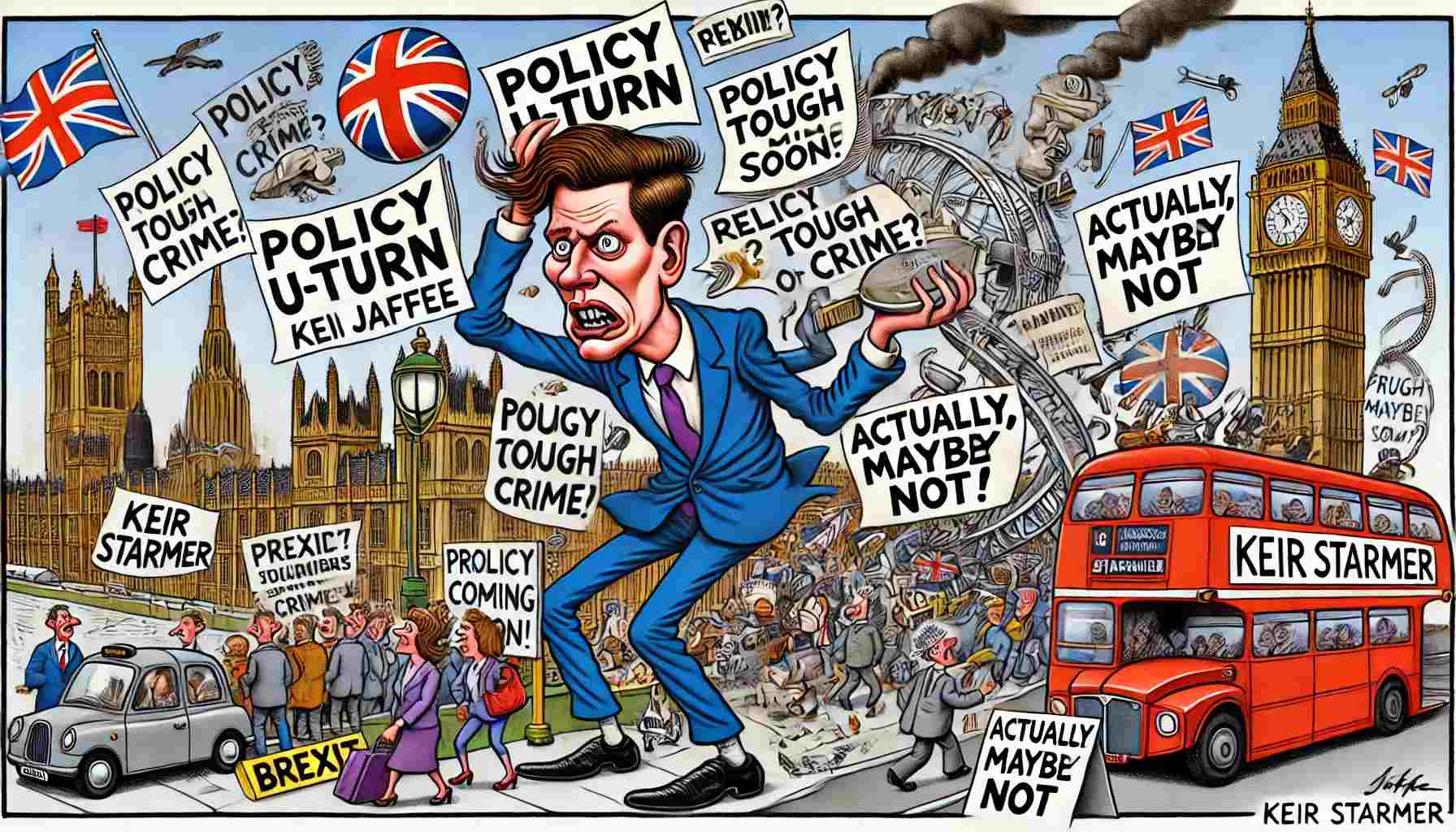
Government “Laser-Focused” on Cost of Living Except When Busy Focused on Everything Else
The government has once again reassured the public that it is “laser-focused” on the cost of living, a phrase delivered with such consistency that it now functions less as a promise and more as a vocal tic. Ministers repeat it in interviews, press releases, and parliamentary answers, often moments before pivoting to an entirely different subject. The laser, it seems, is on. Unfortunately, it keeps pointing elsewhere.
Inside Whitehall, officials insist the focus is real, intense, and unwavering. Outside Whitehall, voters report difficulty locating it. Focus groups conducted across the country revealed widespread confusion about what, exactly, the government is focused on at any given moment. Participants described the administration’s priorities as “fluid,” “responsive,” and “constantly rearranging themselves,” like furniture in a shared office where no one remembers who moved the desk.
The cost of living crisis is acknowledged, discussed, and reaffirmed as important, usually between updates on other pressing matters. It is addressed in the gaps between distractions, slotted neatly between announcements about innovation, global leadership, regulatory reform, national pride, and whatever crisis happens to be trending that afternoon. The result is a policy agenda that promises intensity while delivering multitasking.
“The laser metaphor may need calibration,” said one policy analyst, noting that lasers are typically known for precision, not wandering. “What we’re seeing is more of a torch being waved around during a power cut.”
Government briefings emphasize that multiple issues can be tackled simultaneously. This is true in theory. In practice, every crisis competes for attention like toddlers in a living room, each requiring immediate acknowledgment, none willing to wait. Ministers respond by crouching, nodding, and assuring everyone they are listening, while nothing receives sustained focus long enough to change direction.
Voters, meanwhile, say they notice focus only when it’s missing. Asked to describe the government’s cost of living strategy, many respondents paused before offering answers that sounded like summaries of headlines rather than experiences of relief. “They talk about it a lot,” one said. “I assume that counts as focus.”
Inside the Treasury, aides stress that serious work is happening behind the scenes. This work is described as complex, ongoing, and unsuitable for public consumption. The public, having heard this explanation before, has begun treating it as a genre rather than an update.
The Prime Minister has repeatedly promised that tackling everyday costs remains the top priority. Observers note that “top priority” appears to rotate regularly, making room for everything else that suddenly becomes urgent. One senior civil servant described the situation as “strategic responsiveness,” though conceded it can look like distraction when viewed continuously.
The language of intensity has become central to the government’s messaging. Ministers are not just focused; they are laser-focused. They are not just concerned; they are deeply concerned. Yet the lived experience of voters suggests that emphasis does not automatically translate into outcomes.
In recent weeks, the administration has announced reviews, consultations, task forces, and frameworks related to the cost of living, often alongside unrelated initiatives unveiled with equal urgency. Each announcement is accompanied by assurances that this time, the focus will stick.
For households watching bills rise, the impression is less one of neglect than diffusion. Nothing is ignored outright. Everything is acknowledged briefly. The crisis is never denied, just continuously deferred.
By the end of each week, the government can credibly claim it has addressed the cost of living, provided “addressed” is defined as mentioned, referenced, and returned to later. The laser remains active, scanning the room, illuminating surfaces without settling long enough to burn.
The strategy, if it can be called that, resembles juggling fog. There is motion, effort, and concentration, but nothing firm to grasp. The public is left watching a performance that promises precision and delivers motion.
The laser is on. Just not here.
Disclaimer: This article is satire, produced entirely through a human collaboration between the world’s oldest tenured professor and a philosophy major turned dairy farmer. Any resemblance to real governmental multitasking is the unfortunate result of observation. Auf Wiedersehen.

Chelsea Bloom is an emerging comedic writer with a focus on light-hearted satire and observational humour. Influenced by London’s student culture and digital comedy spaces, Chelsea’s work reflects everyday experiences filtered through a quirky, self-aware lens.
Expertise is growing through experimentation and study, while authority comes from authenticity and relatability. Trustworthiness is supported by clear intent and ethical humour choices.
Chelsea’s contributions represent developing talent within an EEAT-compliant framework that values honesty, clarity, and reader trust.