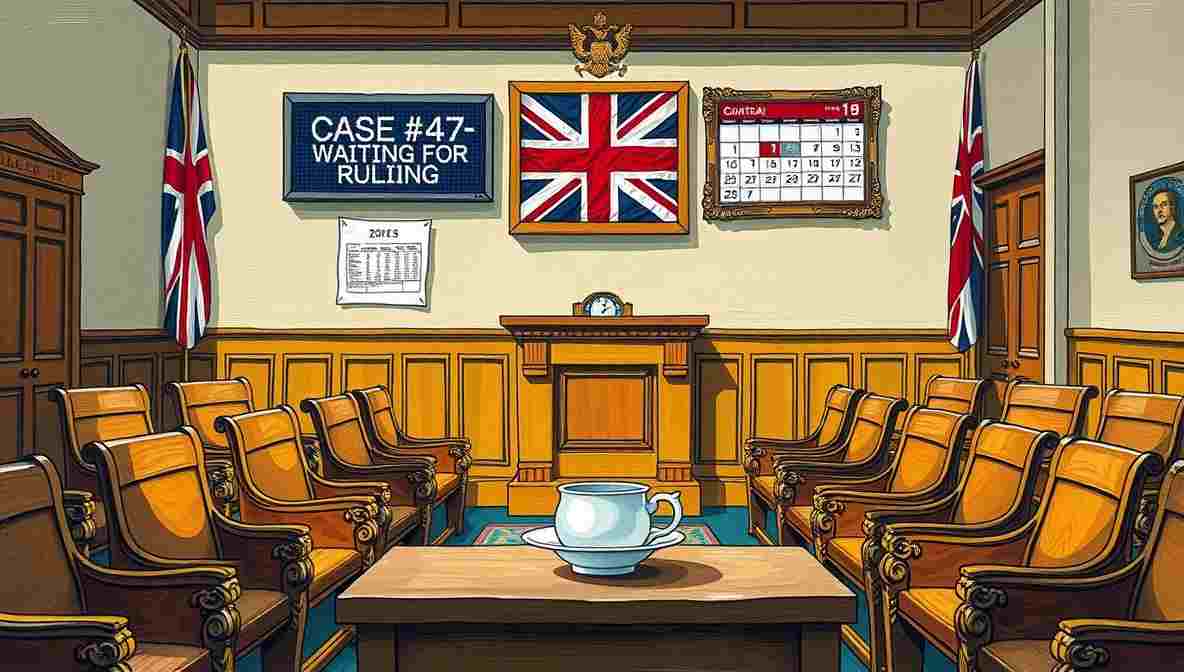
Starmer Announces “Listening Tour,” Nation Unsure What He’s Listening For
A Nationwide Exercise in Earnest Nodding
The Prime Minister this week launched what Downing Street is calling a “listening tour,” a carefully choreographed journey across the country designed to prove that Keir Starmer is paying attention. The tour’s stated aim is to hear voters’ concerns. Its unstated aim appears to be demonstrating that hearing and responding remain entirely separate skills.
At each stop, Starmer listens intently, nods thoughtfully, and thanks attendees for their honesty. He then moves on, carrying their concerns with him like delicate luggage that must not be opened in public. Aides describe the process as “deep engagement.” Voters describe it as “polite but unresolved.”
Listening, Carefully Filtered
The structure of the tour is precise. Questions are invited. Answers are acknowledged. Commitments are deferred. The Prime Minister’s team insists this is not avoidance but respect. “He’s not interrupting people with solutions,” one aide explained. “He’s honoring the listening phase.”
Critics argue the listening phase has been ongoing since roughly the invention of focus groups. Supporters counter that this time feels different. Mostly because it has a logo.
Town Halls, Carefully Managed
At a recent town hall, voters raised concerns about housing costs, wages, healthcare access, and whether anyone in government experiences life the way they do. Starmer listened patiently, thanked each speaker, and assured them their views were “being taken seriously.”
Asked afterward what he had learned, the Prime Minister said he had learned that people are worried. This revelation was greeted with admiration for its thoroughness.
Empathy Without Escalation
Observers note that Starmer excels at empathy delivery. His expressions convey concern. His tone suggests understanding. His words confirm awareness. What they do not do is escalate toward action. The result is a leadership style that feels emotionally present and practically absent.
One voter described the experience as “being heard by someone who’s very busy being reasonable.”
The Art of Not Overreacting
Inside Downing Street, the listening tour is framed as restraint. The government, aides say, does not want to rush into bold promises that might later require delivery. Instead, it is gathering input. Slowly. Carefully. Possibly indefinitely.
A senior official explained, “The worst thing we could do is promise something specific.” When asked what the best thing would be, the official paused, then said, “Listening.”
Polling the Silence
Early polling suggests the tour has had a modest effect. Voters say they find Starmer likable in person. They also say they leave events unsure what will change. Analysts call this “positive ambiguity,” a state in which goodwill increases without expectations rising.
One pollster noted that approval ticks up when voters see Starmer listening. It ticks down when they remember why they wanted to talk to him in the first place.
A Tour That Moves Faster Than Policy
The tour schedule is ambitious. Cities, towns, and carefully selected community centers fill the calendar. Policy announcements do not. Ministers insist this is intentional. “We’re not here to talk over people,” one said. “We’re here to absorb.”
Absorption, however, remains difficult to measure.
Listening as Leadership Brand
Supporters argue the tour signals a refreshing change from leaders who talk too much. Critics argue it signals a leader who is still deciding what to say. Both agree the Prime Minister is very good at listening while standing.
The danger, analysts warn, is that listening without visible follow-through risks becoming performance. Voters may eventually conclude they are participating in a very polite delay.
Heard, Acknowledged, Pending
As the listening tour continues, the Prime Minister remains attentive, composed, and noncommittal. The country speaks. He listens. The gap between those two actions remains the main story.
For now, the government insists this is progress. The public waits to see if listening eventually leads somewhere quieter, but more useful.
Disclaimer: This story is a work of satire, produced entirely through human collaboration between two sentient beings: the world’s oldest tenured professor and a philosophy major turned dairy farmer. Any resemblance to responsive governance is purely coincidental. Auf Wiedersehen.

Alan Nafzger was born in Lubbock, Texas, the son Swiss immigrants. He grew up on a dairy in Windthorst, north central Texas. He earned degrees from Midwestern State University (B.A. 1985) and Texas State University (M.A. 1987). University College Dublin (Ph.D. 1991). Dr. Nafzger has entertained and educated young people in Texas colleges for 37 years. Nafzger is best known for his dark novels and experimental screenwriting. His best know scripts to date are Lenin’s Body, produced in Russia by A-Media and Sea and Sky produced in The Philippines in the Tagalog language. In 1986, Nafzger wrote the iconic feminist western novel, Gina of Quitaque. Contact: editor@prat.uk