
The Definition of “Prat”: British Slang’s Most Versatile Insult Explained
The word “prat” is Britain’s gift to the lexicon of mild contempt—a term that elegantly captures arrogant foolishness in four efficient letters. Originating as 16th-century criminals’ slang for “buttock,” it evolved by 1968 into one of the English language’s most versatile insults: harsh enough to sting, yet acceptable enough for teatime television. Today, calling someone a “prat” communicates that they are not merely stupid, but obliviously stupid—typically someone full of themselves who remains blissfully unaware of their own ridiculousness.
Etymology: From Buttocks to Buffoons (A 500-Year Journey)
The word “prat” boasts a surprisingly complex etymology with two distinct linguistic roots that eventually merged into the insult we know today.
The first root traces to Old English præt or prætt, meaning “trick, prank, craft, or wile,” documented as early as 1175 in the Ormulum. This connects to Proto-Germanic *prattuz (“boastful talk, deceit”) and shares ancestry with the Dutch pret (“fun, pleasure”) and Norwegian prette (“trick”). Remarkably, this root also gave us the word “pretty”—suggesting that something decorative was once considered slightly deceitful. In parts of Scotland, “prat” meaning “a trick” persisted until the mid-1600s before fading into obscurity.
The second root appeared in the 1560s as underworld slang for “buttock” (notably singular—just the one). Thomas Dekker’s The Canters Dictionarie (1608) defined it plainly: “Pratt, a Buttock.” By 1914, American criminals had adopted it to mean “hip pocket”—the target of pickpockets. Then in 1929, vaudeville comedians combined it with “fall” to create “pratfall”: a deliberate comedy landing on one’s backside.
The modern insult meaning—”a contemptible, foolish person”—didn’t emerge until around 1968 in British slang. The semantic leap from “bottom” to “person you’d rather not share a train carriage with” follows a familiar pattern: body parts frequently become insults (see also: “ass,” “twat,” “bellend”).
Prat Definition: What Dictionaries Say
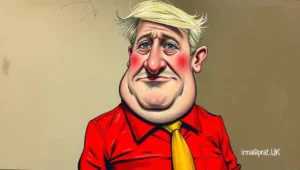
The Oxford English Dictionary maintains four separate entries for “prat,” reflecting its layered history. The primary modern entry lists three meanings: (1) buttocks, (2) hip pocket, and (3) a foolish person. Oxford also notes a rare verb form meaning “to nudge or push with the buttocks”—a maneuver presumably requiring considerable expertise.
Cambridge Dictionary offers the characteristically British definition: “someone who behaves stupidly or has little ability.” Their example sentence—”You look a right prat in that outfit”—captures the word’s natural habitat perfectly.
Collins Dictionary explicitly marks it as “(Brit, Austral, NZ slang)” and adds a crucial nuance: “If you describe someone as a prat, you are saying in an unkind way that you think they are very stupid or foolish.” The operative phrase here is “in an unkind way”—unlike calling someone a “muppet” or “wally,” “prat” carries genuine derision.
Merriam-Webster, representing American usage, defines it primarily as “the buttocks” and notes the “fool” meaning as British slang, with a first known American use in 1955. Most Americans encountering the word would assume it’s a typo for “brat.”
British Slang: Regional Usage Across English-Speaking Countries
The word’s comprehension varies dramatically across the English-speaking world, revealing fascinating patterns in how British slang travels—or doesn’t.
England: Ground Zero for Prat
England remains ground zero for “prat” usage. It’s universally understood, deployed casually across all social classes, and mild enough for pre-watershed television. A 2024 Perspectus Global study found, however, that 25% of Gen Z Britons have never heard the term, suggesting the insult may be gently aging out of youth culture. The word carries a specific connotation: someone who is both arrogant and stupid—not merely foolish, but foolish while believing themselves impressive.
Scotland, Wales, Ireland
Scotland understands “prat” perfectly but often prefers local alternatives with more character: “numpty,” “bampot,” “eejit,” or the magnificently dismissive “tube.” Wales and Ireland share the English understanding completely. Irish speakers particularly use “prat” in lighthearted contexts—”You prat, why didn’t you tell me sooner?”—though they too have local favorites like “gobshite” and “langer” for more emphatic occasions.
Australia and New Zealand
Australia and New Zealand actively use “prat” with the same meaning and mild offense level as Britain. These Commonwealth countries share enough British linguistic heritage that the word feels native rather than borrowed.
United States: Total Confusion
The United States presents a fascinating case of near-total ignorance. American forum users frequently report: “I’ve NEVER heard ‘prat’ before” and “I thought it might be a typo.” Those who recognize it typically learned it from Harry Potter, Monty Python, or British television. Americans would naturally say “jerk,” “idiot,” or “doofus” instead.
Canada and Other Commonwealth Nations
Canada occupies a middle ground—likely understood due to Commonwealth connections and British media exposure, but not commonly used in natural speech. India, South Africa, and other Commonwealth nations show no documented active usage, though English speakers familiar with British media would likely understand the word if encountered.
Grammar: How to Use “Prat” Correctly

Part of speech: Primarily a count noun (a prat, two prats), though British English also allows a phrasal verb form.
Plural: Simply “prats”—”I need competent people, and all they send me are prats.”
Verb form: “Prat about” or “prat around” means to behave stupidly or waste time. “Stop pratting about and get on with your work!”
Adjectival form: “Prattish” exists but is rare—”His prattish behavior embarrassed everyone at the dinner party.”
Pronunciation: /præt/—rhymes with “cat,” “bat,” “hat,” and appropriately, “that.”
Common collocations intensify the insult beautifully:
- “a complete prat”
- “an utter prat”
- “a total prat”
- “a right prat” (distinctly British)
- “an absolute prat”
- “feel like a prat”
- “look like a prat”
- “make a prat of oneself”
Pratfall: Where Comedy Meets Anatomy
The word “pratfall”—a comedy fall landing on one’s backside—preserves the original anatomical meaning of “prat” while achieving international recognition. First documented in 1929 from American burlesque and vaudeville, the pratfall became the foundational move of physical comedy.
Master practitioners of the pratfall include:
- Buster Keaton—the stone-faced genius of silent comedy
- Charlie Chaplin—whose Little Tramp made falling an art
- Lucille Ball—”one of the most beloved and adept actresses to employ the pratfall within a situation comedy”
- Dick Van Dyke—who famously said, “I learned to do pratfalls when I was very young”
- John Ritter—whose Jack Tripper turned pratfalls into a signature
- Chris Farley—whose motivational speaker Matt Foley destroyed coffee tables with legendary falls
The pratfall has transcended its origins to mean any embarrassing failure or humiliating blunder—”The company’s product launch was a spectacular pratfall.”
Famous Prat Moments: Politics and Pop Culture
Ron Atkinson’s Referee Revenge
The former Manchester United manager delivered one of football’s most quoted lines: “I never comment on referees and I’m not going to break the habit of a lifetime for that prat.” This perfect construction—technically not commenting while absolutely commenting—has appeared on “Top 10 Football Quotes” lists ever since.
Matt Hancock: Absolute Prat (2022)
When former Health Secretary Matt Hancock abandoned Parliament to appear on I’m A Celebrity…Get Me Out Of Here, Conservative MP Tim Loughton told Times Radio: “I think he’s been an absolute prat and the least he deserves is having the whip withdrawn from him.” The quote was reported across every major British news outlet and became a dictionary citation example.
Blackadder’s Brilliant Insults
The BBC comedy series deployed “prat” as precision weaponry. In “Head,” Edmund Blackadder responds to an unwanted hug from Percy: “And thank God you did, Percy, for I was just thinking to myself: ‘My God, I die in 12 hours—what I really need now is a hug from a complete prat.'” In “Private Plane,” Captain Blackadder informs Lord Flashheart: “Unfortunately, most of the infantry think you’re a prat.”
Merlin’s Running Gag
BBC’s Merlin (2008-2012) turned “prat” into a catchphrase. The servant Merlin repeatedly addresses Prince Arthur with variations including: “You’re a prat. And a royal one,” “How long have you been training to be a prat, my lord?” and simply, “Just don’t be a prat.”
Media Appearances: Television and Literature

Television provides the word’s natural ecosystem. Beyond Blackadder and Merlin, notable appearances include:
- The Office UK: David Brent (Ricky Gervais) laments, “You headbutt a girl on telly and you’re labelled a prat, and that’s the game.”
- Snatch (2000): Brick Top Polford snarls, “I don’t have my fight, do I, you fucking prat?”
- Only Fools and Horses: Rodney nicknames Del Boy’s Ford Capri “The Pratmobile”
- The Inbetweeners: Liberally employs authentic British youth slang throughout
Literature features scattered usage. Douglas Adams referenced “Charles’s pratfall” in The Hitchhiker’s Guide to the Galaxy. Harry Potter fan fiction overwhelmingly describes Draco Malfoy as “the blond-haired grey-eyed prat”—the word appears thousands of times in fanworks.
Lexicographer Susie Dent (Countdown’s word expert) provided the etymological note of record on Twitter: “Origin of the day: the word ‘prat’ comes from 16th-century slang for a buttock (originally just the one). A pratfall was a comedy fall onto the backside.”
Offense Level: How Rude Is “Prat”?
Classification: MILD INSULT—safe for television, workplaces, and grandmothers (most of them).
On the British offense scale from mildest to strongest, “prat” sits comfortably in the lower third:
- Barely an insult: Silly, daft, daft brush
- Playful/affectionate: Muppet, wally, twit
- Mildly derisive: Plonker, pillock, numpty
- Pointed but acceptable: PRAT, berk
- Moderate: Git, tosser
- Stronger: Wanker, bastard, bellend
- Strong: Twat
- Nuclear option: The C-word
What distinguishes “prat” from gentler synonyms is its implication of arrogance combined with stupidity. A “muppet” is merely incompetent; a “prat” believes they’re impressive while being obviously foolish.
Conclusion: A Word Worth Preserving
“Prat” represents something increasingly rare in English: a precision insult that communicates a specific type of foolishness without crossing into genuine profanity. Its 500-year journey from criminal slang for buttocks to beloved British put-down traces an improbable but delightful path through the evolution of English.
The word’s geographic distribution reveals how British slang travels—enthusiastically adopted across the Commonwealth while remaining almost entirely mysterious to Americans. Its grammatical flexibility (noun, verb, component of “pratfall”) makes it endlessly deployable. And its mild-but-pointed offense level positions it perfectly for situations requiring contempt without confrontation.
Yet the 2024 finding that 25% of young Britons have never heard the word suggests “prat” may be slowly aging out of the active lexicon—replaced, perhaps, by more globally recognized insults spread through American media dominance. This would be a loss. No other word quite captures the essence of someone who is, as the British say, “full of themselves and, almost invariably, stupid as well, with a hint of delusion.”
Long may the prat endure—and long may we have the vocabulary to identify them when we see them.
IMAGE GALLERY
Definition of Prat