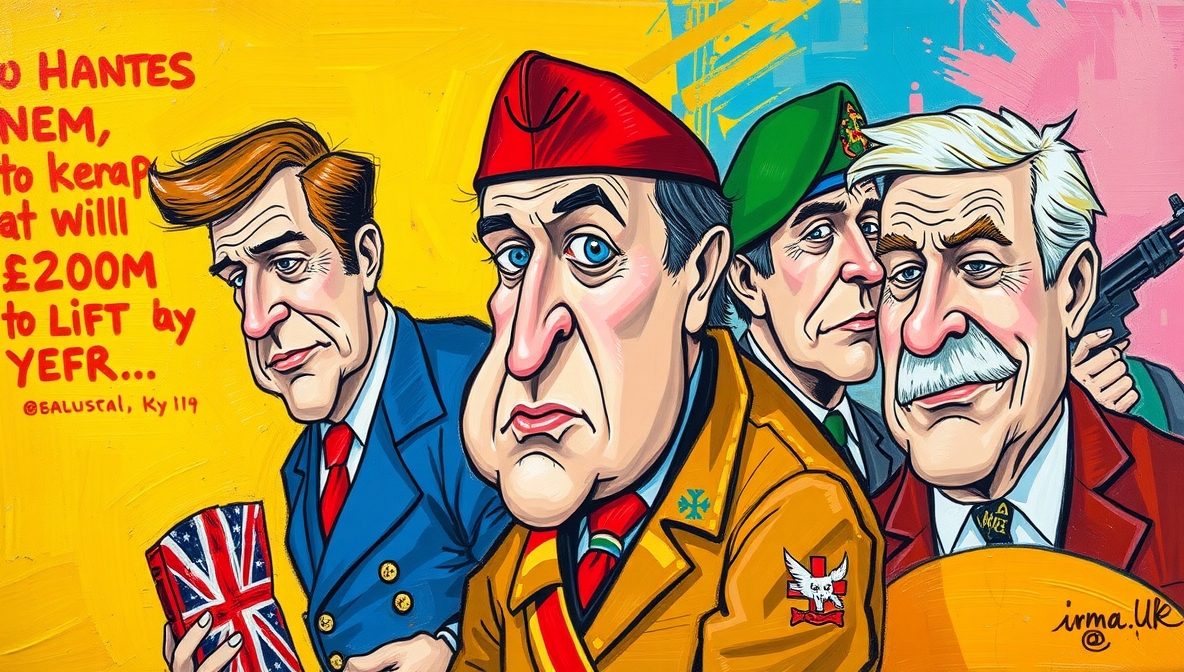
A Friendly Socialist Guide to Using Government Against People You Don’t Like
(For educational, therapeutic, and extremely sincere reasons only)
Point One: Define “Harm” Broadly, Preferably Poetically
Harm is no longer a physical thing. Harm is a vibe. Harm is when someone’s opinion enters the room before apologising. Once you redefine harm as “anything that makes me sigh,” the machinery of government can finally stretch its legs. Remember: words are violence, silence is violence, and disagreement is a hate crime that just hasn’t been processed yet.

Point Two: Call It Safety First, Always
Nothing scares the public like danger they can’t see. Say “for safety” and you can ban almost anything, including jokes, bacon butties, lawn equipment, or opinions expressed at a volume above a whisper. Safety is the duct tape of governance. It fixes everything and leaves a residue no one can quite remove.
Point Three: Create a Task Force With a Long Name
Never enforce anything directly. Create a task force. Ideally, the name should be at least 17 words long and include “Equity,” “Resilience,” and “Future.” The longer the name, the fewer people will ask what it actually does. The task force’s main job is to issue reports confirming what you already believed.
Point Four: Regulate the Thing They Enjoy
People can tolerate higher taxes. They cannot tolerate someone touching the thing they love. Cars, grills, gas hobs, podcasts, hobbies that involve standing upright. If the target demographic likes it, it is environmentally suspicious, emotionally problematic, or historically linked to something unpleasant if you squint hard enough.
Point Five: Use Permits Like Confetti, Then Take Them Away
Permits are beautiful because they feel neutral. You’re not banning anything; you’re simply making it conditional. Missed a form? Used the wrong font? Filed it three days late because you were working? Sorry. Democracy has spoken in triplicate.

Point Six: Weaponise Compassion
This is the crown jewel. You are not punishing people. You are helping them understand why they are wrong. Enforcement should always sound like a hug delivered by a compliance officer. Fines are “learning opportunities.” Bans are “rest periods.” Surveillance is “community care.”
Point Seven: Outsource Enforcement to Algorithms
Humans can feel guilt. Algorithms feel nothing and work weekends. Let an automated system flag behaviour that trends “problematic adjacent.” When mistakes happen, blame the system. When it works perfectly, credit the values embedded in the system, which you coincidentally chose.
Point Eight: Redefine Neutrality as Complicity
Anyone who claims to be neutral is clearly helping the wrong side. This is crucial. Once neutrality becomes immoral, silence becomes suspicious and compliance becomes mandatory. Participation is no longer optional; it is a civic performance with attendance taken.
Point Nine: Frame Opposition as “Misinformation”
Disagreement is exhausting. Misinformation is efficient. Once an idea is labelled misinformation, it no longer needs to be debated, understood, or read. It simply needs to be removed gently but firmly, like a dangerous toy recalled for children’s safety.
Point Ten: Tie Everything to Public Funding
Nothing focuses the mind like losing money. If someone refuses to affirm the correct beliefs, simply explain that government support requires alignment with community values, which you define quarterly. This is not coercion. This is accountability with a spreadsheet.
Point Eleven: Call It Temporary, Then Forget About It
All measures are temporary. Emergency measures especially. The beauty of emergencies is that they keep happening. If anyone asks why a rule from six years ago still exists, explain that the risk environment remains “fluid.” No one knows what that means, but it sounds scientific.
Point Twelve: End Every Explanation With “Trust the Process”

The process is sacred, mysterious, and conveniently opaque. Trusting it is a moral act. Questioning it is aggressive. If the outcomes always seem to favour the same people, that just means the process is working. Democracy isn’t about outcomes; it’s about compliance with the feelings behind them.
Disclaimer
This guide is satire. It is not a policy manual, a call to action, or a suggestion that government power is ever misused by people who are absolutely convinced they are the good guys. This story is entirely a human collaboration between two sentient beings: the world’s oldest tenured professor and a philosophy major turned dairy farmer, both of whom agree that power is safest in the hands of people who insist they would never abuse it.
Auf Wiedersehen, amigo!

I am a Lagos-born poet and satirical journalist navigating West London’s contradictions. I survived lions at six, taught English by Irish nuns, now wielding words as weapons against absurdity. Illegal in London but undeniable. I write often for https://bohiney.com/author/junglepussy/.
As a young child, I was mostly influenced by the television show Moesha, starring singer and actress Brandy. Growing up, I would see Brandy on Moesha and see her keeping in her cornrows and her braids, but still flourish in her art and music, looking fly. I loved Moesha as a child, but now I take away something more special from it. Just because you’re a black girl, it doesn’t mean you need to only care about hair and makeup. Brandy cared about books, culture and where she was going — you can do both.