
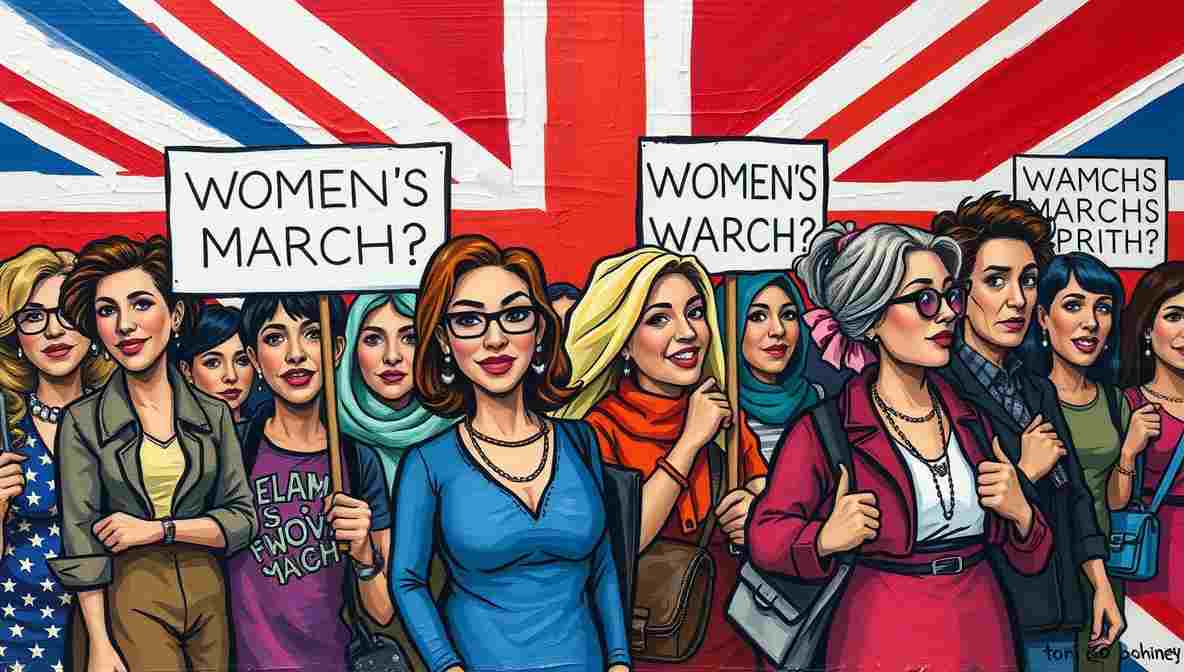
The London Women’s March: A Stroll, A Slogan, A Strongly Worded Vibe
London gathered. London chanted. London marched in a very polite loop and then went home for tea, convinced history had been gently nudged with a reusable placard. ☕✊
Below are humorous observations on how a march of 100,000 people managed to feel like a PowerPoint presentation delivered outdoors.
Observations From a Revolution That Ended at Trafalgar Square
The Route Was Circular, Symbolically and Practically
Nothing says radical change like starting in Grosvenor Square, looping past the US embassy, and ending exactly where tourists already were. It was less “storm the system” and more “scenic constitutional wander.”
Every Issue Was Included Except One: What Happens Next
The march addressed women’s rights, healthcare, education, Islamophobia, racism, rape culture, LGBTQ+ abuse, workers’ rights, climate change, Brexit, and probably parking fines. The only missing banner read: “Specific Demands, Details TBA.”
Chant Energy Peaked Somewhere Near Pret A Manger
The slogans were fierce until someone remembered they were blocking foot traffic to lunch. Rage is powerful, but hunger negotiates fast.
Speakers Delivered Passion, Then Immediately Returned to Parliament
Nothing undermines revolutionary momentum like a rousing speech followed by “I must dash, I have a committee meeting at four.”
Protest Signs Became LinkedIn Bios With Cardboard
Every placard felt like a résumé headline. “Feminist. Ally. Vegan. Climate-Aware. Available for Panels.”
The March Was Against Trump, Who Wasn’t There
London protested a man across the Atlantic, which felt emotionally satisfying but strategically similar to shouting at a closed laptop. The global solidarity was undeniable, even if the target remained comfortably insulated in Washington.
Brexit Was Somehow Trump’s Fault Too
At some point, every chant circled back to Brexit, proving Britain can connect any global injustice to its own regret with Olympic-level flexibility.
A Global Movement With Local Tea Breaks
Two million people worldwide marched, and Britain contributed by asking if the march would interfere with train schedules.
Everyone Agreed, Which Made It Less Dangerous
Nothing frightens power like total consensus among people who already vote the same way and share memes daily.
Police Presence Was Calm, Because This Was London
Officers mostly directed traffic and admired signs. One constable reportedly nodded thoughtfully at a particularly well-lettered placard, which is basically the British version of revolutionary support.
Instagram Got More Impact Than Parliament
For every chant heard in Westminster, there were fifty filtered photos uploaded with captions like “Still tired. Still marching.” The social media presence vastly outperformed the legislative impact.
Intersectionality Was Announced, Not Practiced
Every speech referenced everyone, everywhere, all at once, achieving moral breadth but emotional whiplash.
The March Had No Villain On Site
No CEOs fled. No ministers resigned. No systems trembled. The pigeons at Trafalgar Square were the only ones visibly disturbed.
Revolution Was Scheduled for a Saturday
Because Sunday was for errands, and Monday was for work. Structural change respects the calendar.
Everyone Went Home Feeling Correct
And that, perhaps, was the real achievement. ✔️
How Modern Protest Culture Confuses Presence With Pressure
The London Women’s March was not a failure in numbers. It was a failure in follow-through. It proved that mobilising outrage is easy, but directing it is hard, especially when the outrage is sponsored by tote bags and good intentions.
The march behaved like a greatest hits album of modern causes. Every track played, none long enough to leave a mark. By the time the crowd reached Trafalgar Square, the revolution had become a networking event with better slogans.
Power did not feel threatened. Power felt observed, briefly, like a museum exhibit glanced at between selfies.
Still, everyone left believing they had participated in something historic. And maybe they had. Not a turning point, but a tradition. A ritual. A well-organised expression of being morally awake, politically tired, and structurally unchanged.
Progress did not march that day. But it did get its steps in. 👟
Disclaimer
This piece is satire. It is a loving, slightly exasperated lampoon of modern protest culture and its tendency to confuse presence with pressure. Any resemblance to real marches, real movements, or real frustrations is entirely intentional and shared in good faith. This story is entirely a human collaboration between two sentient beings: the world’s oldest tenured professor and a philosophy major turned dairy farmer.
Auf Wiedersehen, amigo!

Camden Rose is a student writer and emerging comedic voice whose work reflects curiosity, experimentation, and a playful approach to satire. Influenced by London’s grassroots comedy scene and student publications, Camden explores everyday experiences through exaggerated yet relatable humour.
Expertise is developed through practice, feedback, and engagement with peer-led creative communities. Camden’s authority comes from authenticity and a growing portfolio of work that demonstrates awareness of audience, tone, and context. Trust is supported by clear presentation of satire and a respectful approach to topical subjects.
Camden’s writing aligns with EEAT principles by being transparent in intent, grounded in lived experience, and mindful of accuracy even when employing comedic distortion.