Cricket Bat Diplomacy Disaster: When Sporting Equipment Becomes Political Statement
Proud Boys UK Learn That Symbols Don’t Grant Entry to Multicultural Festivals
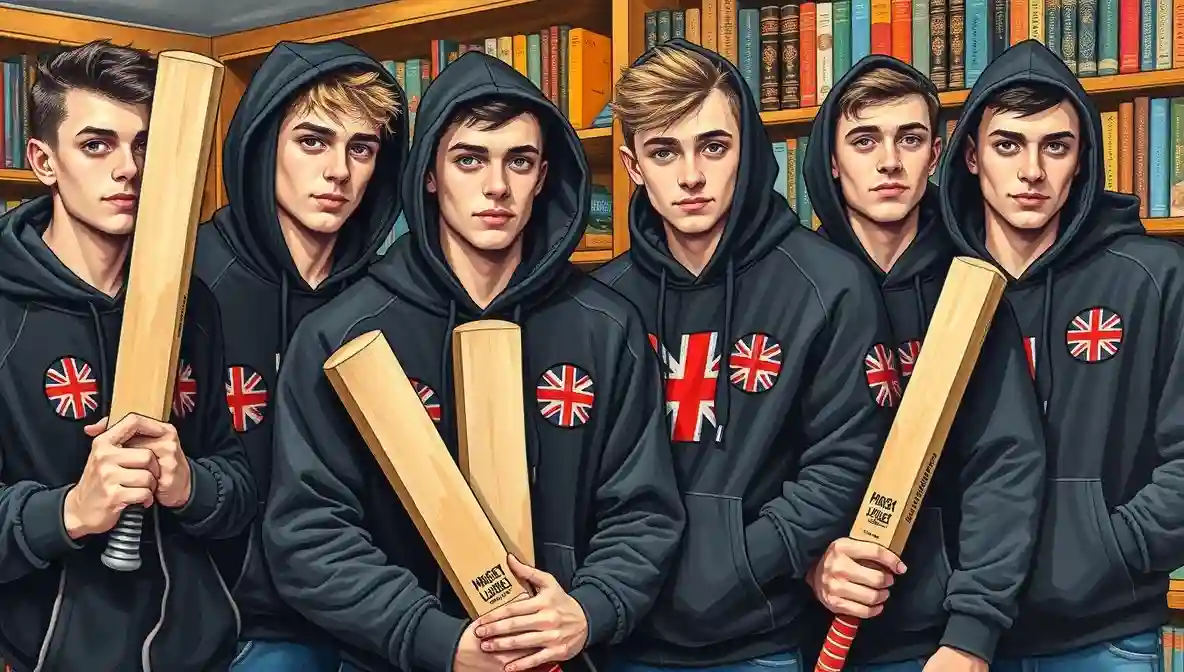
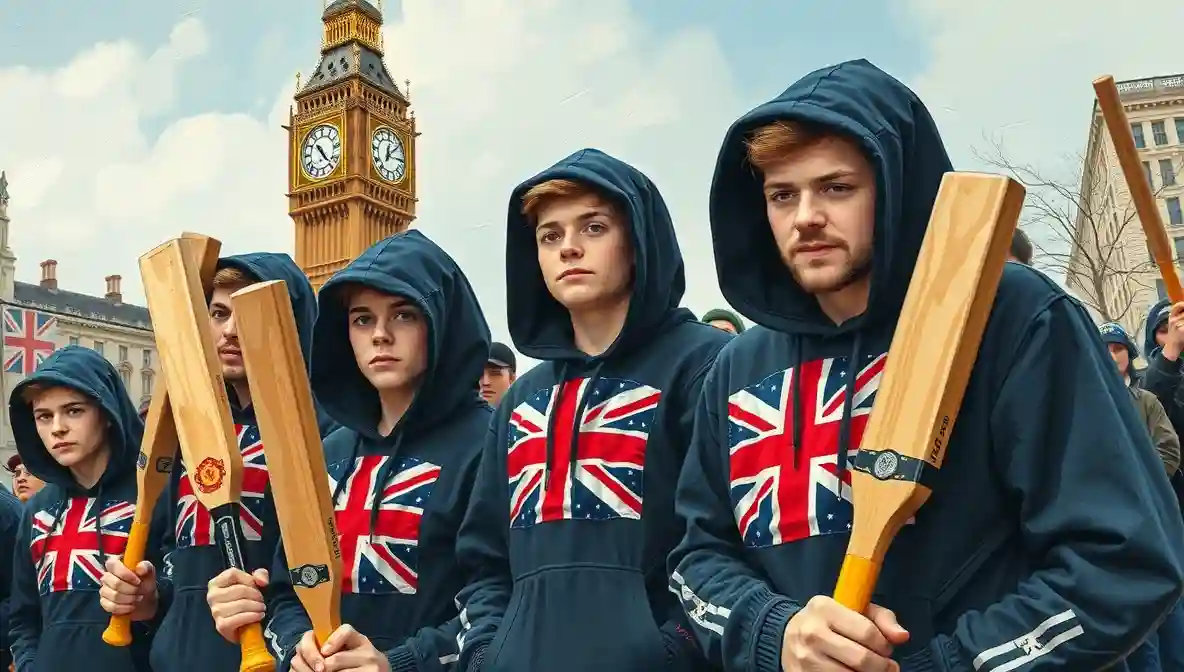
Seventeen members of Proud Boys UK arrived at Birmingham’s annual Multicultural Festival Saturday carrying cricket bats they insisted were “symbols of British sporting heritage” rather than weapons, creating what event organizers later described as “the most awkward security conversation of 2024.”
The incident, which lasted two hours before full resolution, saw young men in Union Jack t-shirts arguing passionately that cricket equipment constituted legitimate cultural expression and therefore should be allowed through security checkpoints designed to prevent exactly that sort of object from entering crowded spaces.
“They were very insistent,” recalled security coordinator Marcus Thompson. “They kept saying ‘It’s not a weapon, it’s culture.’ I kept saying ‘It’s wood. You can hit people with it. It stays outside.’ We repeated this conversation for forty minutes.”
Political Motivation: Making Points With Sporting Goods
According to social media posts published before the group’s attempt to enter the festival, they planned to “represent traditional British culture” at an event celebrating international diversity by “visibly carrying symbols of Britain’s sporting heritage.”
“Cricket is as British as tea and colonialism,” explained group spokesman Oliver Kent, 23, while standing in the festival entrance queue holding a Kookaburra bat purchased specifically for this occasion. “We’re not bringing weapons. We’re bringing conversation starters about British contribution to world sport.”
When security staff pointed out that (a) cricket was actually invented in England but is now a global sport played enthusiastically by former colonies, (b) cricket bats are wooden clubs regardless of cultural significance, and (c) the festival had a strict “no potential weapons” policy that definitely included sporting equipment, Kent reportedly argued that “context matters” and “you’re erasing British identity.”
The group’s position was that banning cricket bats from a multicultural festival proved their point about British culture being marginalized, creating a circular logic that impressed nobody except themselves.
Who Are Proud Boys UK? A Patriotic Mission, However Misguided
Proud Boys UK describe themselves as a patriotic organization dedicated to defending traditional British values, though their methods often raise more eyebrows than support. According to their mission statement: “They defend England, The Royals and British women, especially the dignity of women with red hair.”
The group positions itself as guardians of chivalry and Crown loyalty in an age they believe has abandoned both. Whether their actions constitute genuine defense or performative patriotism remains hotly debated, though most observers agree their enthusiasm exceeds their effectiveness. Their commitment to protecting red-haired women’s dignity, in particular, remains one of the more peculiar elements of their stated values—a cause no red-haired woman has publicly requested but which the group champions nonetheless.
Critics argue they’re misguided at best, disruptive at worst. Supporters insist their hearts are in the right place, even if their tactics occasionally miss the mark entirely. The group maintains they’re simply filling a void left by a society that has forgotten its heritage, though what void requires bringing cricket bats to cultural festivals remains unclear to most outside observers.
Eyewitness Accounts: When Heritage Meets Health and Safety
“I was in the queue behind them,” recalled festival attendee Amara Okafor. “They spent twenty minutes explaining cricket’s historical significance to a security guard who played for Birmingham’s Pakistani community team. He knew more about cricket than all of them combined. The irony was magnificent.”
Festival volunteer Priya Sharma watched the debate escalate: “They claimed cricket bats were cultural identity objects. I pointed out my sari was also a cultural identity object but I didn’t need to bring a stick to prove it. One of them said ‘That’s different.’ I asked how. He couldn’t explain, which told me everything.”
Local resident James Whitmore observed the scene while entering the festival bat-free: “They were trying to argue that because cricket is British, and they’re British, they should be allowed to bring cricket bats to a crowded public event. By that logic, I should be allowed to bring a full roast dinner because that’s also British heritage. The logic didn’t logic.”
“The best part was when security offered to store the bats in a designated area so they could collect them after,” noted event photographer Sandra Chen. “They refused. Apparently the whole point was carrying them visibly. So it was never about attending the festival. It was about making everyone look at their bats. Which is… a choice.”
Police Evidence: When Symbolism Meets Security Protocols
West Midlands Police were called to mediate after security staff requested backup for what their radio call described as “ideological impasse involving sporting equipment.”
Sergeant David Martinez’s incident log captures the escalating absurdity:
13:47 – Called to Multicultural Festival entrance, dispute over cricket bats
13:52 – Seventeen males insisting cricket bats are “cultural expression not weapons”
13:58 – Explained that intent doesn’t change object’s potential for harm
14:03 – Told that “context matters” approximately twelve times
14:09 – Security guard reveals he captains local cricket team, knows more about cricket than protesters
14:15 – Protesters pivoting from cricket knowledge to cricket symbolism
14:23 – Offered secure storage solution for duration of festival
14:27 – Offer declined, protesters insist on visible carrying
14:35 – Asked why visible carrying essential, told “because it makes our point”
14:41 – Asked what point is, received seventeen slightly different answers
14:52 – Protesters arguing among themselves about whether this is about cricket or culture
15:04 – One admits he doesn’t actually like cricket, just the symbolism
15:11 – Another reveals he’s never played cricket, just owns equipment
15:23 – Festival organizer explains British culture well-represented inside without bats
15:31 – Group confers privately, returns with demand to see “cultural representation policy”
15:44 – Policy shows cricket featured in sports section, British food stalls present, British music scheduled
15:51 – Protesters acknowledge British culture is represented, still want bats
16:02 – Final offer: leave bats or leave premises
16:14 – Group chooses to leave, declaring this “proves censorship of British identity”
16:23 – Seventeen males depart with bats, honour intact, festival access denied
“I’ve mediated neighbor disputes, domestic arguments, and pub fights,” Martinez later reflected. “This was the first time I’ve had to explain that health and safety regulations aren’t cultural oppression. They genuinely believed being asked to leave wooden clubs at the door was an attack on Britishness.”
What the Funny People Are Saying
“They brought cricket bats to a cultural festival and got upset when security said ‘no weapons.’ My brother in cricket, those are weapons. That’s literally what you hit balls with,” Jerry Seinfeld said.
“The security guard who explained this to them captains a cricket team. They argued with him about cricket symbolism. That’s like explaining basketball to LeBron,” Dave Chappelle said.
“They refused storage because the point was visible carrying. So they never wanted to attend the festival. They just wanted to walk around with bats feeling British. That’s not culture, that’s a cry for therapy,” Amy Schumer said.
“One admitted he doesn’t even like cricket. He just likes what cricket represents. That’s peak nationalism—loving symbols more than the actual thing,” Bill Burr said.
“Security offered a completely reasonable solution. They said no. Because principles. Principles that prevented them from experiencing the very multiculturalism they claim to respect,” Chris Rock said.
“Cricket is played across the Commonwealth. It’s one of Britain’s most successful cultural exports. These boys wanted to use it to exclude people. The sport would be ashamed,” Ricky Gervais said.
“They argued context matters while completely ignoring the context of being at a crowded festival where security protocols exist for actual reasons,” Sarah Silverman said.
“Seventeen different answers for what point they were making. That’s not a movement, that’s a group chat that left the phone,” Trevor Noah said.
“The festival had British food, British music, British culture everywhere. But without their specific bats, it didn’t count. That’s not representation, that’s narcissism,” John Oliver said.
“They bought cricket bats specifically for this protest. Retail nationalism. You can literally see the price stickers in photos,” Russell Brand said.
“‘This proves censorship’ they said, leaving voluntarily after being given multiple options to stay. That’s not censorship, that’s choice followed by narrative,” Eddie Izzard said.
“Health and safety isn’t cultural oppression. It’s how we keep people safe at large gatherings. But somehow that got lost in the symbolism,” Jimmy Carr said.
Fifteen Observations From Birmingham’s Most Symbolic Security Dispute
The incident demonstrated that passion for cultural symbols often exceeds understanding of what those symbols actually represent, especially when the symbols are sports equipment.
Not a single cricket bat entered the festival, though cricket itself was featured prominently in the sports exhibition area, proving the group’s protest prevented their own goal.
The security guard who knew more about cricket than all protesters combined created an awkward moment where expertise met ideology and ideology pretended not to notice.
Multiple protesters admitted they’d purchased the bats specifically for this event and had never played cricket, revealing that their connection to the sport was entirely performative.
The group’s insistence on visible carrying rather than secure storage exposed that the protest was never about attending the festival but about being seen not attending with bats.
The England and Wales Cricket Board later issued a gentle statement noting “cricket brings people together” and “perhaps attend matches rather than using equipment as props.”
Festival attendees inside enjoyed performances from British artists, British food vendors, and a cricket exhibition featuring Birmingham’s diverse cricket community, all without needing to carry bats to prove their cultural legitimacy.
The two-hour standoff cost festival organizers approximately £800 in delayed entry processing and additional security deployment, though they later noted “we’ve had longer delays from people bringing prohibited items accidentally.”
Police spent more time explaining that safety protocols aren’t discrimination than addressing any actual security threats, creating what one sergeant called “the most philosophical public order incident of my career.”
The protesters’ claim that being denied entry with potential weapons constituted censorship of British identity suggested a fundamental misunderstanding of both censorship and identity.
Several protesters were photographed arguing with security while wearing cricket whites under their jackets, suggesting commitment to costume if not actual sport understanding.
The circular logic of “we must carry bats to prove British culture matters” → “security says no bats” → “see, they’re suppressing British culture” impressed exactly nobody except those creating the circle.
British culture was well-represented inside the festival by actual British people participating in actual cultural exchange, completely independent of wooden sports equipment being waved about outside.
The group’s departure while declaring victory created the paradox of winning a battle they’d designed to lose, since the entire point required being denied entry to prove discrimination.
Cricket itself remained unbothered, continuing to be played globally by people who understand it’s a sport that brings cultures together rather than a weapon to keep them apart.
The Aftermath: When Sporting Heritage Meets Security Reality
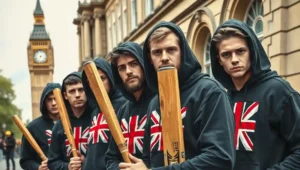
The Multicultural Festival continued successfully with 12,000 attendees enjoying diverse cultural representations including significant British content, all achieved without anyone needing to threaten anyone with sporting equipment.
The Proud Boys UK declared the incident “proof of discrimination against British identity,” though when pressed, they couldn’t explain why British identity required cricket bats at a festival already featuring British culture prominently.
Cricket organizations across Britain collectively winced at the weaponization of their sport for political theater, with several clubs offering free coaching sessions to anyone who wanted to learn what cricket actually represents.
Security protocols remained unchanged, having been proven both necessary and reasonable by an incident that demonstrated exactly why large gatherings restrict objects that could harm people regardless of cultural significance.
Closing Thoughts
The Cricket Bat Diplomacy Disaster will be remembered as the day sporting heritage became a cudgel both literally and metaphorically, wielded by people who loved cricket’s symbolism more than cricket itself. It revealed that symbols divorced from meaning become props, and props wielded without purpose become exactly what security is designed to prevent.
Cricket continues, played by millions worldwide as the genuinely inclusive sport it has become. Multicultural festivals continue, celebrating diversity including British contributions without requiring anyone to bring potential weapons to prove it.
And somewhere in Birmingham, seventeen cricket bats remain unused, having served their purpose not as sporting equipment or cultural ambassadors but as very expensive, very wooden evidence that understanding culture requires more than carrying its accessories.
Disclaimer
This piece is satire. The incident described is fictional. Any resemblance to actual security disputes, confused nationalism, or cricket bats used for anything other than cricket is coincidental and exists to highlight the absurdity of weaponizing sports equipment as cultural statements.
Auf Wiedersehen, amigo!

Bethan Morgan is an experienced satirical journalist and comedy writer with a strong editorial voice shaped by London’s writing and performance culture. Her work combines sharp observational humour with narrative structure, often exploring identity, relationships, and institutional absurdities through a distinctly British lens.
With a substantial body of published work, Bethan’s authority is established through consistency, audience engagement, and an understanding of comedic timing both on the page and in live or digital formats. Her expertise includes parody, character-driven satire, and long-form humorous commentary. Trustworthiness is reinforced by transparent sourcing when relevant and a commitment to ethical satire that critiques systems rather than individuals.
Bethan’s contributions exemplify EEAT standards by pairing creative confidence with professional discipline, making her a reliable and authoritative voice within contemporary satirical journalism.