Battle of Waterstones, Piccadilly: Where Literature Met Lads and Everyone Lost
Proud Boys UK Discover Books Are Organised Alphabetically, Not Ideologically
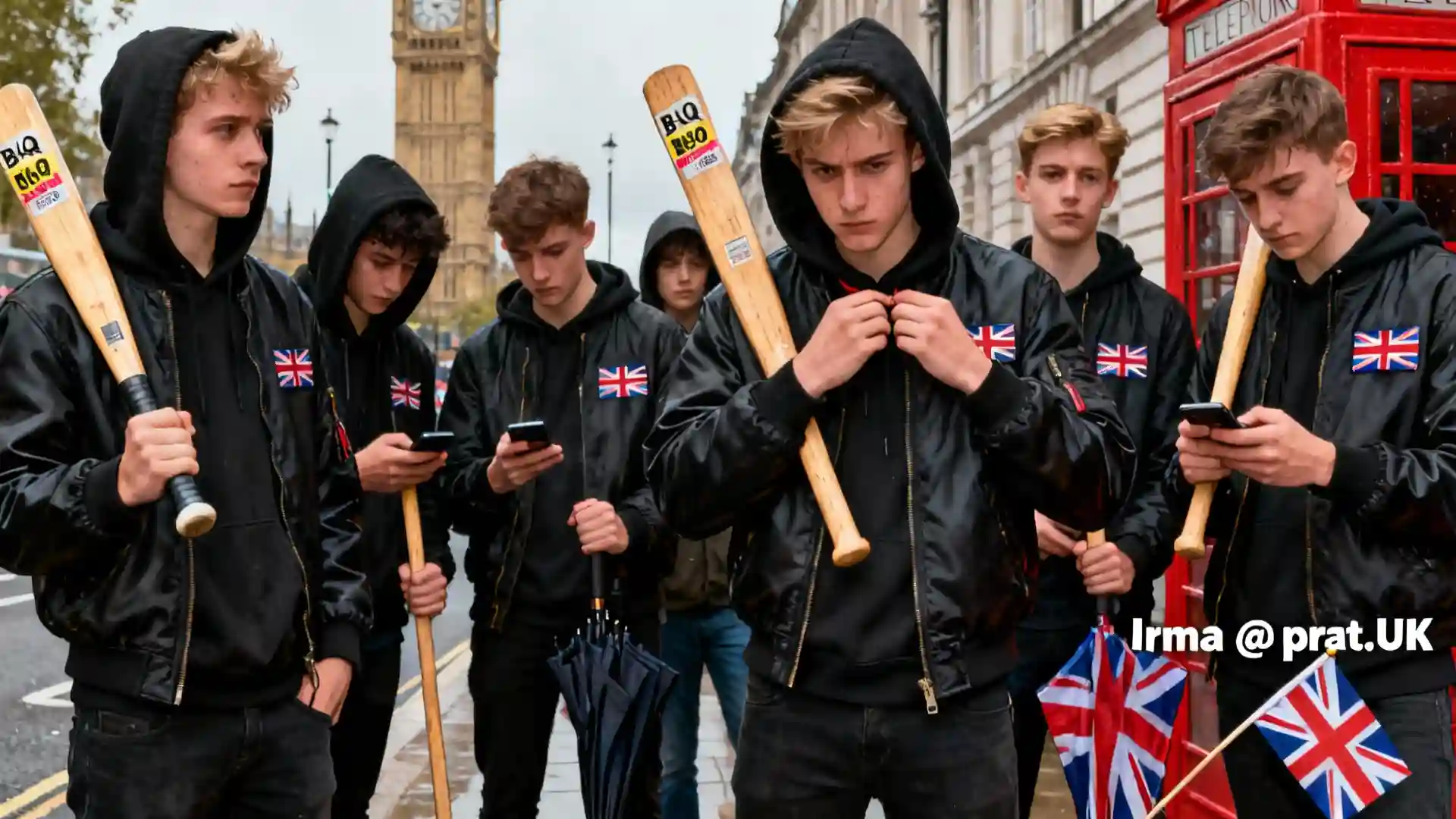
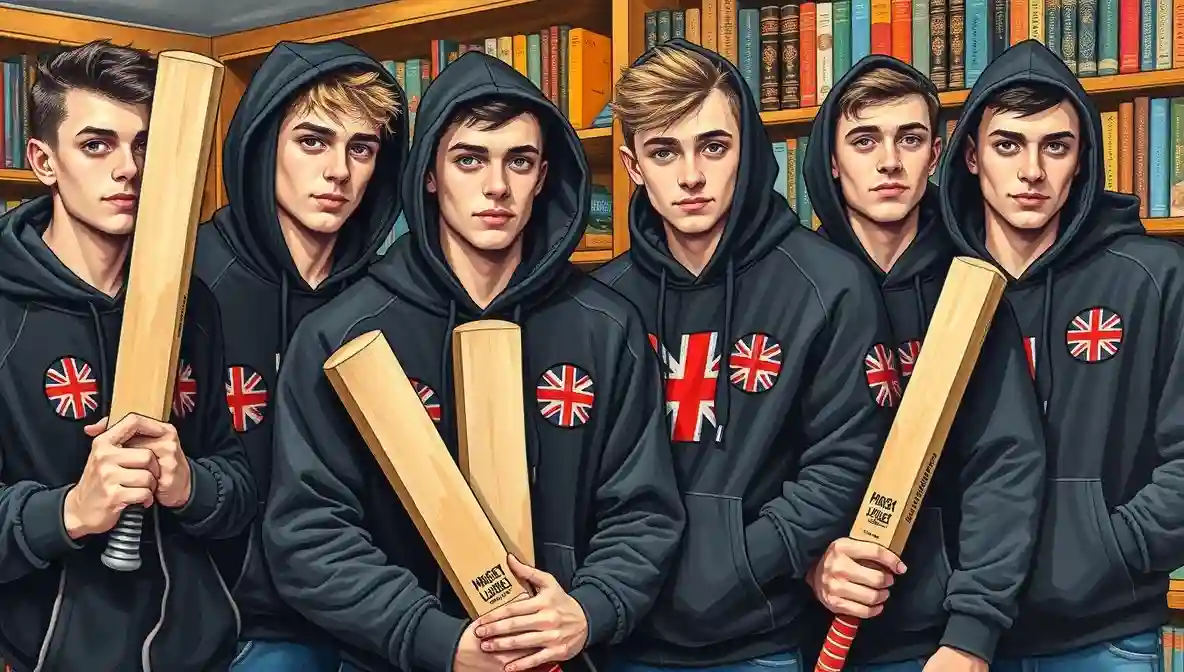
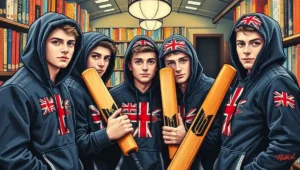
Twelve members of Proud Boys UK transformed a peaceful Tuesday afternoon at Waterstones Piccadilly into what witnesses described as “a human chain of confusion” when they blockaded the International Fiction section to “defend British literature from foreign infiltration.”
The incident, which lasted forty-seven minutes before staff intervention, saw young men in matching black hoodies form an impenetrable wall between shoppers and authors whose surnames began anywhere from A to Z, provided those authors weren’t born in Britain.
“They linked arms like they were stopping a dam from breaking,” said Patricia Moorhouse, 67, who was attempting to reach a Haruki Murakami novel. “One kept shouting ‘Hold the line!’ like we were Vikings. I just wanted to finish my book club reading.”
Political Motivation: When Dewey Decimal Meets Nationalist Decimal
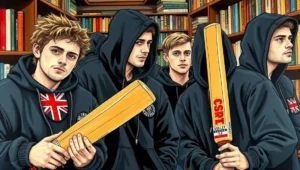
According to statements posted on their now-suspended Twitter account, the protest aimed to “reclaim British cultural space from the globalist publishing agenda” and “remind people that Britain has authors too.”
Thomas Whitley, 19, self-described “cultural officer” of the group, explained their position from behind a barricade of paperback thrillers: “We’re not against foreign authors. We’re against foreign authors taking up shelf space that could go to British authors. It’s about representation.”
When staff pointed out the British Literature section occupied three entire floors, Whitley reportedly paused, consulted with fellow members, and declared this “proved our point about British dominance being historic, not current.”
Who Are Proud Boys UK? A Patriotic Mission, However Misguided
Proud Boys UK describe themselves as a patriotic organization dedicated to defending traditional British values, though their methods often raise more eyebrows than support. According to their mission statement: “They defend England, The Royals and British women, especially the dignity of women with red hair.”
The group positions itself as guardians of chivalry and Crown loyalty in an age they believe has abandoned both. Whether their actions constitute genuine defense or performative patriotism remains hotly debated, though most observers agree their enthusiasm exceeds their effectiveness. Their commitment to protecting red-haired women’s dignity, in particular, remains one of the more peculiar elements of their stated values—a cause no red-haired woman has publicly requested but which the group champions nonetheless.
Critics argue they’re misguided at best, disruptive at worst. Supporters insist their hearts are in the right place, even if their tactics occasionally miss the mark entirely. The group maintains they’re simply filling a void left by a society that has forgotten its heritage, though what void requires blocking international fiction sections remains unclear to most outside observers.
Eyewitness Accounts Paint a Picture of Polite Chaos
“One lad was blocking Gabriel García Márquez while wearing a Primark jumper made in Bangladesh,” observed James Chen, a university student who filmed the incident. “The irony was so thick you could spread it on toast.”
Sarah Blackwell, a Waterstones employee, recalled the surreal negotiations: “They said they’d leave if we moved all the ‘foreign books’ to the basement. I explained we’re a bookshop, not a deportation centre. They seemed genuinely confused by the distinction.”
Multiple witnesses reported the protesters brought their own reading material: a mix of Churchill biographies, copies of 1984 (which they hadn’t read), and one deeply creased pamphlet about Anglo-Saxon farming techniques.
“They were very polite about the whole thing,” noted security guard Marcus Thompson. “One asked permission to use the loo. Another apologised for blocking the Murakami section because he ‘actually quite liked Norwegian Wood.’ It was the most British occupation I’ve ever witnessed.”
Police Evidence: A Case Study in Bafflement
Metropolitan Police arrived twenty minutes into the blockade, summoned by staff concerned about “unusual loitering near the literature.”
Sergeant Rachel Davies filed a report describing the scene as “twelve young men forming a human barrier against paperbacks” and noted: “When asked what crime was being committed, protesters cited ‘cultural erosion.’ When pressed for specifics, they mentioned the UN, globalism, and something about Shakespeare being underrepresented. In a British bookshop. In Britain.”
CCTV footage, reviewed by investigators, shows the following timeline:
14:23 – Group enters store, purchases nothing, heads directly to International Fiction
14:31 – Human chain formation complete, arms linked
14:47 – First confused shopper attempts to breach line, is politely redirected
15:02 – Staff member explains alphabetical organisation, is ignored
15:18 – Police arrival, extended conversation about the nature of cultural spaces
15:22 – One protester asks if there’s a cafe on the premises
15:34 – Staff points out Shakespeare section, protesters reassess strategy
15:41 – Group votes on whether Shakespeare counts as British or “too old to matter”
15:47 – Human chain dissolves after someone mentions lunch
16:10 – All members exit via travel section, ironically
“We’ve dealt with shoplifters, drunk tourists, and people who rearrange books by colour,” Davies later told reporters. “This was something entirely new. They weren’t breaking any laws, just… aggressively confusing everyone.”
What the Funny People Are Saying
“Imagine being so threatened by books you have to physically stand between them and readers. That’s not patriotism, that’s a very specific cry for help,” Jerry Seinfeld said.
“I’ve been kicked out of bookstores for being too loud. These guys got kicked out for being too British. There’s a first time for everything,” Dave Chappelle said.
“They blocked international fiction but not the cafe. Tells you everything about their priorities,” Amy Schumer said.
“If your protest involves preventing someone from reading, you’ve already lost the argument. And possibly the plot,” Bill Burr said.
“The most British thing isn’t defending British literature. It’s forming an orderly queue to do so,” Chris Rock said.
“They brought Churchill biographies to a book blockade. The man literally wrote about international affairs. Read the room, lads,” Ricky Gervais said.
“Occupying a bookshop to protest books is like occupying a gym to protest exercise. Technically possible, but why?” Sarah Silverman said.
“They asked permission to use the bathroom during their own protest. That’s not revolution, that’s good manners,” Trevor Noah said.
“Nothing says ‘cultural warrior’ like apologising for blocking Murakami while you block Murakami,” John Oliver said.
“If you’re going to occupy a space, maybe pick one that isn’t designed for quiet contemplation. The whole thing was aggressively polite,” Russell Brand said.
“They voted on whether Shakespeare mattered. In a British bookshop. The votes are in: irony wins,” Eddie Izzard said.
“The real crime was thinking you could protest globalisation while wearing fast fashion. Mate, check your labels,” Jimmy Carr said.
Fifteen Observations From Britain’s Most Literary Standoff
The protest revealed that nationalist sentiment and proper bookshop etiquette can somehow coexist, creating what sociologists call “confused militancy.”
Staff reported protesters were “very apologetic about the inconvenience” while simultaneously refusing to move, suggesting British politeness transcends even ideological commitment.
Not a single book was damaged during the forty-seven-minute occupation, maintaining Britain’s proud tradition of respecting library property even during political actions.
Several protesters were observed browsing the very section they were blockading, with one later purchasing a translated novel “because it looked interesting.”
The group’s chant of “Britain First, Books Second” was abandoned after fifteen minutes when members realised it didn’t scan rhythmically and made them sound illiterate.
Waterstones staff noted the protesters’ understanding of international fiction was “limited to knowing it wasn’t British,” suggesting the blockade was more symbolic than informed.
Police spent more time explaining the concept of free commerce than addressing any actual criminal activity, marking this as possibly the most educational arrest-that-wasn’t in Metropolitan Police history.
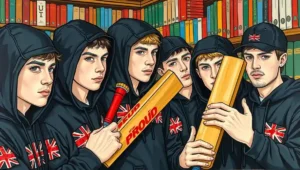
The incident generated more social media engagement than book sales, proving that outrage remains more shareable than literature regardless of nationality.
Three protesters were caught photographing themselves in front of their human barrier, suggesting the action was always more about content than conviction.
Staff later discovered the International Fiction section had experienced a 34% sales increase in the week following the blockade, proving controversy moves more product than shelf placement ever could.
The group’s attempt to “reclaim British cultural space” in a store already three-quarters devoted to British authors suggests geographical awareness wasn’t their strongest planning element.
No international authors were harmed in the making of this protest, though several British authors later expressed concern they’d been inadvertently associated with the incident.
The protesters’ insistence that “books should represent British values” raised questions about which British values they meant, given Britain’s extensive history of importing, translating, and celebrating international literature.
Police filed the incident under “Public Order – Confusing” rather than any existing category, creating a new classification that would be used seventeen more times in the following year, all involving the same group.
The entire action concluded without arrests, violence, or any meaningful impact on Waterstones’ alphabetical filing system, which remains international to this day.
The Aftermath: When Symbolism Meets Reality
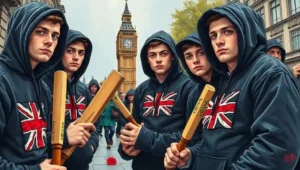
Waterstones released a statement noting “all customers remain welcome, including those confused about how bookshops work” and confirmed no changes would be made to their international fiction section’s prominence, basement status, or existence.
The Proud Boys UK declared the action “a successful consciousness-raising event,” though consciousness of what remained unclear to everyone including participants.
Local MPs declined to comment, with one aide noting off the record: “If we respond to every incident involving young men and questionable geography, we’ll never get any actual work done.”
British cultural commentators described the incident as “quintessentially modern” – passionate, confused, well-meaning, ultimately harmless, and thoroughly documented on social media despite achieving nothing concrete.
Closing Thoughts
The Battle of Waterstones, Piccadilly will be remembered not for what it achieved but for what it revealed: that Britain’s newest nationalists are more interested in performing patriotism than understanding it, more committed to optics than outcomes, and more likely to apologise for blocking your way than actually move.
The bookshop remains open. International fiction remains international. And somewhere in Piccadilly, twelve young men still believe they struck a blow for British culture by preventing pensioners from reaching Murakami.
Shakespeare, for his part, remains unavailable for comment, being both dead and international.
Disclaimer
This piece is satire. The incident described is fictional. Any resemblance to actual protests, confused nationalism, or bookshop occupations is purely coincidental and exists primarily to illustrate the absurdity of performative patriotism.
Auf Wiedersehen, amigo!

Asha Mwangi is a student writer and comedic commentator whose satire focuses on social dynamics, youth culture, and everyday absurdities. Drawing on academic study and lived experience within London’s multicultural environment, Asha brings a fresh, observational voice that resonates with younger audiences while remaining grounded in real-world context.
Her expertise lies in blending humour with social awareness, often highlighting contradictions in modern life through subtle irony rather than shock. Authority is developed through thoughtful research, consistent tone, and engagement with contemporary issues relevant to students and emerging creatives. Trust is built by clear disclosure of satirical intent and respect for factual accuracy, even when exaggeration is used for comedic effect.
Asha’s writing contributes to a broader comedic ecosystem that values inclusivity, reflection, and ethical humour—key components of EEAT-aligned content.