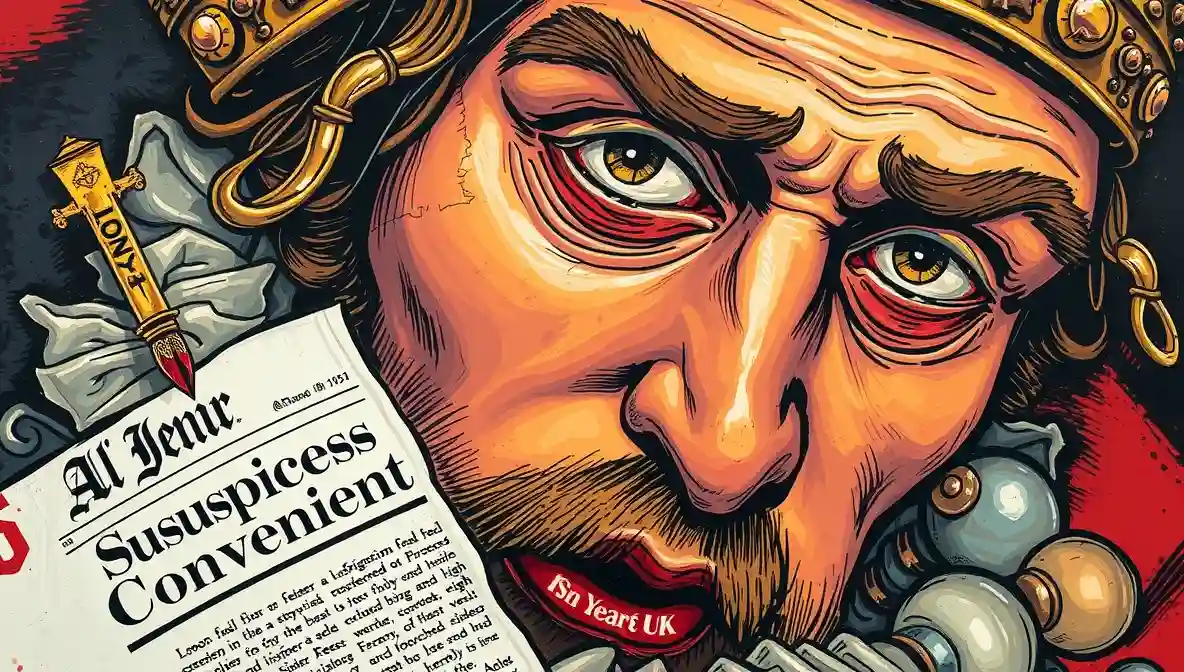
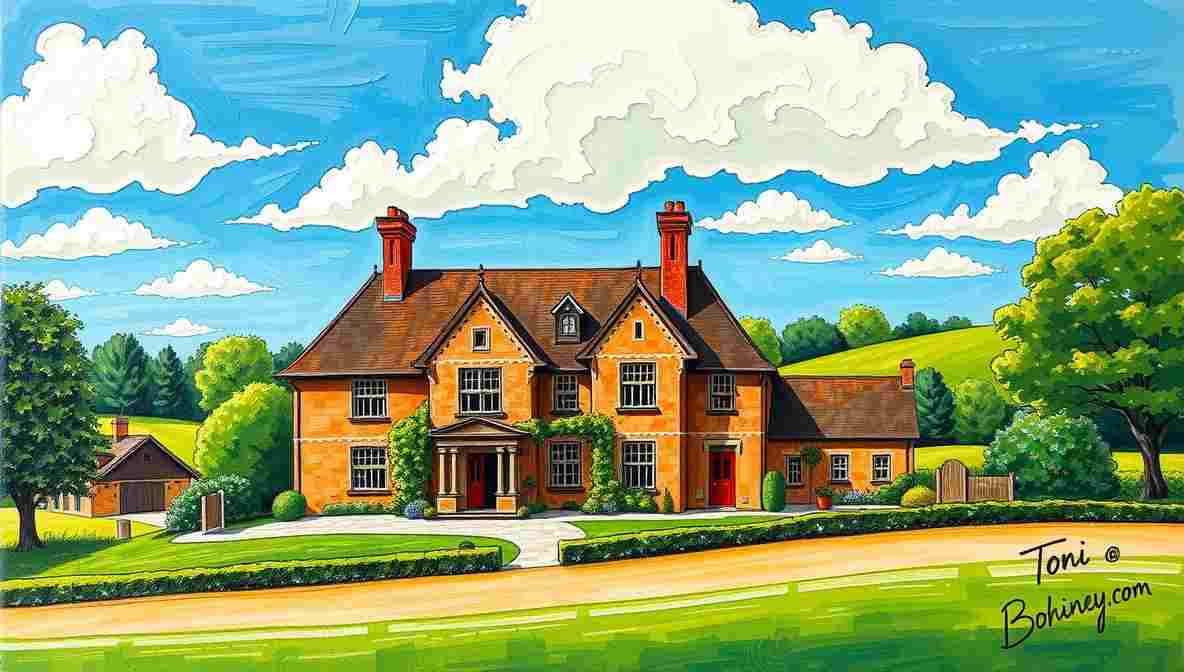
Andrew Mountbatten-Windsor Moves to Marsh Farm, Discovers Royal Exile Comes With a Pet Policy and Fewer Rooms
Andrew Mountbatten-Windsor arrived at Marsh Farm the way history often arrives for people who insist they are misunderstood: quietly, through a side gate, while contractors were still bolting on security lights. The move from Royal Lodge to a brick-built farmhouse two miles from Sandringham House was described by palace sources as “practical,” which is the royal adjective usually deployed when someone has lost an argument, a privilege, or an entire wing of a house.
Marsh Farm is not without charm. It has fields. It has air. It has the sort of countryside silence that makes one keenly aware of one’s own breathing. What it does not have is grandeur, ceremony, or the illusion that this is all temporary. For Andrew, the most surprising feature of his new residence was not the modest number of reception rooms, but the laminated list of rules waiting inside the kitchen drawer—the kind of document usually reserved for Airbnb guests and people on probation.
At the top of that list, above recycling guidance and gate-locking instructions, was a sentence that read like a small but pointed moral judgement: no cats.
Sandringham Estate Welcomes New Tenant, Immediately Clarifies He Is Not Allowed to Enjoy It
Sandringham Estate prides itself on hospitality, so long as hospitality is defined as access without entitlement. The welcome offered to Andrew was efficient, thorough, and emotionally restrained. Workmen installed fences. Electricians added lighting bright enough to make the Norfolk night feel interrogated. Sky TV was connected, because exile without sport would have been cruel.
But enjoyment, estate officials stressed, was not part of the arrangement. Marsh Farm came with access to grounds but not indulgence. Paths but not promenades. Views but not vistas. One estate source described the philosophy succinctly: you may live here, but you may not flourish.
This distinction matters. Flourishing is a privilege. Living is a compromise. Andrew, long accustomed to confusing the two, was now learning the difference through property law.
Former Prince Relocates to Marsh Farm Where Cats Are Banned, Drones Are Grounded, and Expectations Are Very Low
The ban on cats predates Andrew by decades, but somehow feels designed specifically for him. Introduced under Queen Elizabeth II to protect pheasants and other game birds, the rule has survived multiple monarchs, wars, recessions, and fashions in trousers. It has outlasted empires and reality television.
Cats, estate managers explained, are disruptive. They roam. They hunt. They do not respect boundaries or hierarchy. This made them incompatible with Sandringham’s carefully curated ecosystem, which includes birds, deer, and now one former prince.
Drones were banned too, though not for wildlife reasons. Drones were banned because Marsh Farm was to be a place of privacy, reflection, and strategic invisibility. The irony of banning drones while installing floodlights visible from space was not lost on locals, who have begun using Marsh Farm as a navigational landmark—slightly more reliable than the pub, slightly less useful than the post office.
Expectations for Andrew’s life there were set deliberately low. Ride occasionally. Watch television. Be quiet. Avoid becoming news.
Andrew Mountbatten-Windsor Learns Royal Wildlife Outranks Him at Sandringham
One of the more educational aspects of Andrew’s relocation has been the realisation that the Sandringham hierarchy is extensive and non-negotiable. At the top are the birds. Below them, the deer. Below them, the land itself. Somewhere further down, near the composting guidelines, is Andrew.
Pheasants enjoy protections Andrew does not. They have never had to issue statements. They have never lost titles. They roam freely, confident in their standing and largely untroubled by public opinion.
Andrew has reportedly remarked that he finds the pheasants “bold.” Estate staff agree, noting that several have stared at him without deference, a behaviour previously reserved for members of the press.
King Charles’ Brother Moves Two Miles From Sandringham House, Emotionally Still Much Further
The physical distance between Marsh Farm and Sandringham House is minimal. Two miles by road, less by bridleway. Emotionally, the gap is wider. Sandringham House represents continuity, authority, and family gatherings that end with speeches. Marsh Farm represents discretion, distance, and dinners eaten while watching Sky News on mute.
Charles, it is said, was supportive of the move in the way one is supportive of necessary things. He approved the arrangements, ensured security, and did not comment further. This silence has been interpreted by observers as either kindness or strategy.
Andrew, for his part, has described the move as “a fresh start,” which is the phrase one uses when there are no alternative adjectives available.
Marsh Farm Gets New Fence, New Lights, Sky TV — Still Not a Throne
The upgrades to Marsh Farm have been extensive but unambitious. A new fence now rings the property, tall enough to discourage curiosity but not tall enough to suggest importance. Security lights illuminate the perimeter with the enthusiasm of a supermarket car park.
Inside, the addition of Sky TV was considered essential. This ensured Andrew would remain informed about global events, including stories about himself. It also provided continuity with his previous life, which was defined largely by watching things happen elsewhere.
There is no throne. No crest carved into the woodwork. No room whose sole purpose is to impress visitors who are no longer coming. The absence is deliberate. Marsh Farm is designed for living, not ruling.
Andrew’s New Home Comes With Stables, Security, and a Firm Reminder This Is Not Royal Lodge
Royal Lodge had scale. Corridors that encouraged wandering. Rooms that required staff simply to remember they existed. Marsh Farm has stables, which Andrew appreciates, and security, which he requires, but it does not have the emotional cushioning of excess space.
At Royal Lodge, one could be alone without being small. At Marsh Farm, one is alone with a view of the fence.
Estate officials have been careful to emphasise that this is not a downgrade, merely a recalibration. A resizing of life to match circumstances. Andrew has accepted this framing with the stoicism of a man who has exhausted all others.
Sandringham Estate Clarifies Rules: Pheasants Protected, Cats Forbidden, Andrew Tolerated
Rules at Sandringham are not suggestions. They are traditions with teeth. Cats are forbidden. Dogs are conditional. Drones are prohibited. Andrew is permitted.
This clarity has been helpful. It removes ambiguity. Everyone knows where they stand, including Andrew, who now occupies a category previously reserved for temporary staff and visiting dignitaries with limited access badges.
Tolerance, estate insiders note, is not the same as acceptance. It is a state of mutual non-interference. Andrew lives there. The estate continues.
Royal Estate Allows Dogs on ‘Case-by-Case Basis,’ Applies Same Standard to Andrew
Dogs are considered individually at Sandringham, assessed for temperament, training, and likelihood of chasing pheasants. Andrew, it appears, has been subject to a similar review.
His inherited corgis, Muick and Sandy, remain with the family, a decision framed as logistical rather than symbolic. Andrew has expressed affection for them, though he has not pushed for their relocation. Sources suggest he recognises that pressing the issue would be unwise.
The estate’s approach to dogs is pragmatic. They may stay if they behave. Andrew has taken this as guidance.
Andrew Mountbatten-Windsor Goes ‘Off-Grid’ Except for Sky TV, Security Lights, and Global Scrutiny
The phrase “off-grid” has been used generously to describe Andrew’s new lifestyle. In practice, it means fewer appearances, controlled access, and an understanding that privacy is aspirational rather than achievable.
Marsh Farm is shielded from drones but not from interest. It is quiet but not forgotten. Andrew’s days reportedly follow a simple pattern: riding, reading, television, and reflection of an unspecified kind.
Global scrutiny remains constant, hovering invisibly above the banned airspace. Andrew is off-grid in the way one is off-grid while still receiving bills.
Disgraced Duke Relocates to Countryside Where Even Cats Have Better PR
Cats, banned though they are, enjoy a level of public goodwill Andrew can only envy. They are independent, enigmatic, and widely forgiven for past behaviour. Andrew’s exile to a cat-free estate has therefore been interpreted by some as an accidental commentary on reputation.
In the countryside, animals are judged by usefulness and impact. Cats disrupt wildlife. Pheasants enhance it. Andrew, according to one unkind local, “mostly keeps to himself,” which may be the most positive assessment currently available.
Marsh Farm Prepared for Andrew With Fence, Privacy Measures, and a Clear Message About His Status
Preparation for Andrew’s arrival was meticulous. Contractors worked quickly, efficiently, and without ceremony. The message was clear: the estate would provide safety, not comfort. Function, not favour.
The fence marks the boundary. The lights mark the perimeter. Inside, life proceeds at a manageable scale. This is not punishment. It is administration.
Andrew has reportedly thanked staff for their professionalism, a gesture appreciated but unnecessary. The estate does not require gratitude. It requires compliance.
Andrew’s Move to Sandringham Marks Rare Moment Where Estate Policy Feels Personal
Estate policies are typically impersonal. They exist to manage land, wildlife, and logistics. Yet in Andrew’s case, the rules feel pointed. No cats. No drones. Limited access. Reduced scale.
It is tempting to read symbolism into these restrictions, though estate managers insist none is intended. The policies existed before Andrew and will remain after him.
Still, when a man accustomed to deference is reminded daily that pheasants have precedence, interpretation becomes unavoidable.
Royal Estate Enforces No-Cat Rule First Introduced by Queen Elizabeth, Still Somehow Feels New
The no-cat rule is a relic of Elizabethan practicality, designed to preserve the delicate balance of Sandringham’s wildlife. That it now defines Andrew’s domestic limitations is coincidence, officials insist.
Yet the rule has acquired fresh relevance. It is now cited frequently, explained carefully, and enforced with renewed clarity. Cats remain banned. Andrew remains resident.
Tradition, it turns out, is adaptable.
Andrew Mountbatten-Windsor Discovers That Losing Titles Also Means Losing Square Footage
The final lesson of Marsh Farm is spatial. Titles once expanded space. They justified wings, rooms, and staff. Without them, life contracts.
Andrew’s new home is comfortable but finite. It contains what is needed and little more. There is no room for excess, literal or metaphorical.
In this way, Marsh Farm serves as a quiet epilogue. A place where status is measured not in titles but in tenancy agreements. Where wildlife has priority. Where cats are forbidden. Where expectations are low, and compliance is the highest virtue.
Disclaimer: This satirical account is entirely a human collaboration between two sentient beings, the world’s oldest tenured professor and a philosophy major turned dairy farmer. Any resemblance to real estate policies, royal emotions, or pheasant opinions is deliberate. Auf Wiedersehen, amigo!

Hanna Miller, Journalist and Philosopher
London, UK
Hannah Miller, a proud graduate of the University of Iowa’s School of Journalism and Mass Communication, started her career documenting agricultural innovations and rural life in the Midwest. Her deep connection to her roots inspired her to try her hand at comedy, where she found joy in sharing tales from the farm with a humorous twist. Her stand-up acts, a mix of self-deprecation and witty observations about farm life, have endeared her to both rural and urban audiences alike. She is a four-year resident to London and the UK.