Starmer and Tweets That Weren’t Read
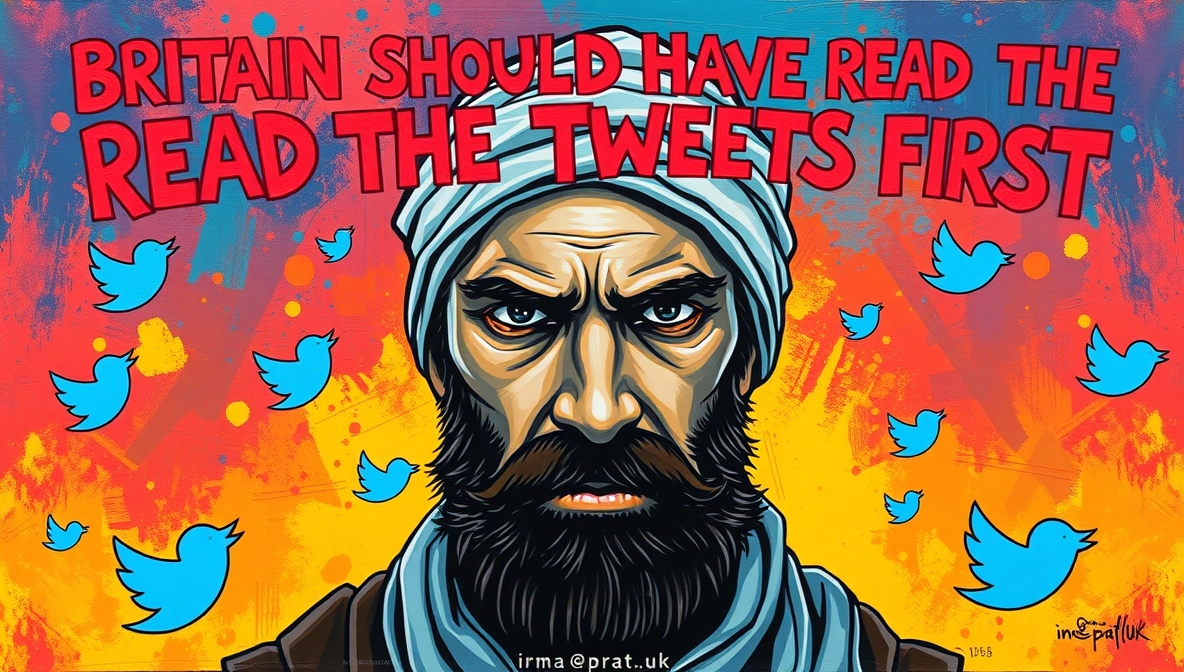
Britain Should Have Read the Tweets First
Prime Minister Sir Keir Starmer apparently treated vetting Alaa Abd el-Fattah’s Twitter history the same way many Brits check the weather forecast: glance briefly, hope for the best, and assume someone else has done the detailed bit. Starmer proudly welcomed the Egyptian-British activist back to Blighty on Boxing Day after years imprisoned in Cairo — a gesture meant to highlight British values of human rights and decency. Instead the nation got a different value: reads of decade-old tweets the government somehow missed before the big celebratory tweet.
The Return That Wasn’t Fully Checked
It turns out that “delighted to welcome you home” is a really bad opening line if the person you’re welcoming has a social media history that reads like the draft script for a dodgy 2010s shout-fest. Within hours of Abd el-Fattah’s arrival, a chorus of historical tweets resurfaced in which he reportedly praised violence against “Zionists, including civilians,” disparaged police, and indulged in other incendiary material. That sparked outrage across the political spectrum — not for the tweetstorm, but for the fact that Britain’s Foreign Office didn’t glance at his Twitter before an official welcome.
The backlash was about as subtle as a Christmas cracker full of fireworks. MPs demanded that Abd el-Fattah be stripped of his British citizenship — which they admitted might be legally impossible — proving once again that politics is mostly about yelling loudly at things that sound bad on paper.
Foreign Office: “We Didn’t Read the Tweets”
In response, the Foreign Secretary launched a review into the “serious information failures” that let this happen. Civil servants allegedly didn’t know about the problematic tweets — the very ones that were easily findable online — which raises the question of whether the Foreign Office’s search protocol stops at the first page of Google results.
Starmer insists he had no idea about the posts before publicly welcoming Abd el-Fattah. That’s about as reassuring as a butcher insisting he doesn’t know what meat looks like. Critics pointed out that Starmer campaigned for the activist’s release for years, but somehow never checked what that campaigner had been saying online — an oversight on par with forgetting your pin code and trying “1234” repeatedly.
Celebrity Backers Also in the Storm
The drama didn’t stay confined to Parliament. Celebrities like Olivia Colman and Carey Mulligan, who supported Abd el-Fattah’s freedom campaign, found themselves on the receiving end of calls to apologise — which is rich, considering the most common celebrity apology normally starts with “I didn’t realise….” and ends with “…I love all my fans.”
How Bad Was the Tweetstorm?
If this were a football match, Starmer’s government would have scored two own goals, conceded three, and been red-carded for leaving the pitch without its performance review. The tweets were described in strong terms, and the government called them “abhorrent,” which in diplomatic language is roughly equivalent to “yep, that’s awkward.”
Abd el-Fattah himself offered an apology, saying that the posts were expressions of youthful frustration during “antagonistic online cultures,” essentially the Twitter equivalent of a drunk uncle at a wedding — loud, incoherent, and deeply regretted by all.
Satirical UK POV: A Case Study in Modern Governance
When Vetting Is Optional
In the UK, background checks now seem to follow this logic: if someone isn’t famous enough to be on Have I Got News For You every week, they’ll probably have a straightforward digital footprint. Civil servants apparently assumed someone else had done the Twitter check — like a relay race where everyone thought the baton was imaginary. If the government’s vetting had been more rigorous, the only surprise might have been finding that someone had, in fact, tweeted about something controversial. Instead Whitehall was blindsided when Twitter did what Twitter does: reminded everyone what was said ten years ago.
The Review That Was Too Late
The Foreign Office’s newly launched review promises to uncover all sorts of “lessons learned,” which hopefully will include not forgetting that social media exists and that people sometimes tweet terrible things. The irony is that every Conservative and Labour MP now knows more about Abd el-Fattah’s old tweets than his official dossier ever mentioned, because they’ve all read at least 14 threads detailing them with commentary and GIFs of cats. At this point Twitter itself has better records than the British government.
British Values: Tested, Slightly Frayed
The Atlantic framed this episode as “a test of Britain’s values,” which might be over-dramatic except that it’s now a test that everyone is studying with a mix of horror and fascination. Starmer has defended both the welcoming gesture and the need for due process, and is trying to thread the needle between upholding international human-rights norms and convincing a sceptical public that he doesn’t run the country like a civil-service speed-dating app.
The Real Punchline
This whole saga boils down to a classic bit of British humour: you prepare meticulously for the big moment, and late in the day someone points out you forgot the one thing that matters. The government spent years lobbying for Abd el-Fattah’s release and then forgot to check what he had actually said online. That’s not a policy failure, that’s a plot twist fit for a sitcom where the entire cast miscarries the point while the audience laughs awkwardly. Of all the lessons from this debacle, the most universal might be that in politics — as in life — it’s usually the tweets you didn’t read that come back to bite you.
— Based on reporting from The Atlantic and major UK outlets. This story reflects a uniquely human collaboration between the elusive UK political class, the unpredictable realm of social media history, and the peculiar art of background checks that feel optional. Not an AI conspiracy.

Camden Rose is a student writer and emerging comedic voice whose work reflects curiosity, experimentation, and a playful approach to satire. Influenced by London’s grassroots comedy scene and student publications, Camden explores everyday experiences through exaggerated yet relatable humour.
Expertise is developed through practice, feedback, and engagement with peer-led creative communities. Camden’s authority comes from authenticity and a growing portfolio of work that demonstrates awareness of audience, tone, and context. Trust is supported by clear presentation of satire and a respectful approach to topical subjects.
Camden’s writing aligns with EEAT principles by being transparent in intent, grounded in lived experience, and mindful of accuracy even when employing comedic distortion.