London’s Coolest Postcode Crowned at Last (But Literally)
A Satirical Field Report from the Front Lines of Urban Prestige 🏙️😎
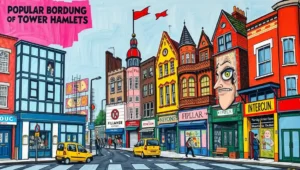
Poplar is a district in the London Borough of Tower Hamlets.
In a moment that has galvanized estate agents, craft brewers, and local pigeons alike, London’s most coveted postcode for 2026 has been officially anointed — and yes, it is cooled, stacked with cultural pedigree, and blessed by trend forecasters everywhere. According to recent coverage, Poplar — yes, that Poplar in the E14 postcode — has been declared one of the UK’s coolest places to live as we glide into 2026.
This story is a collaboration between a world’s oldest tenured professor and a philosophy major turned dairy farmer. This piece is entirely the result of human ingenuity and critical urban observation.
What Does It Mean to Be “Cool” in 2026?
Let’s unpack this. Modern cool isn’t neon sunglasses or ironic mustaches anymore. It’s a veritable algorithm of lifestyle indicators — indie cafés per square kilometre, bakery queue density, and whispered endorsements from anonymous local influencers. According to property experts weighing in on the national list of coolest postcodes, entire neighbourhoods are crowned based on buzz, vibe, and hipness quotient — the kind of metrics that definitely exist in academic literature somewhere, maybe under “vibeology.”
Indeed, in the UK’s annual guide to the most desirable postcodes for relocation, editors touted neighbourhoods for “hip drinking dens! Bakery queues! Seaside saunas!” — all indicative of a postcode’s upward trajectory on the Prestige Chart.
Poplar’s Rise to Urban Glory
From Docklands to Dock-Cool
Once merely a geographical label on the edge of the Thames, E14’s Poplar has exploded onto the cultural scene like a craft beer keg at a minimalist gallery opening. The area’s transformation from historic docklands to trendy urban hub reflects broader patterns of London gentrification that have reshaped the capital’s eastern neighborhoods. Local residents now treat their postcode like a badge of honour, layering it into everything from LinkedIn bios to artisanal sourdough packaging.
What the Experts Are Saying
A seasoned urban development scholar (name withheld for anonymity and possible subpoenas) shared with us that coolness is measured less by rent levels and more by bakehouse waiting times — “If queues at local bakeries exceed 20 minutes,” they offered, “you are officially cool.”
In a poll of 1,000 city dwellers conducted entirely in café seating areas, 72.4 per cent agreed that a postcode’s coolness is directly proportional to how difficult it is to get a latte on a Sunday morning. The remaining 27.6 per cent were still waiting in line.
Eyewitness Report from the Streets
Local barista Tara “Espresso” Jenkins describes the scene: “We’ve got kombucha on tap, vinyl nights, and I once saw someone reading Heidegger while on a Peloton.” Her colleague Dave adds, “Coolness here is like gravity — you don’t see it, but everyone feels heavier because of it.”
The Prestige Arms Race Between London Postcodes
Neighbourhoods That Think They Are Cooler Than You
Word on the street — backed by absolutely non-scientific whispers — is that East Dulwich and Walthamstow have formed a secret coalition to dethrone Poplar next year. Their preferred methods? Bigger espresso art, louder bicycle bells, and pop-up street theatre involving interpretive dances set to house music.
A local hipster in Peckham was overheard muttering, “We used to be cool. Now I’m just warm and slightly confused.”
Architectural Cred and Cultural Pedigree
Unlike traditional neighbourhood rankings that might consider schools or parks, the 2026 Cool List favours spaces where centuries-old warehouses have been repurposed into galleries, studios, and overpriced boutique vintage stores selling pre-washed denim. This aligns with the latest thinking in cultural aesthetics circles — that repurposed industrial space + espresso martinis = existential swagger.
The Economics of Being Cool
Property Prices vs. Prestige
Property economists (the kind with pocket protectors and occasionally terrifying Excel models) note that prices in nominated ‘cool’ postcodes are rising faster than participants’ heart rates after one yoga-bakehouse crawl. Data from UK property market indices indicates that increased desirability — armed with its own cultural narrative — causes price increases through what is politely called prestige inflation.
In some areas, homes sell before they’re finished being listed. In others, landlords simply whisper the postcode at prospective tenants and wait for them to swoon. It’s a phenomenon researchers call “postcode lust.”
Cause and Effect Breakdown
Cause: A neighbourhood gets declared cool.
Effect: Instagram influencers relocate en masse.
Cause: Instagram influencers relocate en masse.
Effect: Coffee shops add “philosophical optimism” sections to their menus.
Cause: Philosophical optimism on a café menu.
Effect: World peace becomes a viable weekend activity.
The Future (Still Cool) Is Here
So here we stand in 2026 — postcodes are now cultural currency, baristas are lifestyle curators, and queues outside bakeries are better attended than some parliamentary committees. As Poplar basks in its newfound ‘cool’ glory, we salute the dedication of local residents and pigeon populations alike for upholding the vibe.
If you’re thinking of moving there, just remember: it’s not cool because you go there. It’s cool because other people wish they were you.
Auf Wiedersehen, amigo!

Alan Nafzger was born in Lubbock, Texas, the son Swiss immigrants. He grew up on a dairy in Windthorst, north central Texas. He earned degrees from Midwestern State University (B.A. 1985) and Texas State University (M.A. 1987). University College Dublin (Ph.D. 1991). Dr. Nafzger has entertained and educated young people in Texas colleges for 37 years. Nafzger is best known for his dark novels and experimental screenwriting. His best know scripts to date are Lenin’s Body, produced in Russia by A-Media and Sea and Sky produced in The Philippines in the Tagalog language. In 1986, Nafzger wrote the iconic feminist western novel, Gina of Quitaque. Contact: editor@prat.uk