
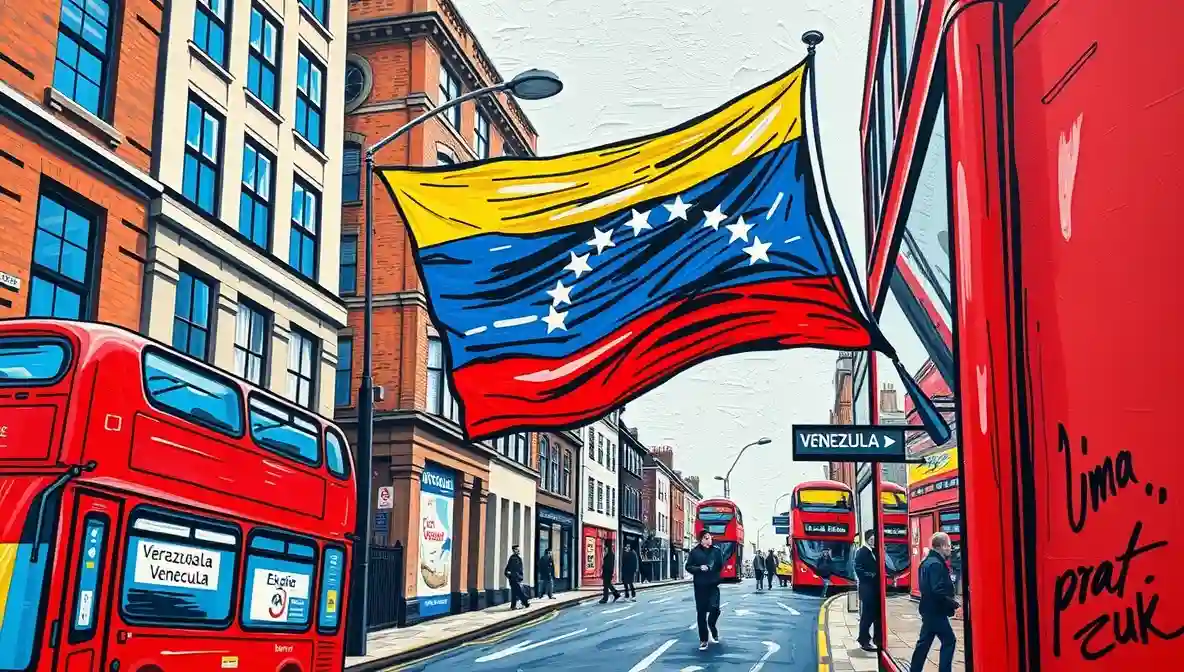
UK Introduces “Aspirational Timeline” for Venezuela Crisis
Officials confirm events move quickly when measured in press releases diplomatic language, Venezuela crisis, UK foreign policy, political spin
Ministry Redefines Speed to Include “Eventually”
The UK government has revolutionised crisis management this week by confirming that Venezuela’s political transition is moving “fast” – provided one measures speed using interpretive frameworks rather than clocks. Officials described the assessment as accurate when viewed through the lens of diplomatic optimism and selective amnesia.
According to sources within the Foreign Office, the transition has achieved remarkable velocity by existing in multiple tenses simultaneously. “We’re seeing rapid progress,” one diplomat explained, “if you understand ‘rapid’ to mean ‘discussed regularly at meetings.'”
New Temporal Standards Praised

The breakthrough came when officials realised that traditional measurements – calendars, historical records, observable reality – imposed unnecessary constraints on diplomatic messaging. By adopting flexible chronology, the government can now describe any process as swift regardless of duration.
International observers responded with polite confusion. Several noted that Venezuela’s crisis has spanned years, making “fast” an innovative choice of adjective. Others suggested the UK might next describe continental drift as “brisk” or geological epochs as “a bit rushed.”
Citizens Await Flexible Benefits
British commentators wondered whether the new temporal flexibility might apply domestically. “If Venezuela’s decade-long crisis is ‘fast,’ perhaps my train delays are actually early arrivals from yesterday,” one commuter noted.
The Foreign Office declined to specify when the transition might conclude, explaining that endpoints are less important than maintaining positive momentum in press releases. Time, they confirmed, is whatever we agree it is during briefings.
Officials introduce flexible chronology to better capture diplomatic progress
The UK government described Venezuela’s political transition as “fast” this week after quietly expanding the definition of time to include optimism, intention, and selective memory. The assessment, delivered with professional calm, suggested that events spanning years can, under the right interpretive framework, be understood as moving briskly.
According to officials, progress in Venezuela has occurred at a pace that merits recognition, even if that pace is not immediately visible to those relying on calendars, lived experience, or basic arithmetic. The transition, they explained, should be measured against diplomatic expectations rather than observable outcomes, a method that allows for encouraging conclusions without the inconvenience of comparison.

Supporters of the statement argued that political change is nonlinear and that focusing too heavily on duration misses the spirit of momentum. They pointed to dialogue, engagement, and the existence of conversations as evidence that things are moving. Critics responded that conversations are not outcomes and that redefining speed does not shorten hardship.
International reaction was restrained. Other governments acknowledged the UK’s remarks without adopting the terminology. Diplomats familiar with Venezuela’s prolonged crisis privately described the word “fast” as aspirational branding rather than analysis. One observer noted that if time were measured by press releases alone, many global conflicts would already be resolved.
Within Britain, the phrasing drew mixed reactions. Some welcomed the optimism, arguing that constant pessimism can become paralysing. Others questioned whether redefining time helps anyone beyond those issuing the statements. Several commentators noted that calling a process “fast” after adjusting the scale is a familiar tactic, often used when progress exists primarily in theory.
Political analysts suggested the language serves multiple functions. Internationally, it signals engagement and relevance without committing to benchmarks. Domestically, it reassures audiences that distant crises are being addressed efficiently, even if efficiently now means “in a manner that sounds efficient.” The flexibility of the term allows it to survive future developments without contradiction.
When asked to clarify what constitutes “fast,” officials emphasised that transitions should be understood holistically, taking into account complexity, resistance, and the value of patience. This explanation, whilst thorough, did little to anchor the term in reality. Observers noted that patience is rarely required when speed is genuine.
As discussion faded, the phrase lingered, repeated in commentary and analysis with varying degrees of irony. Venezuela’s situation remains unresolved, its challenges persistent. The UK’s assessment stands as an example of how diplomatic language can compress years into adjectives and transform duration into tone.
Time, it appears, is flexible when measured in statements. The transition continues. The definition adjusts.
SOURCE: https://bohiney.com

Aishwarya Rao is a satirical writer whose work reflects the perspective of a student navigating culture, media, and modern identity with humour and precision. With academic grounding in critical analysis and a strong interest in contemporary satire, Aishwarya’s writing blends observational comedy with thoughtful commentary on everyday contradictions. Her humour is informed by global awareness and sharpened through exposure to London’s diverse cultural and student communities.
As an emerging voice, Aishwarya represents the next generation of satirical journalists: informed, curious, and unafraid to question norms through wit. Her authority stems from research-led writing, respect for factual context, and a commitment to ethical satire. Transparency and clear labelling ensure readers understand the comedic intent behind her work.
Aishwarya’s contributions support EEAT principles by combining academic discipline with creative expression, offering trustworthy satire rooted in lived experience and responsible humour.


