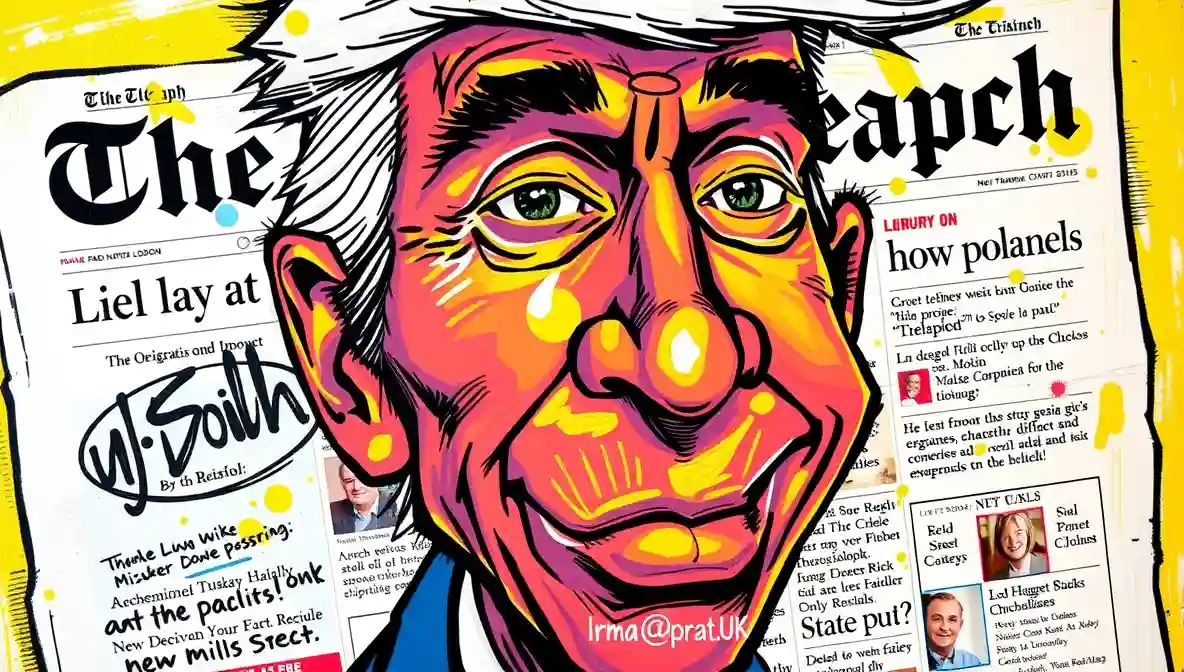
Auction From Hell: Britain Spends Two Years Politely Watching a Newspaper Refuse to Be Sold
The sale of The Telegraph was supposed to be a business transaction. A simple exchange of money, ownership, and a few carefully worded assurances about “editorial independence.” Instead, it has become a slow-motion endurance event, best understood as competitive hesitation. For more than two years, Britain has watched a national newspaper sit on the auction block like an antique wardrobe no one wants to move because it might contain ghosts, legal clauses, or Rupert Murdoch’s echo.
This was not an auction in the normal sense. Normal auctions involve bidding, tension, and eventually a hammer. This auction involved pauses, parliamentary concern, national-security side quests, and people quietly backing away while muttering that they were “still very interested, conceptually.”
Observers quickly began referring to it as “the auction from hell,” which in British terms means it was slightly awkward, mildly exhausting, and required far more meetings than anyone had emotionally budgeted for.
At the center of the ordeal sat The Telegraph, a newspaper so traditional it still believes the internet is a phase. Around it circled bidders from finance, media, and geopolitics, each discovering in turn that buying a British newspaper is less like acquiring an asset and more like marrying into a family with strong opinions about curtains.
Everyone Wants the Telegraph, Just Not the Process
Initially, interest was high. There were American investors, international funds, and ambitious media groups convinced they could modernize the paper while preserving its “essential character,” which is investor shorthand for “we promise not to upset the readers who write letters in fountain pen ink.”
Then came the complications.
Foreign ownership became controversial, not because it was unprecedented, but because suddenly everyone noticed it. The idea that overseas money might influence a British newspaper caused immediate concern among politicians who had previously been quite relaxed about overseas money influencing British property, football clubs, and entire neighborhoods.
When Parliamentary Concern Meets Strategic Inaction
Committees were formed. Reviews were commissioned. Statements were issued clarifying that nothing had been decided, nothing would be rushed, and everyone should please remain calm while doing absolutely nothing.
As one unnamed adviser reportedly put it, “We’re not blocking foreign ownership. We’re just creating an environment in which it slowly loses the will to live.”
The Daily Mail Waits Patiently, Then Clears Its Throat
While other bidders cycled through optimism, frustration, and strategic withdrawal, one presence remained steady in the background: Daily Mail.
The Mail did not rush. It observed. It waited. It did what it has always done best: positioned itself as both inevitable and slightly offended it wasn’t consulted earlier.
When Lord Rothermere finally made clear that the Mail wanted a decisive role, it felt less like a power grab and more like a family elder tapping a glass at dinner. Not angry. Just ready to speak.
Consolidation or Stewardship? Britain Debates Semantics
The proposal was framed carefully. The Mail did not want to “control” the Telegraph outright. It merely wanted a final say. A guiding hand. A reassuring presence to ensure the paper remained true to its values, which coincidentally aligned almost perfectly with the Mail’s values, tone, and understanding of modern life.
Critics called it consolidation. Supporters called it stability. Neutral observers called it “inevitable” and began checking whether they had already read tomorrow’s headlines yesterday.
Regulatory Caution Becomes a National Sport
Throughout the process, regulators approached the deal with the intensity of people handling an unexploded Victorian-era artifact. Every step was careful. Every decision was delayed. Every possible outcome was examined from at least six angles, including one involving public confidence, national culture, and vibes.
Media plurality was discussed at length, often by people who had not read a newspaper in years but felt strongly that there should be several of them, owned by different billionaires, with subtly different fonts.
The irony, of course, was that the longer the process dragged on, the fewer independent options remained. What began as a concern about concentration ended as a masterclass in attrition.
Inside the Newsroom: Weather Patterns and Resignation
Inside the Telegraph newsroom, staff reportedly followed developments the way farmers watch weather patterns. With experience, resignation, and a quiet understanding that nothing they did would influence the outcome.
An Auction Without Momentum, or Endings
The most striking feature of the Telegraph sale was not controversy, but inertia. Bids appeared, stalled, were reconsidered, and then dissolved into statements about “ongoing dialogue.”
Each phase was accompanied by breathless coverage explaining that this time, surely, resolution was imminent. Each time, resolution politely declined.
By the second year, the auction no longer felt like a transaction. It felt like a British institution in its own right. Something to be endured. Something future historians would mention briefly before moving on to something more decisive, like a constitutional crisis resolved in an afternoon.
The Telegraph, meanwhile, continued publishing confidently worded opinions about leadership, decisiveness, and the importance of clear authority, all while remaining unsold.
The Most British Outcome Possible
In the end, the auction from hell achieved something remarkable. It united political concern, regulatory caution, media rivalry, and national impatience into a single, elegantly drawn-out experience.
No one got exactly what they wanted. Everyone got exactly what they expected.
If the Daily Mail does emerge with decisive influence, it will be framed not as a takeover, but as stewardship. If regulators approve it, they will stress the safeguards. If critics object, they will do so in op-eds that carefully avoid proposing an alternative.
And if nothing changes at all, Britain will nod, sigh, and continue reading the same papers it always has, comforted by the knowledge that even in an age of rapid change, some things remain reassuringly stuck.
Process Over Progress: A Very British Resolution
The Telegraph sale was never really about ownership. It was about process, patience, and the national ability to turn a decision into a long weekend that lasts two years.
Some auctions end with a bang. This one ends with a murmur, a committee note, and a sense that everyone involved needs a cup of tea and a lie down.
Auf Wiedersehen.

Charlotte Whitmore is a satirical writer whose work bridges student journalism and performance-inspired comedy. Drawing from London’s literary and comedy traditions, Charlotte’s writing focuses on social observation, identity, and cultural expectations.
Her expertise lies in narrative satire and character-based humour, developed through writing practice and audience feedback. Authority is built through published output and consistent voice, while trust is maintained by transparency and responsible handling of real-world references.
Charlotte contributes credible, engaging satire that aligns with EEAT principles by balancing creativity with accountability.