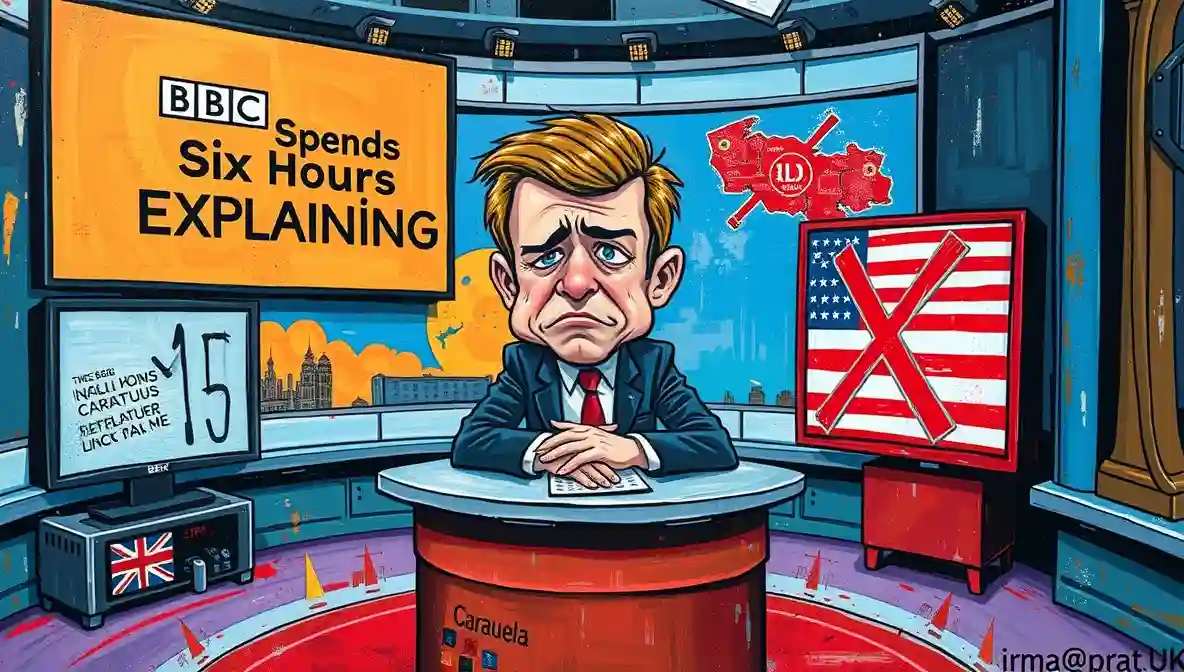
BBC Spends Six Hours Explaining Why Trump’s Caracas Strike Proves He’s Literally Hitler
When Breaking News Breaks the Narrative
The BBC’s live blog opened with the sort of breathless urgency typically reserved for Royal funerals or England losing on penalties: “Explosions have been reported in Caracas.” Within seconds, the corporation’s entire editorial staff appeared to have simultaneously remembered they hadn’t called Trump a fascist in nearly forty-eight hours and set about correcting this oversight with admirable efficiency.
Expert Analysis from People Who’ve Never Left Islington
The explosions, according to sources who definitely exist and aren’t just Guardian journalists with a thesaurus, were “disproportionate,” villegal,” and “precisely the sort of thing you’d expect from a man who once ate KFC with a knife and fork.” Washington insisted the strikes targeted military installations used by a regime that had been threatening American interests for months, but the BBC’s panel of experts—none of whom could locate Venezuela on a map yesterday—were having none of it.
Presidential Competence Mistaken for Chaos
Donald Trump, speaking from what the BBC described as va location suspiciously free of books,” explained the strikes were surgical, necessary, and achieved their objective without civilian casualties. The BBC translated this as vunhinged rambling” and asked seven different analysts whether this proved he was “losing his grip on reality,” a question they’ve been asking daily since 2016 without apparent irony.
When Dictators Deserve Sympathy
Still, experts in international relations, meaning people who once attended a Chatham House drinks reception, noted with concern that Trump had acted without first asking permission from the United Nations, the European Union, or at minimum, a Belgian diplomat with a podcast. One former Foreign Office mandarin, speaking anonymously because he’s still bitter about Brexit, suggested, “When America starts defending its interests without consulting us, democracy itself is at risk.”
Caracas Residents Surprisingly Ungrateful for BBC Concern
In Caracas, residents described relief that military sites rather than residential areas were hit, though the BBC’s correspondent in Bogotá assured viewers this was likely Stockholm Syndrome or false consciousness. “I found out the regime’s weapons depot was destroyed because Twitter told me,” said one witness. “I feel safer, but I’m told I should feel oppressed.”
Live Coverage of Developing Outrage
The BBC continued its live updates with admirable commitment to a predetermined narrative, alternating between explosions, diplomatic hand-wringing, and a helpful explainer titled Why Trump Is Always Wrong, which has been sitting in their content management system since January 2017, requiring only minor date adjustments.
The Rhythm of Modern Crisis Manufacturing
By hour six, the story had settled into its familiar rhythm: Trump explaining his reasoning, European politicians explaining why this was definitely the wrong reasoning, and British commentators explaining that if only we’d remained in the EU, we could be part of this deeply meaningful condemnation. The BBC reminded viewers that this was a developing story, which in modern terms means they’ll keep developing new reasons to be appalled until something else happens.
Somewhere in Washington, a military objective was achieved. Somewhere in Caracas, a dictator’s arsenal smouldered. And somewhere at Broadcasting House, the word “concerning” quietly refreshed itself again.
SOURCE: https://bohiney.com/explosions-in-caracas/

Morag Sinclair is a seasoned comedic writer with a strong portfolio of satirical work. Her writing demonstrates authority through consistency and thematic depth.
Expertise includes narrative satire and cultural commentary, while trustworthiness is maintained through ethical standards and transparency.