Liz Truss Sends Legal Letter to Keir Starmer: “Please Stop Noticing What I Did”
Former PM Who Lost to Lettuce Demands Reputation Repair
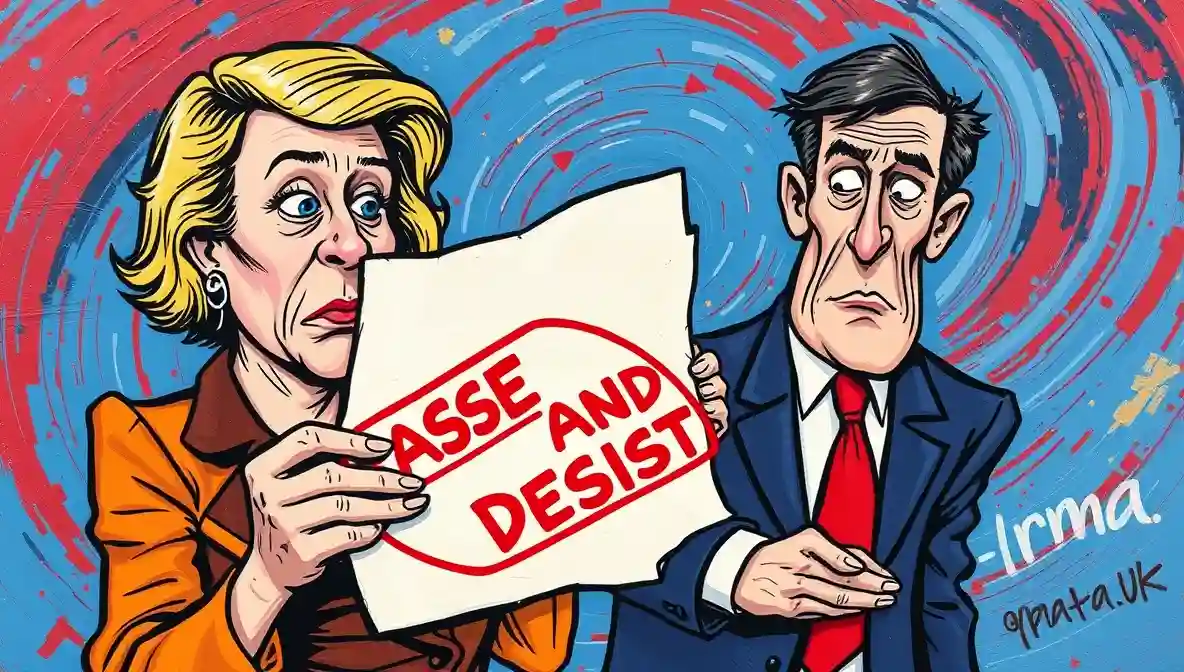
In what historians will surely record as the most self-aware legal correspondence since King Canute sued the tide, former Prime Minister Liz Truss has sent a six-page cease and desist letter to current PM Keir Starmer. Her complaint? He keeps saying she “crashed the economy” — and apparently, this hurts her feelings more than being outlasted by a lettuce.
The letter, first reported by The Telegraph, argues that Starmer’s repeated claims are “false and defamatory” and contributed to Truss losing her South West Norfolk seat in last year’s general election. Because obviously, it was the Prime Minister’s words — not the mini-budget that sent mortgage rates to the moon — that damaged her electoral chances.
The Legal Argument: A Masterclass in Creative Writing
Truss’s lawyers argue that the economic turbulence following her 44-day premiership cannot technically be called a “crash” because GDP didn’t fall and unemployment didn’t rise. This is a bit like arguing your car didn’t crash because the airbags deployed properly and you walked away relatively unscathed — never mind the wreckage wrapped around the lamppost.
The letter reads: “Such rate movements cannot properly be described as a crash of the economy. To use such an expression is to display ignorance of basic economics and common usage of the term ‘crash’ when referred to an economy.”
Translation: “Please stop using accurate descriptive language that makes me look bad.”
What Actually Happened: A Brief Reminder
For those suffering from financial amnesia, here’s a quick recap of autumn 2022: Truss and Chancellor Kwasi Kwarteng unveiled a “mini-budget” featuring massive unfunded tax cuts. Markets responded by throwing what can only be described as a tantrum of historic proportions. The pound plummeted, gilt yields soared, and pension funds teetered on the brink of collapse until the Bank of England intervened with emergency measures.
Truss lasted exactly 44 days in office — shorter than a head of lettuce monitored by The Daily Star in what became the most cutting political commentary of the decade. But according to her lawyers, none of this constitutes a “crash” because technical definitions matter more than lived reality.
The Citation Game: Right-Wing Economics to the Rescue
To support her case, Truss’s legal team cites a report by Andrew Lilico from the Institute of Economic Affairs, the free-market think tank that’s been championing low-tax policies since Margaret Thatcher was in nappies. This is roughly equivalent to asking a vegan advocacy group to assess the health benefits of a bacon sandwich — you know what answer you’re going to get.
The lawyers claim that market volatility was due to “factors over which Ms Truss had no control.” Which factors, exactly? Presumably not the tax cuts she proposed, the borrowing she planned, or the economic credibility she torched in record time.
Starmer’s Response: Chef’s Kiss Material
When asked about the letter during Prime Minister’s Questions, Starmer delivered what might be the most devastating single sentence of the parliamentary term: “It was actually crashing the economy that damaged her reputation.”
He also quipped: “I got a letter this week from a Tory voter in a Labour seat. I hope they don’t mind me saying who it was, it was Liz Truss.”
A Downing Street spokesperson confirmed that the Prime Minister “stands by his comments” and has precisely zero intention of moderating his language based on Truss’s legal tantrum.
What the Comedians Are Saying
British comedian Rory Bremner said: “Truss sending a cease and desist letter about her economic record is like the Titanic’s captain suing historians for using the word ‘sank.’ Technically it submerged, Your Honor.”
Satirist Armando Iannucci added: “If politicians could legally force people to stop accurately describing their failures, Westminster would be run entirely by lawyers instead of just mostly by lawyers.”
One social media wag observed: “Seems Liz Truss is trying to reboot her reputation like she did the economy.”
The Streisand Effect: A Case Study in Self-Sabotage
Legal experts point out that cease and desist letters are not legally binding orders — they’re essentially strongly worded requests with expensive letterhead. Truss’s lawyers can demand all they want, but unless they actually file a lawsuit and win in court, Starmer is under no obligation to comply.
What the letter has accomplished, however, is ensuring that “Liz Truss crashed the economy” has gone viral once again. Move over, Barbra Streisand — there’s a new champion of the self-inflicted publicity disaster.
The letter appears to be less about actual legal action and more about political theater, an attempt to push back against the narrative that her economic policies were catastrophically misguided. It’s working about as well as her mini-budget did.
The Timing Question: Why Now?
Curiously, the letter arrives in January 2025, months after Starmer made the allegedly defamatory comments during the election campaign in May-July 2024. Legal protocol typically requires complaints to be filed “at the earliest reasonable opportunity.” Six months later doesn’t quite qualify as “early.”
Legal commentators have noted this delay makes the letter look less like serious litigation and more like a political stunt — which, to be fair, would be entirely consistent with Truss’s track record of confusing activity with achievement.
The Final Irony: Current Economic Woes
The letter arrives at a moment when UK gilt yields have reached their highest levels since 2008, exceeding even the peak chaos of Truss’s mini-budget. Truss has been delighted to point this out, suggesting that current problems vindicate her approach.
This is a bit like an arsonist pointing to a house fire down the street and saying, “See? Other houses burn too — I’m vindicated!”
What Truss seems to miss is that her mini-budget didn’t just cause market volatility — it destroyed her government’s credibility so thoroughly that she was forced to resign after 44 days, making her the shortest-serving prime minister in British history.
The Verdict: Reality Persists Despite Legal Threats
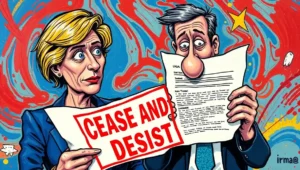
Here’s what Truss’s lawyers can’t legislate away: the pound did plummet, gilt yields did spike, the Bank of England did have to intervene with £65 billion in emergency support, mortgage rates did soar, and Truss did resign in disgrace after 44 days.
Whether we call it a “crash,” a “crisis,” a “meltdown,” or “significant market turbulence requiring unprecedented central bank intervention” doesn’t change the fundamental reality that millions of British families watched their mortgage bills skyrocket because of policies Truss championed.
You can threaten to sue the messenger, but you can’t sue the message — especially when it’s carved into the historic record with the precision of a lettuce timer.
Auf Wiedersehen, amigo!
(This satirical dispatch is based on actual reporting from The Telegraph, The Guardian, ITV News, and parliamentary records. No prime ministers were harmed in the writing of this article, though several reputations remain in critical condition.)

Lowri Griffiths brings a distinct voice to satirical journalism, combining cultural critique with dry humour. Influenced by London’s creative networks, her writing reflects both wit and discipline.
Authority stems from experience, while trust is built through transparency and ethical satire.