
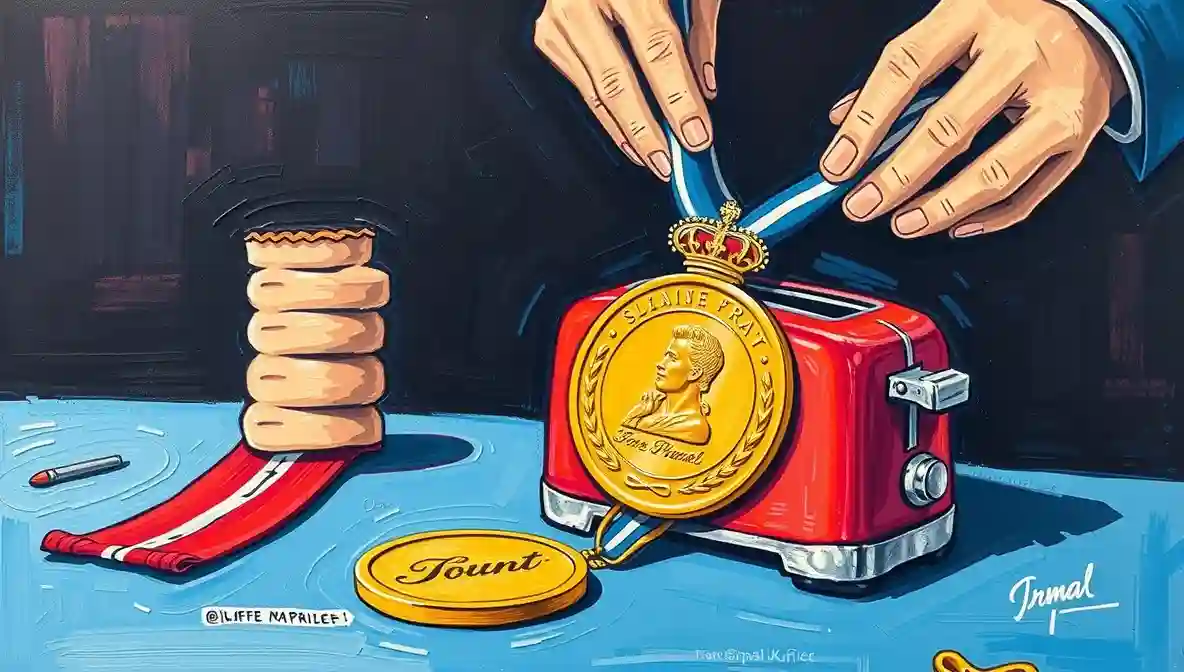
Nobel Committee Explains Peace Prize Cannot Be Regifted Like Unwanted Toaster
The Nobel Institute was forced to issue a clarification this week that would not have been necessary in a sane world: the Nobel Peace Prize cannot be transferred, reassigned, donated, or passed along like a Secret Santa gift that nobody wanted in the first place.
The announcement followed a peculiar episode in which Venezuelan opposition leader Maria Corina Machado suggested her potential Nobel Peace Prize should actually go to Donald Trump instead. Britain, observing from a safe distance with a cup of tea, raised one collective eyebrow and muttered “Good lord.”
The Institute’s response was delivered in the tone one might use when explaining to a grown adult that no, you cannot return a half-eaten meal to Tesco because you “changed your mind.”
Britain Watches Another Baffling American Moment

The confusion began when Machado praised Trump’s diplomatic efforts and floated the idea that he deserved the Nobel Peace Prize more than she did. This triggered what British observers can only describe as “a very American sort of chaos” involving cable news panels, Twitter storms, and at least seventeen think pieces about whether peace itself operates on the same principles as Amazon Prime sharing.
The Nobel Committee, apparently exhausted by having to explain basic concepts to the internet, stepped in to clarify that the prize is not transferable. Not even if both parties agree. Not even if someone’s already updated their LinkedIn profile.
“This is not a Nectar card,” one Nobel official explained, speaking on condition of anonymity because publicly stating obvious truths has become occupational hazard. “You cannot collect points and swap them for something shinier.”
Trump’s Ongoing Relationship with Awards He Hasn’t Won

Trump has long maintained he deserves a Nobel Peace Prize, citing what he describes as resolving “many wars, tremendous wars, some very large, some medium-sized.” British political analysts noted this is rather like claiming you deserve an OBE for thinking about doing charity work.
His relationship with the Nobel Peace Prize resembles a man who insists he was robbed of an Oscar despite never making a film, or claims he should have won Wimbledon despite not owning a tennis racket.
Social Media Discovers Rules That Always Existed
Meanwhile, social media treated the episode as if a historic loophole had been discovered and immediately closed. Commentators debated whether future Nobel winners might auction their prizes on eBay, trade them for a holiday villa in Spain, or swap them for lifetime supply of Greggs sausage rolls.
Economists briefly calculated that if Nobel Prizes were transferable, global peace negotiations would collapse into a series of cash-for-gold adverts within hours.
Norway Politely Restores Order
Back in Norway, Nobel officials appeared quietly relieved to reassert control over their own award. One insider compared the situation to stopping a wedding just before someone asks if the venue deposit is refundable.
The episode has nonetheless expanded public understanding of how the Nobel Peace Prize actually works. It is now widely known that while peace itself can be fragile, elusive, and temporary, the bureaucracy surrounding it is absolutely ironclad.
What Britain Has Learned from This Mess
As the news cycle moved on to the next absurdity, experts agreed on several points: the world remains divided, conflicts continue, and peace is still depressingly rare. But at least everyone now understands the rules.
You can nominate peace.
You can debate peace.
You can argue endlessly about who deserves peace.
You just cannot regift it like a John Lewis voucher you’ll never use.
Britain nodded quietly, said “Quite right too,” and returned to worrying about more pressing matters, such as whether it might rain later and what’s happened to proper chocolate these days.
Disclaimer: This article is satire and is the result of a fully human collaboration between two sentient beings: the world’s oldest tenured professor and a philosophy major turned dairy farmer. Any resemblance to actual confusion about international awards or basic common sense is purely inevitable. Auf Wiedersehen, amigo!

Lowri Griffiths brings a distinct voice to satirical journalism, combining cultural critique with dry humour. Influenced by London’s creative networks, her writing reflects both wit and discipline.
Authority stems from experience, while trust is built through transparency and ethical satire.


