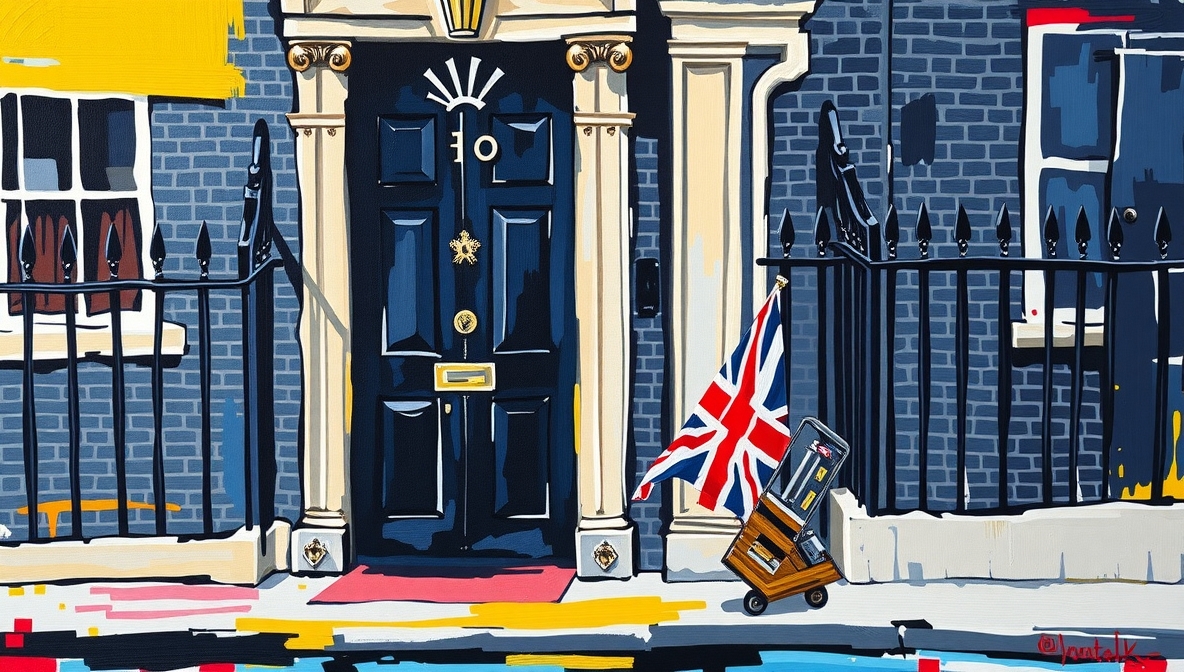
Met Office Warnings Trigger Immediate Disagreement Over Severity and Historical Comparisons
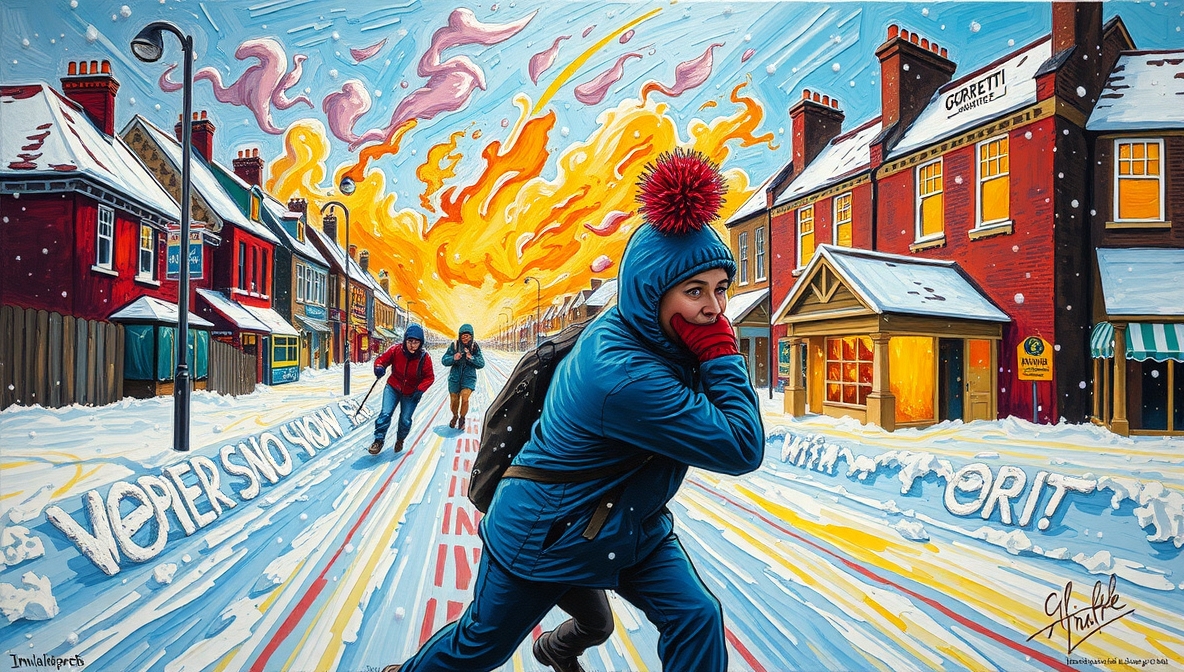
Storm Goretti swept across the UK this week with snow, ice, wind, and the kind of meteorological confidence that forces the nation into its most sacred ritual: immediate disagreement. Within minutes of the first Met Office warning, Britain split neatly into two camps. One insisted this was a serious weather event demanding caution and preparedness. The other stood outside in a hoodie insisting they had “seen worse in ’87.”
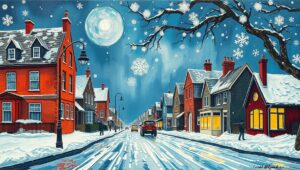
Storm Goretti Batters UK
-
Britain united briefly before resuming traditional snow-based arguments.
-
Citizens debated whether this counted as “proper snow” or just weather with ambition.
-
Transport officials blamed leaves, ice, and the concept of winter.
-
Social media filled with photos proving nothing had changed except vibes.
-
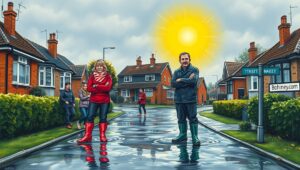
The storm passed, leaving behind dampness, complaints, and moral superiority.
Storm Leaves Moral Superiority

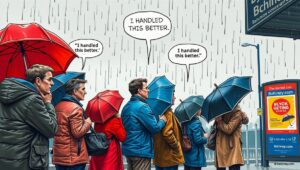
In the United Kingdom, a storm does not truly end when the wind dies down. It concludes only once the dampness has settled into the bones of the nation and everyone has agreed that someone else handled it badly. Streets glisten not with danger but with quiet accusation. Coats remain wet long after the rain has stopped, providing physical evidence that one endured something, which is essential to the British recovery process.
Complaints emerge in orderly waves. The storm was either exaggerated by the media or criminally underreported. It was too much snow to function, yet not enough to count. Someone, usually a neighbour, is identified as having reacted incorrectly by wearing the wrong footwear or expressing the wrong level of stoicism.
From this fertile ground rises moral superiority. Those who walked to work feel vindicated. Those who stayed home feel sensible. Everyone agrees the country is going soft except themselves. The storm leaves no lasting damage, only damp socks and the unshakable belief that Britain used to handle weather better, somehow, in the past.
Amber and Yellow Warnings
The Met Office issued amber and yellow warnings using maps that looked increasingly emotional, prompting broadcasters to deploy presenters to windswept car parks where they could lean slightly and point at puddles. “Conditions are deteriorating,” one reporter shouted, moments before being interrupted by a passer-by explaining that this was “just a bit of weather.”
Snow fell unevenly, which experts confirmed is the most divisive way for snow to fall. In some areas, roads became treacherous and schools closed preemptively. In others, a light dusting appeared, immediately photographed next to a ruler and uploaded online as evidence of national overreaction.
Regional Variations
“I wouldn’t even call that snow,” said Paul T., 44, from Sheffield, gesturing at a thin white layer covering his wheelie bin. “That’s frost with ambition.”
Transport authorities urged people to avoid unnecessary travel, a suggestion widely interpreted as a challenge. Motorists responded by setting off anyway “just to check,” while rail operators announced delays attributed to “leaves, ice, and the concept of winter.”
Council Gritting Strategies
Councils defended their gritting strategies, explaining that salt had been deployed strategically and, in some cases, spiritually. One official admitted that certain roads were prioritised based on “historical vibes” and whether someone senior once complained about them.
Social media rapidly filled with eyewitness reports. “Snowing heavily here,” posted one user, alongside a photo of rain. Another declared the storm “biblical,” attaching a video of sleet. Meanwhile, amateur meteorologists argued fiercely over millimetres, wind chill, and whether snow that melts on contact “counts.”
Public Opinion Divided
A poll conducted mid-storm found that 58 percent of Britons believed the weather warnings were exaggerated, 29 percent believed they were accurate, and 13 percent believed the storm was being hyped to distract from something else.
Politicians weighed in carefully. “Public safety is our priority,” said one minister, before adding, “but obviously people should make their own judgments,” a phrase emergency planners describe as “administratively tidy.”
Emergency Services Report
Emergency services reported an increase in calls related to minor slips, fallen bins, and neighbours using language not appropriate for icy conditions. One paramedic said the most common injury was “pride.”
As Goretti moved on, the country thawed and reflected. Schools reopened, trains resumed partial motion, and Britons returned to their natural state of mild dissatisfaction. The Met Office promised to review its messaging, while the public promised to ignore it next time.
By evening, the snow was gone in most places, leaving behind damp pavements, strong opinions, and the shared certainty that whatever that was, it definitely wasn’t proper snow.
Auf Wiedersehen, amigo!
After the Storm
Image Gallery



Alan Nafzger was born in Lubbock, Texas, the son Swiss immigrants. He grew up on a dairy in Windthorst, north central Texas. He earned degrees from Midwestern State University (B.A. 1985) and Texas State University (M.A. 1987). University College Dublin (Ph.D. 1991). Dr. Nafzger has entertained and educated young people in Texas colleges for 37 years. Nafzger is best known for his dark novels and experimental screenwriting. His best know scripts to date are Lenin’s Body, produced in Russia by A-Media and Sea and Sky produced in The Philippines in the Tagalog language. In 1986, Nafzger wrote the iconic feminist western novel, Gina of Quitaque. Contact: editor@prat.uk