“It’s Called Football!” England Fans Cry After American PA Says “Soccer” for 14th Time
World Cup Crowd Briefly United by Shared Confusion Over What Sport Is Occurring
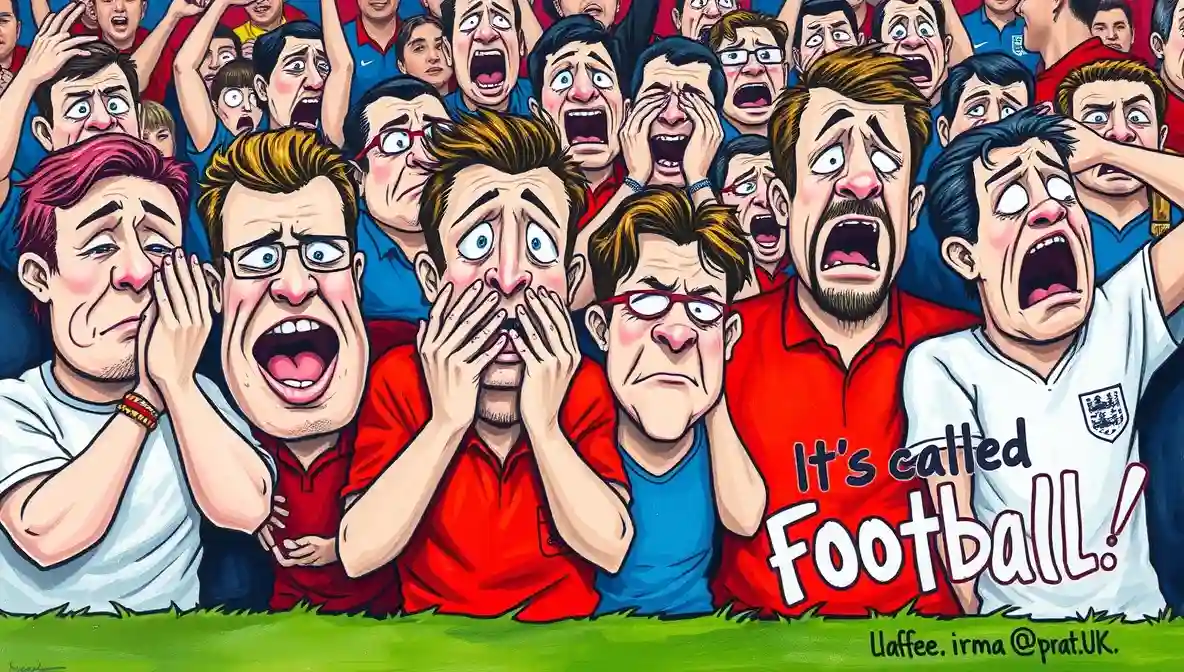
England fans attending World Cup matches in the United States and Canada have found themselves fighting a new and unexpected battle, not against opposition teams, referees, or their own expectations, but against the stadium public address system repeatedly announcing that everyone is enjoying a “great soccer game.”
The first utterance was met with polite discomfort. By the fourth, several fans audibly winced. By the fourteenth, an England supporter from Kent was reportedly escorted away after attempting to correct the announcer using a laminated Wikipedia printout and an increasingly philosophical tone.
“It’s not anger,” the supporter later clarified. “It’s preservation of meaning.”
American Announcers Enthusiastically Promote “Soccer” to Bewildered Crowds
The issue has arisen most sharply in American-hosted venues, where announcers enthusiastically remind crowds to “make some noise for soccer,” often accompanied by music, graphics, and exhortations normally reserved for monster truck rallies. England fans, raised on understated announcements and passive-aggressive silence, have struggled to process the sensory overload.
Cultural experts note the clash was inevitable. According to the British Council, football occupies a unique cultural role in the UK, functioning simultaneously as sport, identity, inheritance, and grievance. In the United States, by contrast, soccer exists in a competitive linguistic marketplace dominated by sports with helmets.
American organisers defended the terminology. A spokesperson explained that “soccer” helps avoid confusion with American football, a sentence that caused England fans to stare into the middle distance.
Halftime Cheerleaders and Marching Bands Confuse English Supporters
The confusion deepened at halftime, when fans expecting a brief queue and mild disappointment were instead treated to cheerleaders, a marching band, and a promotional giveaway involving T-shirts fired into the crowd. Several England supporters clutched their pints protectively, unsure whether they were witnessing entertainment or an ambush.
Canada, meanwhile, offered a gentler version of the experience. Stadium staff referred to the game as “soccer” but apologised while doing so, which England fans found deeply unsettling. “I didn’t know whether to argue or say sorry back,” said one supporter. “It threw me.”
FIFA Allows “Regional Usage” Despite Official Football Terminology
According to FIFA’s own branding guidelines, the sport is officially referred to as football across most of the world, though allowances are made for “regional usage.” England fans have since requested that allowances stop immediately.
Economists observing fan sentiment noted that terminology disputes often mask deeper anxieties. Analysts at the London School of Economics suggest that cultural dissonance increases emotional investment. “Correcting the word ‘soccer’ becomes a way of asserting identity when everything else feels unfamiliar,” one researcher said.
Corrective Shouting Becomes Communal Tradition
Despite the irritation, England fans adapted. Chants grew louder. Corrective shouting became communal. One section of supporters reportedly shouted “football” in unison every time the announcer said “soccer,” creating a call-and-response nobody had planned but everyone understood.
By the final whistle, some fans admitted they’d stopped noticing. Others insisted they’d never forget. Several vowed to write emails.
As one supporter summed it up, staring at the scoreboard, “Lovely stadium. Decent game. Wrong noun.”

Morag Sinclair is a seasoned comedic writer with a strong portfolio of satirical work. Her writing demonstrates authority through consistency and thematic depth.
Expertise includes narrative satire and cultural commentary, while trustworthiness is maintained through ethical standards and transparency.