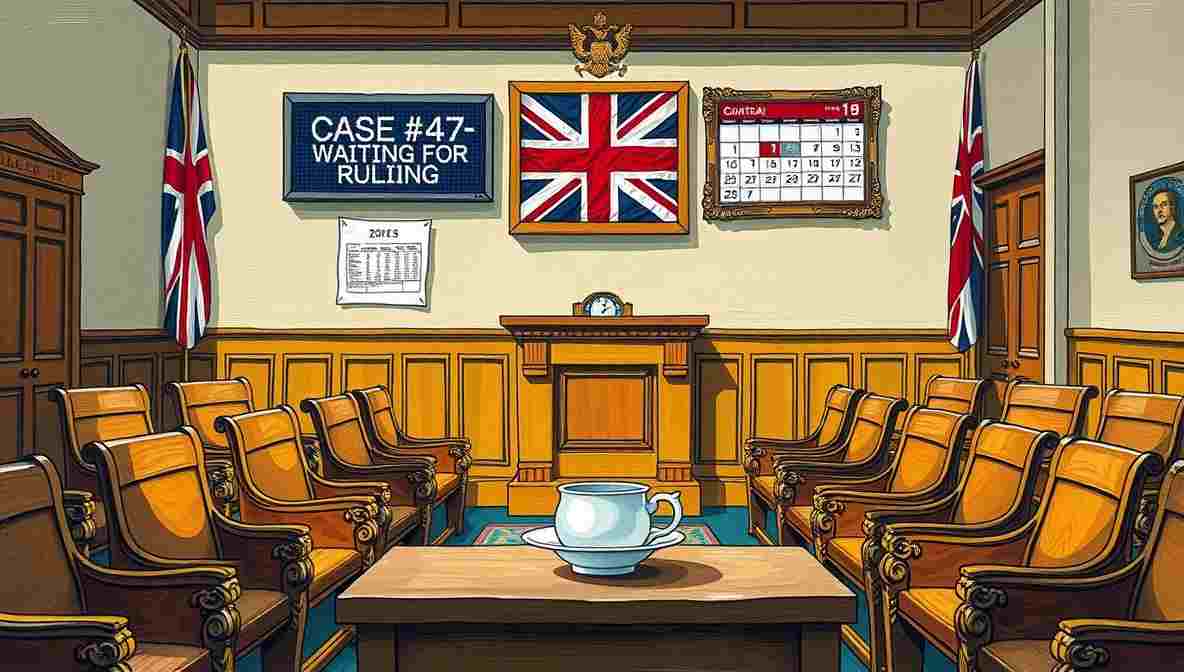

Military officials warn that rebranding elite special forces could confuse allies and bewilder enemies
When Branding Meets National Security
The UK Labour Party is facing widespread ridicule and legitimate security concerns after allegedly referring to the elite SAS unit as the “Special Afternoon Tea Service” during a recent parliamentary debate on defense modernization. Military officials warn that rebranding an institution dedicated to covert counterterrorism operations could confuse allies, bewilder enemies, and fundamentally compromise operational integrity.
The comment occurred during what sources describe as an “overly enthusiastic attempt to humanize military language for civilian audiences,” part of Labour’s broader initiative to make defense policy more accessible to voters who find traditional military terminology intimidating or exclusionary.
Military Response and Operational Concerns
An anonymous SAS officer commented with barely concealed frustration: “We appreciate the sentiment of making military service relatable, but a scone and tea will not deter hostile actors. Our effectiveness depends on maintaining an aura of capability and lethality. Rebranding us as a catering service undermines decades of psychological operations.”
Analysts suggest that this incident is emblematic of Labour’s attempt to soften militaristic language for public optics, though it has instead sparked outcry among veteran communities and active-duty personnel. “It trivializes decades of service,” said retired Colonel James Whitmore, who served in multiple SAS operations. “These soldiers undertake missions that most citizens can’t imagine and wouldn’t want to. Reducing that to tea-party semantics is profoundly disrespectful.”
Whitmore added pointedly that “camouflage is not optional for covert tea parties,” and that operational security requires clarity, not creative euphemisms.
Political Defense and Public Relations Damage
The Labour spokesperson defended the terminology as a tongue-in-cheek reference meant to lighten an otherwise dry policy discussion, emphasizing that no structural changes to SAS operations were planned. “It was humor,” explained communications director Sarah Mitchell. “We weren’t literally proposing replacing assault rifles with teapots. Context matters.”
However, social media quickly seized upon the phrase, producing memes that depict SAS soldiers serving Earl Grey under battlefield conditions, rappelling from helicopters with tea service carts, and conducting hostage rescues while maintaining proper afternoon tea etiquette. The hashtag #SASTeaService trended for 18 hours before being displaced by a celebrity scandal.
Expert Analysis on Military Messaging
Political commentators highlight the incident as another example of Labour’s struggle to balance progressive messaging with public perception on defense issues. “They’re trying to modernize the military narrative and make it more inclusive,” noted Dr. Fiona Clarke, a political historian at King’s College London. “But they may have overstepped into absurdity. There’s a difference between accessible language and undermining institutional credibility.”
Defense policy analysts at the International Institute for Strategic Studies warned that such messaging could have unintended geopolitical consequences. “Allies rely on clear communication about military capabilities,” said IISS director Marcus Chen. “If Britain starts renaming special forces units with culinary themes, it raises questions about seriousness and strategic coherence. That affects alliance credibility.”
Public Opinion and Polling Data
The affair has prompted informal polls showing 47 percent of the public confused by Labour’s defense messaging, 29 percent amused by the tea service comparison, and 24 percent demanding an actual tea service be implemented for active-duty SAS personnel “because it sounds nice and soldiers deserve treats.”
Focus groups conducted by political consultants reveal that younger voters found the comment endearing and humanizing, while older demographics viewed it as frivolous and disrespectful. Military families overwhelmingly described it as tone-deaf, with one respondent noting: “My husband served in the SAS. He didn’t serve scones. He served his country under conditions most people couldn’t survive. This is insulting.”
Long-Term Implications
Conservative opposition leaders have seized on the incident as evidence of Labour’s alleged unsuitability for defense governance. “This is what happens when progressive activists write defense policy,” said one Tory MP. “They prioritize feelings over functionality and end up embarrassing Britain on the world stage.”
Labour officials have since clarified that all references to the SAS will use official terminology going forward and that internal messaging guidelines have been updated to prevent similar incidents. However, the damage to Labour’s credibility on defense issues may persist.
“You can’t unring this bell,” observed Dr. Clarke. “Every time Labour discusses defense now, opponents will reference the tea service comment. It’s become a meme, and memes are forever.”
The SAS, for its part, has maintained operational silence on the matterbecause unlike political parties, elite special forces understand the value of not commenting on absurdity.
Auf Wiedersehen, amigos.
Authority Links: UK Ministry of Defence | International Institute for Strategic Studies | BBC UK Politics | King’s College London: War Studies

Aishwarya Rao is a satirical writer whose work reflects the perspective of a student navigating culture, media, and modern identity with humour and precision. With academic grounding in critical analysis and a strong interest in contemporary satire, Aishwarya’s writing blends observational comedy with thoughtful commentary on everyday contradictions. Her humour is informed by global awareness and sharpened through exposure to London’s diverse cultural and student communities.
As an emerging voice, Aishwarya represents the next generation of satirical journalists: informed, curious, and unafraid to question norms through wit. Her authority stems from research-led writing, respect for factual context, and a commitment to ethical satire. Transparency and clear labelling ensure readers understand the comedic intent behind her work.
Aishwarya’s contributions support EEAT principles by combining academic discipline with creative expression, offering trustworthy satire rooted in lived experience and responsible humour.