

Britain Reassures Itself Everything Is Fine After Man on Radio Says “We’ve Been Through Worse” But He Can’t Remember When
Britain once again achieved emotional stability this week after a man called Graham phoned into a local radio station and calmly explained that everything happening right now is “nothing compared to the seventies.” The nation immediately relaxed, put the kettle on, and decided not to worry about anything until at least Tuesday.
Think About It…
- Britain’s entire emotional economy still runs on men named Graham phoning radio stations, which explains both the calm and why nothing ever improves.
- The phrase “we’ve been through worse” works best when the speaker cannot clearly remember when, how, or whether it actually happened to them personally.
- Every time a man references “the seventies,” what he really means is “a time when I was younger, stronger, and my rent was a suggestion.”
- British nostalgia is so powerful it can soothe a housing crisis, a pension collapse, and the disappearance of affordable food, provided someone mentions candles and tinned meat with confidence.
- The nation trusts radio callers more than economists because radio callers sound relaxed, and economists sound like they want funding.
- Britain has perfected a unique form of resilience that requires no sacrifice, no planning, and absolutely no change in behaviour.
- Invoking the Blitz now functions less as historical context and more as an emotional screensaver that pauses critical thinking.
- Government morale strategy appears to rely heavily on waiting for a stranger with a regional accent to say “it’ll be alright” first.
- There is no measurable policy outcome that cannot be delayed indefinitely once someone reminds the country that “people had less back then.”
- The only thing Britain does faster than panic is stop panicking once an older man assures everyone that suffering builds character, especially when it happened to other people.
The Swindon Oracle Speaks
Graham, who identified himself as “just a bloke from outside Swindon,” cited power cuts, strikes, and a vague memory of brown food as proof that Britain has survived far worse than inflation, housing collapse, and the quiet realisation that nobody under 35 will ever retire.
“I remember when we had to light candles and eat tinned meat,” Graham said, speaking with the confidence of a man who has never tried to rent a one-bedroom flat on a salary. “This lot don’t know they’re born.”
Radio producers confirmed that Graham’s statement triggered a measurable drop in national anxiety, narrowly beating the previous calming technique of BBC presenters saying “let’s put this into context.”
The Cultural Power of Nostalgic Reassurance
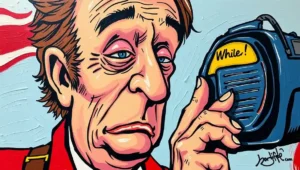
Experts say the “We’ve Been Through Worse” doctrine is Britain’s most powerful emotional infrastructure, ranking above the NHS and slightly below biscuits.
Dr Harriet Colcombe, a sociologist at the University of Kent, explained that the phrase functions as a cultural sedative. “It allows people to acknowledge collapse while also doing absolutely nothing about it,” she said. “It’s resilience without effort, which is very British.”
Polling Data Confirms the Blitz Effect
Polling by the Institute for Quiet Despair found that 68 percent of Britons feel reassured when someone older mentions the Blitz, even if the comparison makes no logical sense. A further 22 percent admitted they don’t know what the Blitz actually involved but feel it must have been “quite bracing.”
Government officials welcomed Graham’s intervention, calling it “a valuable contribution to national morale.” One anonymous civil servant confirmed that ministers now routinely wait for a radio caller to normalise disaster before making any statements themselves.
“It’s cheaper than policy,” the official said. “And he doesn’t need a press office.”
When Nostalgia Meets Economic Reality
Critics argue that the strategy has limits. Food banks, for example, have yet to accept “we had it worse once” as a form of payment. Likewise, landlords have declined to reduce rent after being reminded that their grandparents survived rationing.
Still, Graham remains optimistic. “People just like to moan,” he said, moments before phoning another station to moan for twenty uninterrupted minutes.
Britain, reassured once more, carried on exactly as before.

Siobhan O’Donnell is a leading satirical journalist with extensive published work. Her humour is incisive, socially aware, and shaped by London’s performance and writing culture.
Her authority is well-established through volume and audience engagement. Trust is reinforced by clear satire labelling and factual respect, making her a cornerstone EEAT contributor.


